

7 min read
Wondering how long it takes to get a green card through VAWA can cause real anxiety. Before getting into timelines, it helps to be clear on the basics: what VAWA is and who it protects. With that in mind, let’s talk about realistic timeframes.
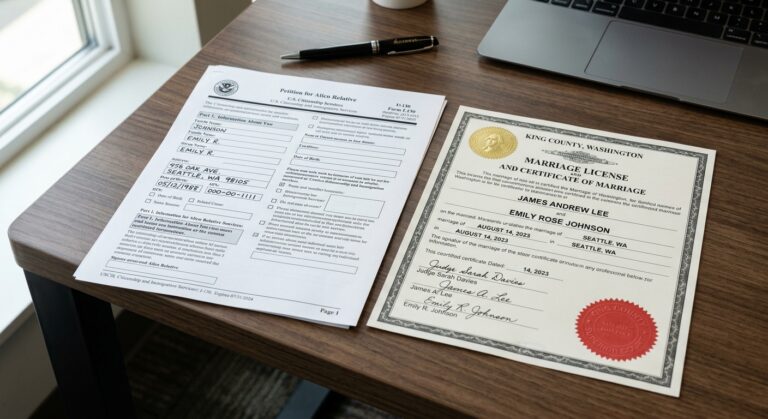
There is no single VAWA green card timeline. USCIS first decides the Form I-360 self-petition; permanent residence requires a separate adjustment-of-status or immigrant-visa process. The stages may overlap if you can file concurrently, and visa availability can affect the wait. Check the estimate for your form, category, and office on the USCIS processing times page.

Understanding how long a VAWA green card really takes
The typical path starts with filing Form I-360, the VAWA self-petition. USCIS measures processing from receipt to a decision, which can be approval or denial. Its published 80% figure describes completed cases over the preceding six months; it is not an average or a deadline for your case. See how USCIS calculates processing times.
Eligible applicants in the United States can seek adjustment of status with Form I-485. Some can file it together with the I-360; others must wait for visa availability. Approval of the I-360 does not itself grant permanent residence. Applicants using the immigrant-visa route abroad have a separate consular process; USCIS sends an approved self-petition to the National Visa Center. See USCIS guidance on approved self-petitions.
Speak with an attorney before traveling abroad, even if you have advance parole. In Matter of Delcarmen-Lara (August 13, 2026), the BIA treated advance-parole travel as a departure for the ten-year unlawful-presence bar and applied its new holding prospectively. Your travel dates, prior unlawful presence, and any applicable statutory VAWA exception need individual review. The ruling does not mean every VAWA applicant is barred from returning.
Every case is unique. A professional evaluation helps you prioritize the steps that reduce unnecessary delays and anticipate what USCIS may ask for before it happens.
What’s causing the current delays?
It helps to understand why VAWA cases are delayed. Although every file is different, the common factors tend to follow a pattern:
- USCIS workload: processing varies, and a published estimate does not establish why your individual case is taking longer.
- Visa availability: some applicants must wait until a visa is available before they can proceed with the permanent-residence stage.
- Document review: USCIS evaluates whether the evidence establishes the qualifying relationship, abuse, and other eligibility requirements.
- Different stages and offices: an I-360 estimate does not measure the entire green card process; check the relevant estimate for each application.
- Requests for Evidence (RFEs): USCIS may request additional evidence; the response and its review can affect the case timeline.
- Security checks: USCIS must complete and resolve required background checks before deciding an adjustment application.
Together, these factors create more uncertainty for people who are waiting, affecting both the emotional and practical side of life for families.
If you’ve been waiting a long time or feel your case has stalled, you don’t have to go through it alone. At YSL Immigration Lawyers, we review case notices, identify missing evidence, and help prepare RFE responses. Our VAWA attorneys can review your specific situation.
How to prepare your case to move forward clearly
Gathering relevant evidence from the start helps USCIS evaluate your case. Useful documents may include medical reports, police records, sworn statements, photos, and proof of living together. USCIS considers any credible evidence; a particular type of document, such as a police report, is not required. The evidence must address each eligibility requirement. See the USCIS evidence standard.
Plan your I-360 strategy carefully. Qualifying self-petitioning spouses, children, and parents of abusive U.S. citizens are immediate relatives and may file the I-360 and I-485 together if otherwise eligible for adjustment. Spouses and children of abusive permanent residents depend on visa availability; use the USCIS adjustment filing charts to check when filing is permitted. Eligibility also requires review of admissibility and any available waiver or other relief.
Work with a team that understands both the emotional reality and the legal requirements. A structured plan helps you manage the stress and present a strong case to USCIS.
Step-by-step guide for VAWA survivors
- Gather evidence of the abuse and the relationship, using credible documents and detailed statements; explain missing records where helpful.
- File Form I-360 with the right evidence and a clear eligibility plan.
- If eligible, apply for adjustment of status with Form I-485 and prepare supporting documents for USCIS review.
- Consider work authorization separately. An approved VAWA self-petition supports category (c)(31) for eligible self-petitioners and derivative children residing in the United States; an eligible applicant with a pending I-485 may apply through Form I-765 under category (c)(9). Prima facie is neither approval nor a work permit. Certain self-petitioning spouses and children may use it to establish eligibility for some public benefits; self-petitioning parents are excluded from that qualified-alien basis. Program requirements still apply. See USCIS guidance on these separate benefits and Form I-765 instructions.
- Prepare for possible interviews and Requests for Evidence, and stay in close contact with your legal team.
- Put your safety first in every part of your life, and keep USCIS informed of address changes using the special instructions for VAWA cases so correspondence reaches a safe address.
- Stay informed about new laws and USCIS guidance so your strategy can adapt as things change.
How long a VAWA green card takes varies, but careful preparation and the right support make a real difference. If you want clarity and a personalized plan, YSL Immigration Lawyers can help you map out a realistic path that considers your story, your evidence, and your goals. Contact us for an initial evaluation.
Frequently asked questions about how long a VAWA green card takes
What’s the average time to get a green card through VAWA?
There is no single average that applies to every VAWA green card case. Check the current I-360 estimate for the VAWA category and the office handling it, then assess the separate permanent-residence stage. Visa availability, adjustment eligibility, and whether applications were filed together affect the overall wait. A published USCIS processing estimate measures past decisions, not a guaranteed approval date.
What can make the VAWA green card process take longer?
USCIS workload, visa availability, evidence review, RFEs, and interviews can affect the timeline. An I-360 estimate alone does not cover the entire green card process. Stay in touch with your attorney, review each USCIS notice, and check the estimate for the relevant form and office. These checks help you plan; they do not guarantee faster processing.
Which documents are key to avoiding delays in a VAWA case?
Gather credible evidence of the qualifying relationship, abuse, and other eligibility requirements. Medical or police records can help, but USCIS does not require a particular type of evidence for a VAWA self-petition. Detailed statements and other relevant records may also support the case. Keep legible copies with consistent dates and names. Organized evidence helps review, but does not guarantee that USCIS will not issue an RFE.
What should I do if I get a Request for Evidence (RFE) in my VAWA case?
Review exactly what USCIS requests and the response deadline stated in the notice. Tell your attorney promptly, gather the requested evidence, and address the identified gaps or inconsistencies. Keep a copy of the complete response and proof of submission. A timely response matters, but it does not guarantee approval or a shorter overall processing time.
How can an attorney help me with my VAWA case?
A skilled attorney evaluates your eligibility, organizes your evidence, handles RFE responses, and coordinates your I-360 and I-485. They also offer strategies to minimize delays, keep you informed about timelines and requirements, and support you along the way. An attorney can build a plan around your case, with guidance on safety, documentation, and communication with USCIS, so you can move toward permanent residence with confidence.