
9 min read
Is it safe to travel on Advance Parole? It depends on your history. Advance Parole is a travel permit that lets certain immigrants leave the United States and come back without USCIS treating their pending case as abandoned. You apply with Form I-131, and if USCIS approves it, you get Form I-512 or I-512L, the document you show at the port of entry. For many people with a pending green card case, a pending work permit, or TPS, it is the only legal way to travel abroad and return.
Important 2026 update: under a Board of Immigration Appeals decision issued on August 13, 2026 (Matter of Delcarmen-Lara), leaving the U.S. on Advance Parole now counts as a departure for the 3- and 10-year unlawful presence bars. If you have more than 180 days of unlawful presence, you could be barred from returning. This decision overruled Matter of Arrabally, the 2012 case that many people relied on to travel safely. If you got advice about traveling before August 2026, get it checked again before you leave.
Understanding this permit is part of the bigger picture of your green card process, so it is worth getting it right before you buy a plane ticket.
How Advance Parole works and what it is for
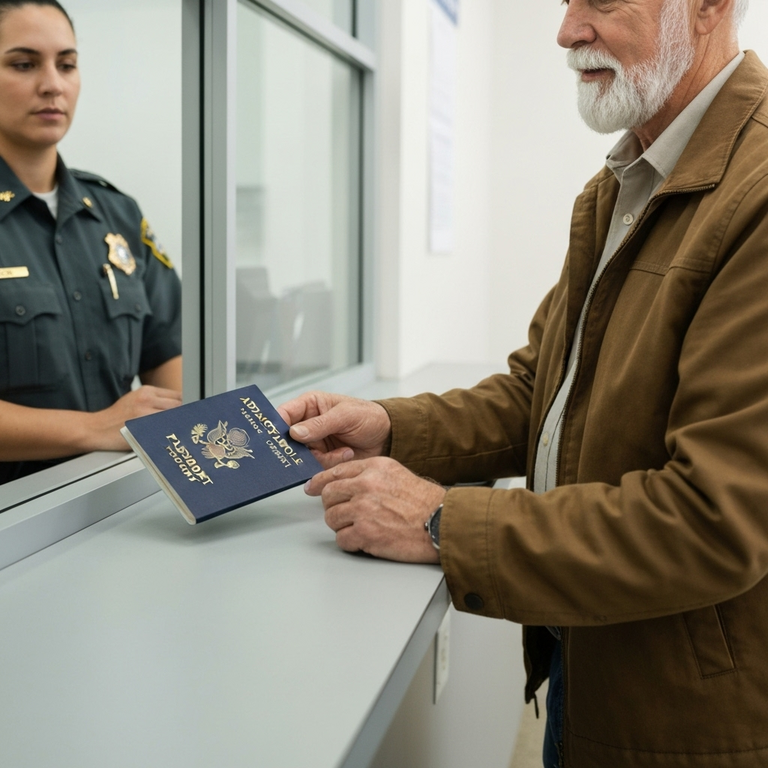
Advance Parole is a travel authorization, not a visa. It does not guarantee that you will be let back in. The Customs and Border Protection (CBP) officer at the port of entry makes the final decision.
The process is simple on paper: you file Form I-131, and if it is approved, USCIS issues Form I-512 or I-512L as the physical document. If you leave without a valid Advance Parole document while your case is pending, USCIS may treat your application as abandoned.
Advance Parole is different from humanitarian parole and from nonimmigrant visas (like a tourist visa). It only applies to people who have an open case with USCIS that allows it.
Who needs Advance Parole?
These are the main groups who usually need Advance Parole before leaving the country:
- Adjustment of status applicants (Form I-485): leaving without Advance Parole usually means your I-485 is considered abandoned. Some people in valid H-1B or L-1 status (and their H-4 or L-2 family members) can travel on their visa instead, but check this with an attorney first.
- TPS holders: you need a travel authorization from USCIS before you leave. Without it, you could lose your TPS and your continuous physical presence.
- People with a work permit (EAD) or a pending EAD that is tied to a green card case: you still need Advance Parole while your I-485 is pending. A work permit is not a travel document.
- DACA recipients: Advance Parole is discretionary and only granted for limited reasons (see the DACA section below).
- Family-based or employment-based green card applicants with a pending I-485: this is the path to visit family abroad or attend to work commitments while you wait.
Apply for the permit before you buy tickets. If your situation is unusual, talk to an immigration attorney first.
How do you apply for Advance Parole?
You apply with USCIS Form I-131, along with proof of your pending case (for example, your I-485 receipt notice if your adjustment has not been approved yet). You can file it together with other forms, such as your I-485 and I-765.
Since April 1, 2024, Form I-131 filed with an I-485 has its own filing fee. Check USCIS Form G-1055 for the current fee before you file.
USCIS does not publish a fixed timeline for the I-131, and processing can take several months. Start early, check the USCIS processing times page, and do not book non-refundable travel until you have the document in your hands.
When USCIS approves your request, it issues Form I-512 or I-512L. The document must still be valid on the day you come back.
Is it safe to travel on Advance Parole?
Travel on Advance Parole always carries some risk, and the risk depends on your case. The document does not guarantee re-entry. The CBP officer can use discretion under the grounds of inadmissibility in INA §212(a) and can find you inadmissible even if your permit is valid. Scrutiny at ports of entry has increased in 2025 and 2026.
The big change: Advance Parole travel now triggers the 3- and 10-year bars
This is the most important risk to understand before you travel. Under a Board of Immigration Appeals decision issued on August 13, 2026 (Matter of Delcarmen-Lara), leaving the U.S. on Advance Parole now counts as a departure for the 3- and 10-year unlawful presence bars. If you have more than 180 days of unlawful presence, you could be barred from returning.
Here is how the bars work:
- 3-year bar: if you were unlawfully present for more than 180 days but less than one year and then you leave the U.S.
- 10-year bar: if you were unlawfully present for one year or more and then you leave the U.S.
Before August 2026, Matter of Arrabally said that traveling on Advance Parole was not a “departure” for these bars, so many people with past unlawful presence (for example, someone who overstayed a visa and is now adjusting through a U.S. citizen spouse) could travel and return safely. Matter of Delcarmen-Lara overruled that. Now, a trip on Advance Parole can trigger the bar, and that bar can block the green card you are waiting for. In some cases, a waiver may be possible (see our guide on the I-601 waiver), but you should never count on it.
Who should be especially careful:
- People who overstayed a visa by more than 180 days before filing for adjustment of status.
- DACA recipients who had unlawful presence after turning 18 and before getting DACA.
- Anyone who has ever been out of status for a long time, even years ago.
Unlawful presence does not count while you are under 18, and it generally stops counting while you have a properly filed I-485 pending or while you have deferred action. Calculating it is technical. If you are not sure how many days you have, do not travel until an attorney reviews your full history. You can learn more in our article on getting a visa after unlawful presence.
Court decisions in 2025 and 2026 on DACA and TPS have also created uncertainty, and border policy can change quickly. If you have a different status, your case needs its own review:
- If you have a VAWA case, talk to us before leaving the country.
- Read about whether you can travel with a U visa.
- Find out if you can travel with your work permit inside the U.S.

Specific risks for DACA and TPS holders
DACA and TPS are both affected by ongoing lawsuits and policy changes. That makes travel riskier for them than for a typical I-485 applicant.
| Who you are | Situation as of 2026 | Main risk |
|---|---|---|
| DACA renewal recipients | Renewals are processed. Advance Parole is discretionary and only for limited reasons. | Denial if your reason does not fit. Past unlawful presence (after age 18, before DACA) can now trigger the 3- or 10-year bar when you leave. |
| Initial DACA requests | After the Fifth Circuit decision of January 17, 2025, USCIS accepts initial requests but does not process them. | Without approved DACA, you cannot get DACA Advance Parole. |
| TPS holders | TPS is active for some countries but several designations are in litigation. | A policy change or end of your country’s designation while you are abroad can make your return harder. |
For DACA, USCIS has traditionally granted Advance Parole only for humanitarian, educational, or employment purposes, such as:
- Visiting a seriously ill relative or attending a funeral.
- Getting medical treatment.
- Study abroad programs or academic research.
- Work assignments, conferences, or training.
USCIS decides case by case. If your reason does not fit, your request can be denied. Even if it is approved, CBP still decides whether to admit you. Talk to a DACA attorney before you apply or travel.
What to bring and how to prepare before you travel
Good preparation reduces problems at the border. Make sure your permit is valid for your entire trip, your passport is valid, and you know about any recent changes in the law, including Matter of Delcarmen-Lara. If you are adjusting status, check where your immigration medical exam (Form I-693) stands.
Bring these documents to the port of entry:
- Your original Form I-512 or I-512L.
- A valid passport.
- A copy of the approval or receipt notice for your pending case or benefit.
- Documents that support the reason for your trip.
- Your immigration attorney’s phone number.
Answer CBP’s questions calmly and completely. Do not sign anything you do not understand, especially Form I-407 (Record of Abandonment of Lawful Permanent Resident Status) or any waiver of rights. You have the right to ask to speak with your attorney.
At YSL Immigration Lawyers, attorney Yohana Saucedo and our team in Austin and Laredo, Texas, review your full history before you travel. If you want our adjustment of status attorneys to check whether a trip is safe for you, schedule a consultation.
Frequently asked questions about Advance Parole travel risks
Does traveling on Advance Parole trigger the 3- or 10-year bar?
It can. Under a Board of Immigration Appeals decision issued on August 13, 2026 (Matter of Delcarmen-Lara), leaving the U.S. on Advance Parole now counts as a departure for the 3- and 10-year unlawful presence bars. If you have more than 180 days of unlawful presence, you could be barred from returning. This overruled Matter of Arrabally. Talk to an attorney before you travel.
What documents should I bring to the port of entry when I return on Advance Parole?
Bring your original, valid I-512 or I-512L, your passport, a copy of the approval or receipt notice for your pending case, proof of the reason for your trip, and your attorney’s phone number. Stay calm and cooperate with the CBP officer.
How long does USCIS take to process Form I-131?
USCIS does not give a fixed timeline, and it can take several months. Apply well in advance, do not buy tickets before your approval, and check the USCIS processing times tool.
Does Advance Parole guarantee that I will be let back into the U.S.?
No. The CBP officer makes the final decision, and a valid document does not force them to admit you. Review your full immigration history with an attorney before you leave.
Is Advance Parole still available for DACA recipients in 2026?
Yes, but only for limited reasons and case by case. Initial DACA requests are not being processed after the January 2025 Fifth Circuit decision. If you had unlawful presence after age 18 and before DACA, a trip can now trigger the 3- or 10-year bar, so consult an attorney first.
What happens if I leave without Advance Parole while my I-485 is pending?
USCIS will usually consider your I-485 abandoned, and your case may be closed. If you have unlawful presence, leaving can also trigger the 3- or 10-year bar. Do not travel without talking to an attorney.