
6 min read
Marriage-based adjustment of status lets you get your green card without leaving the United States when you marry a U.S. citizen. Form I-485 is at the center of the process, and the interview matters just as much as the paperwork.
Knowing what each stage looks like, from gathering documents to sitting down with the officer, helps you avoid mistakes that delay or complicate your case. If you want guidance for your situation, our adjustment of status attorneys can walk you through it.
What is marriage-based adjustment of status?
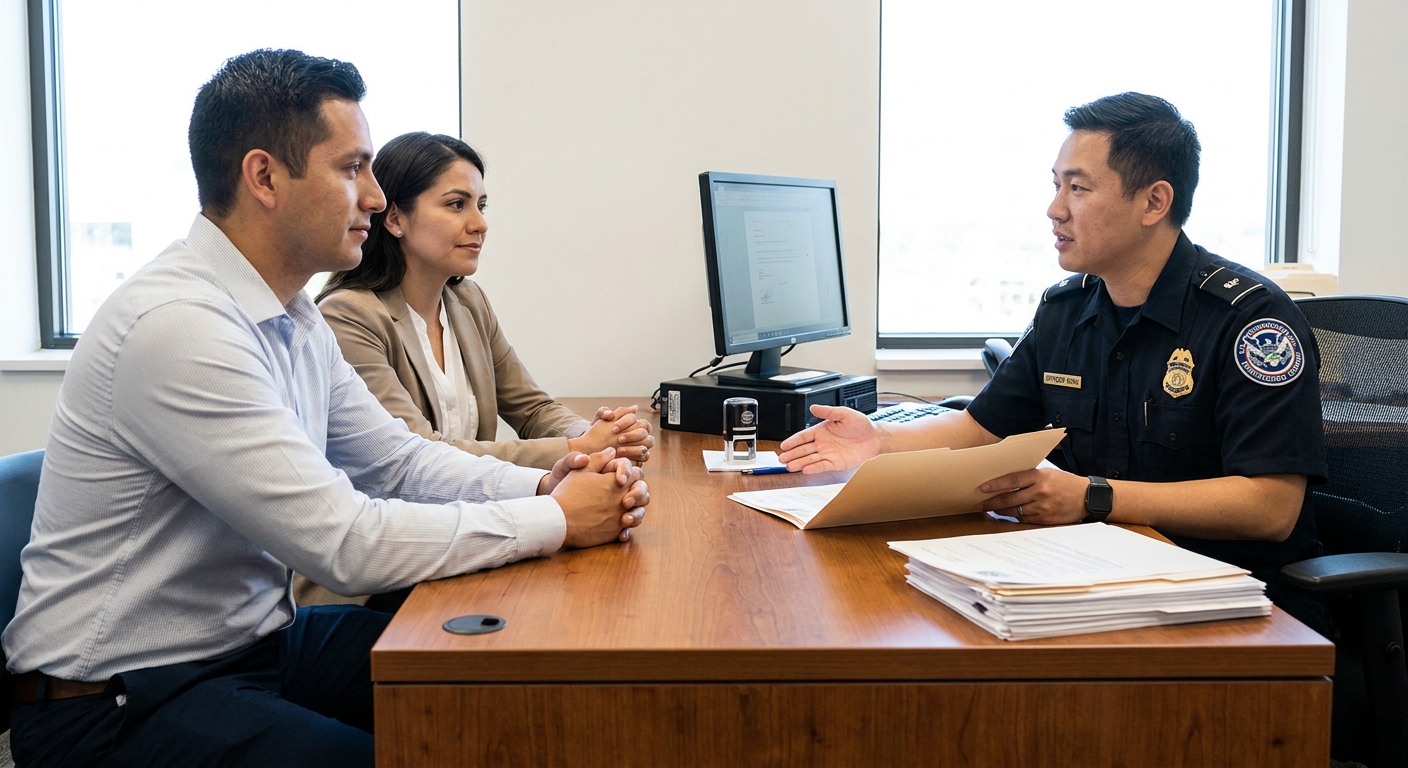
If you are in the U.S. and marry a U.S. citizen, adjustment of status lets you apply for a green card without going back to your home country. It is how you change from a temporary (nonimmigrant) status to permanent resident from inside the country.
You can only do this if you qualify to apply from inside the U.S. In general, that means you entered legally: for example, with a tourist or student visa, or with humanitarian parole. As the spouse of a U.S. citizen, you are an “immediate relative,” so an expired visa usually does not stop you, as long as you were inspected and admitted or paroled. If you entered without inspection, the path is much harder and may require a waiver or a different process.
Form I-485, Application to Register Permanent Residence or Adjust Status, is never filed on its own. It goes with a family petition, Form I-130 (Petition for Alien Relative), that is already approved or filed at the same time. Spouses of U.S. citizens can file both forms together in one package. The I-130 proves the relationship, and the I-485 proves you are eligible for the green card.
Finishing your case inside the U.S. is one of the most common ways to become a permanent resident, compared with consular processing abroad. You don’t have to leave for the interview or the approval, which keeps families together and makes planning simpler. To compare both paths, see how long it takes to get a green card.
Requirements and documents for marriage-based adjustment of status
An incomplete package is one of the most common reasons these cases stall. Missing evidence or inconsistencies can lead to delays or a denial. Everything rests on two things: proving your marriage is real and proving you are eligible.
Your immigration history at the time you file decides whether this path is open to you. If you entered without inspection, you will face obstacles that call for a careful legal review before you file anything.
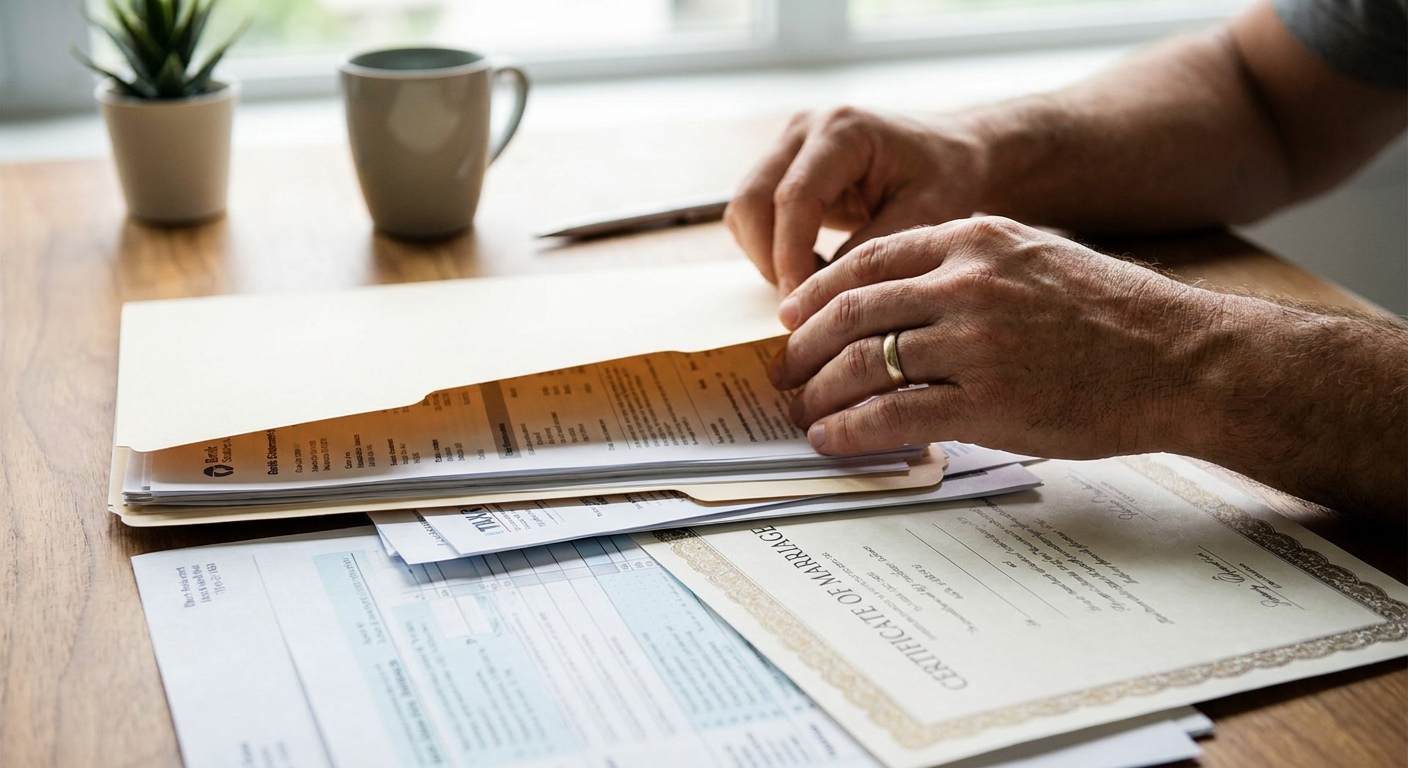
The marriage must also be “bona fide,” meaning real and not entered into only for an immigration benefit. USCIS looks for clear proof that you built a life together, so the evidence you send can make or break your case:
- Marriage certificate and birth certificates.
- Proof you live together: a joint lease or mortgage, or utility bills in both names at the same address.
- Shared finances: joint bank account statements, shared credit cards, or life insurance naming your spouse as beneficiary.
- Social evidence: photos of the two of you with family and friends, and receipts from trips or events together.
- Sworn statements (affidavits) from friends or relatives who know your relationship.
- Identity and travel documents, including passports, visas, and your I-94 entry record.
- Form I-130, approved or filed together with your I-485.
- Form I-864, the Affidavit of Support from your U.S. citizen spouse.
- An immigration medical exam (Form I-693) completed by a USCIS-approved doctor, with the required vaccines. Learn more about the immigration medical exam.
Your criminal and immigration history also matter. Some immigration violations, such as entering without inspection or certain past removals, and some criminal records can complicate or even block your application.
If you want a work permit and a travel permit while you wait, you can file Form I-765 and Form I-131 with your I-485. Since April 1, 2024, each of those forms has its own fee, even when filed with the I-485. Check the current USCIS fee schedule (Form G-1055) before you file, and read our guide on the marriage work permit.
What happens at the I-485 marriage interview?
The interview can decide your case. It is USCIS’s chance to confirm that your marriage is real and that you qualify for a green card. Many couples treat it as a formality, and a weak interview can put the whole case at risk.
In most cases, both you and your U.S. citizen spouse must attend. An immigration officer will ask about your life together, and the questions usually focus on everyday and personal details.
Expect questions about how you met, how the proposal happened, your plans for the future, and your daily routines. Officers also often ask about money matters, such as joint accounts, property, and who pays which bills. What matters most is that both of your answers match and show that you really know each other.
Even if you already sent a lot of documents, bring the original evidence of your marriage to the interview, plus updated proof: recent joint bank statements, current proof that you live together, and recent photos from family events or trips. Anything that shows your relationship continues is useful.
If the answers don’t match or you come unprepared, the officer may have serious doubts. If the officer is not convinced the marriage is real, they can send a Request for Evidence (RFE) or deny the application, which means a long delay.
What to expect after the interview
After the interview, the wait can feel uncertain, and there are several possible outcomes. In the best case, the officer approves the case and your green card is on its way. For a full breakdown, read what happens after your immigration interview.
The officer may also send an RFE if they need more information to decide. In fewer cases, the application is denied because eligibility or the marriage was not proven. Most I-485 denials can’t be appealed: depending on the case, the options are usually a motion to reopen or reconsider (Form I-290B) within 30 days, refiling, or asking the immigration judge again if you are placed in removal proceedings. Learn more in our guide on what to do if your adjustment of status is denied.
The conditional green card and Form I-751
If your marriage is less than two years old on the day USCIS approves your green card, you will receive a conditional green card valid for two years. This is how the government double-checks that the marriage is genuine and not only for immigration purposes.
Before the conditional card expires, you must file Form I-751, Petition to Remove Conditions on Residence, during the 90 days before the expiration date. If you don’t file in time, you could lose your permanent resident status, although USCIS accepts late filings when you explain a good reason in writing.
For the I-751 you will need even more proof that your marriage stayed real during those two years: updated records of shared property, joint accounts, children born to the marriage, and any other evidence of a shared life. Keeping a running record of this evidence from day one makes this second step much easier.
The path to a marriage green card takes preparation and careful follow-up. If you want support with your adjustment of status, attorney Yohana Saucedo and our team in Austin and Laredo, Texas, are ready to help. Contact us.
Frequently asked questions about marriage-based adjustment of status
Can I get a marriage green card if I didn’t enter the U.S. with a visa?
If you entered without inspection, adjusting status from inside the U.S. is much harder. In general, you need a lawful entry to qualify for Form I-485. Some exceptions exist, such as Section 245(i) or parole in place for certain military families, that may allow you to adjust. Every case is different and needs a full legal review.
How long does marriage-based adjustment of status take?
It depends on the USCIS office, its workload, and how complex your case is. It usually takes from several months to more than a year, including filing the I-130 and I-485, biometrics, the interview, and the final green card. Keeping your documents up to date and answering any RFE quickly helps your case move.
Can I travel outside the U.S. while my I-485 is pending?
Traveling while your I-485 is pending is risky. Leaving without Advance Parole (Form I-131) usually means USCIS treats your application as abandoned. Even with Advance Parole, under a Board of Immigration Appeals decision issued on August 13, 2026 (Matter of Delcarmen-Lara), leaving the U.S. on Advance Parole now counts as a departure for the 3- and 10-year unlawful presence bars. If you have more than 180 days of unlawful presence, you could be barred from returning. Read about Advance Parole travel risks and talk to an attorney before any trip.
What is the difference between a conditional and a permanent green card?
You get a conditional green card if your marriage is less than two years old when your I-485 is approved, and it is valid for two years. A regular green card is valid for ten years. To go from conditional to permanent, you file Form I-751 during the 90 days before your conditional card expires and show your marriage is genuine.
Do I need a lawyer for marriage-based adjustment of status?
It is not required by law, but legal help is strongly recommended. The I-485 process has many requirements, documents, and possible problems that can delay or deny your case. An attorney can help you build a strong application, prove your marriage is real, and prepare for the interview.