
6 min read
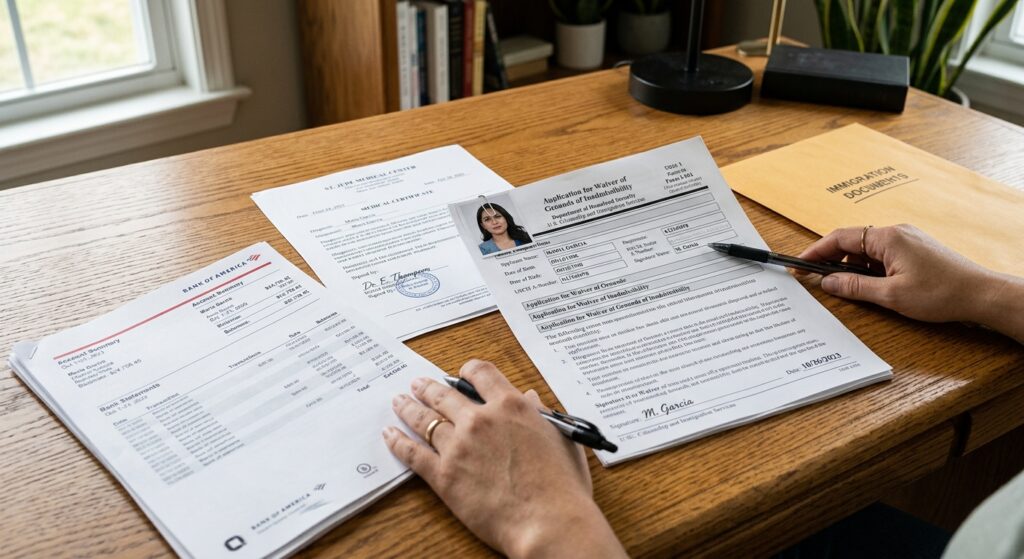
If inadmissibility is blocking your immigration case, the I-601 waiver may be an option. Form I-601, Application for Waiver of Grounds of Inadmissibility, lets eligible applicants request a waiver of certain grounds for an eligible immigration benefit; filing it does not grant that benefit.
Understanding what it covers and what evidence your case needs helps you prepare the application. It also helps to see where the I-601 fits among the different types of immigration waivers, because not every ground of inadmissibility works the same way.
Who qualifies for an I-601 waiver?
Not everyone with a ground of inadmissibility can apply for an I-601. Eligibility depends on the immigration benefit and the ground being waived. Some routes require a qualifying relative and extreme hardship; others have different standards or alternatives. The USCIS Form I-601 instructions distinguish those requirements.
For immigrant waiver routes that require hardship to a qualifying relative, who counts depends on the ground:
- Fraud or willful misrepresentation (INA §212(i)), under the ordinary immigrant rule, and unlawful presence (INA §212(a)(9)(B)(v)): a U.S. citizen or lawful permanent resident spouse or parent. A child is not the qualifying relative under these rules.
- Certain criminal grounds (INA §212(h)), under the hardship route: a U.S. citizen or lawful permanent resident spouse, parent, son, or daughter. Other routes under this provision have their own conditions.
For a VAWA self-petitioner seeking a fraud waiver under INA §212(i), extreme hardship may be to the applicant or the applicant’s U.S. citizen, lawful permanent resident, or qualified alien parent or child. That exception does not change the qualifying-relative rule for the unlawful-presence waiver.
For eligible applicants, the I-601 can cover, among other grounds, certain crimes involving moral turpitude (CIMTs), fraud or willful misrepresentation, some health-related grounds, and a single offense of simple possession of 30 grams or less of marijuana. That marijuana provision does not cover trafficking; statutory limits and the applicable discretionary standard still govern.
Under INA §212(a)(6)(C)(i), the fraud ground concerns fraud or willful misrepresentation of a material fact to obtain a visa, admission, or another immigration benefit. An innocent error is not automatically that ground. We review the specific conduct and the applicable waiver requirements before preparing the case.
Key differences between the I-601 waiver and the I-601A provisional waiver
Although the names are similar, they are different forms and cannot be used interchangeably. Choosing the wrong one can cause filing problems or a denial.
Form I-601A (Provisional Unlawful Presence Waiver) applies only to unlawful-presence inadmissibility under INA §212(a)(9)(B). It is for eligible consular immigrant visa applicants who believe that, upon departure, this will be their only ground of inadmissibility at the visa interview. USCIS can decide this provisional request before they leave.
Applicants must be physically present in the United States, at least 17, and have an eligible immigrant visa case pending with the Department of State (DOS). This can be based on an approved immigrant petition with the DOS immigrant visa processing fee paid, or Diversity Visa selection for the applicable fiscal year. Eligible spouses and children may apply as derivatives under the instructions.
Applicants must provide biometrics in the United States as directed and show extreme hardship to a U.S. citizen or lawful permanent resident spouse or parent, as well as favorable discretion. The Form I-601A instructions explain these requirements and the exclusions.
A pending Form I-485 makes you ineligible. Pending removal proceedings without a final order must be administratively closed and not recalendared when you file. A final removal, deportation, or exclusion order requires USCIS to have already approved Form I-212 consent to reapply before filing I-601A. A final reinstatement of a prior order, or an unexpired grant of voluntary departure, also makes you ineligible.
An approved I-601A takes effect only after departure, the immigrant visa interview, and the DOS consular officer’s determination that you are otherwise admissible and eligible for the visa. If removal proceedings remain, resolve them before leaving as the instructions explain.
A pending or approved I-601A does not give lawful status, authorized stay, employment authorization, Advance Parole, or protection from removal. It does not stop unlawful-presence accrual or guarantee a visa or admission. DOS decides visa eligibility; CBP decides admission at the port of entry.
Form I-601 covers several grounds under INA §212, subject to the benefit, waiver requirements, and statutory limits. Eligible applicants may use it in adjustment of status or consular processing. It does not waive every ground.
Being out of lawful status does not always mean that every day counts as unlawful presence. Whether a bar applies depends on counted time, departure, the applicable statutory conditions, and exceptions. Other grounds, such as fraud or health issues, require a separate assessment of available relief.
Travel rules also need separate review. In Matter of Delcarmen-Lara, decided August 13, 2026, the BIA held prospectively that an Advance Parole departure counts as a departure under the ten-year-bar provision, INA §212(a)(9)(B)(i)(II). The current USCIS unlawful-presence guidance separately warns about Advance Parole departures under both three- and ten-year provisions. Individual statutory conditions and exceptions still matter.
What counts as extreme hardship for USCIS?
Where the applicable waiver route requires extreme hardship, USCIS evaluates the totality of the circumstances, individually and cumulatively. The common consequences of denied admission alone generally are not enough; their combined effects may establish hardship. The evidence should address separation or relocation, as applicable to the case.
Relevant factors may include the relative’s medical conditions, financial dependence, psychological impact, educational difficulties, conditions in the country of relocation, and community ties in the United States. Where hardship to a qualifying relative is required, harm to a child who is not a qualifying relative matters through its effect on that relative.
We connect the claimed hardships to verifiable evidence: medical and psychological reports, financial records, specific letters of support, and country-condition documentation. USCIS hardship guidance explains how factors are assessed together. VAWA has ground-specific waiver rules; being a victim does not provide a universal waiver.
Requirements and evidence to support your application
Preparing an I-601 requires evidence of eligibility for the particular waiver ground and evidence supporting favorable discretion. If your route requires a qualifying relative and extreme hardship, include proof of the relationship and supporting hardship evidence.
Depending on your waiver ground and the claims you make, the documentation may include:
- A complete, signed Form I-601 and the applicable filing fee, unless a fee waiver is available and granted under the USCIS rules.
- A marriage or birth certificate proving the qualifying relationship, if required.
- Proof of the qualifying relative’s required immigration status, if that route applies.
- A detailed statement from the relative explaining the claimed hardship from separation or relocation, if applicable.
- Medical, psychological, or educational reports supporting the hardships claimed.
- Proof of the financial effects, community ties, and country conditions relevant to the claim, plus evidence required for the waiver ground and favorable discretion.
Documents in another language require a full English translation certified as complete and accurate by a translator competent in both languages. Check the current fee and fee-waiver rules on the USCIS I-601 page. Filing timing depends on the benefit: eligible consular applicants generally file after the visa interview and inadmissibility finding.
If you are eligible for adjustment of status, follow the filing instructions for that case. An I-601 does not always have to be filed together with a family petition or Form I-485.
How does filing and processing an I-601 work?
A filing rejection for defects such as a missing signature is different from a denial on the merits. Check the filing requirements before submitting the application.
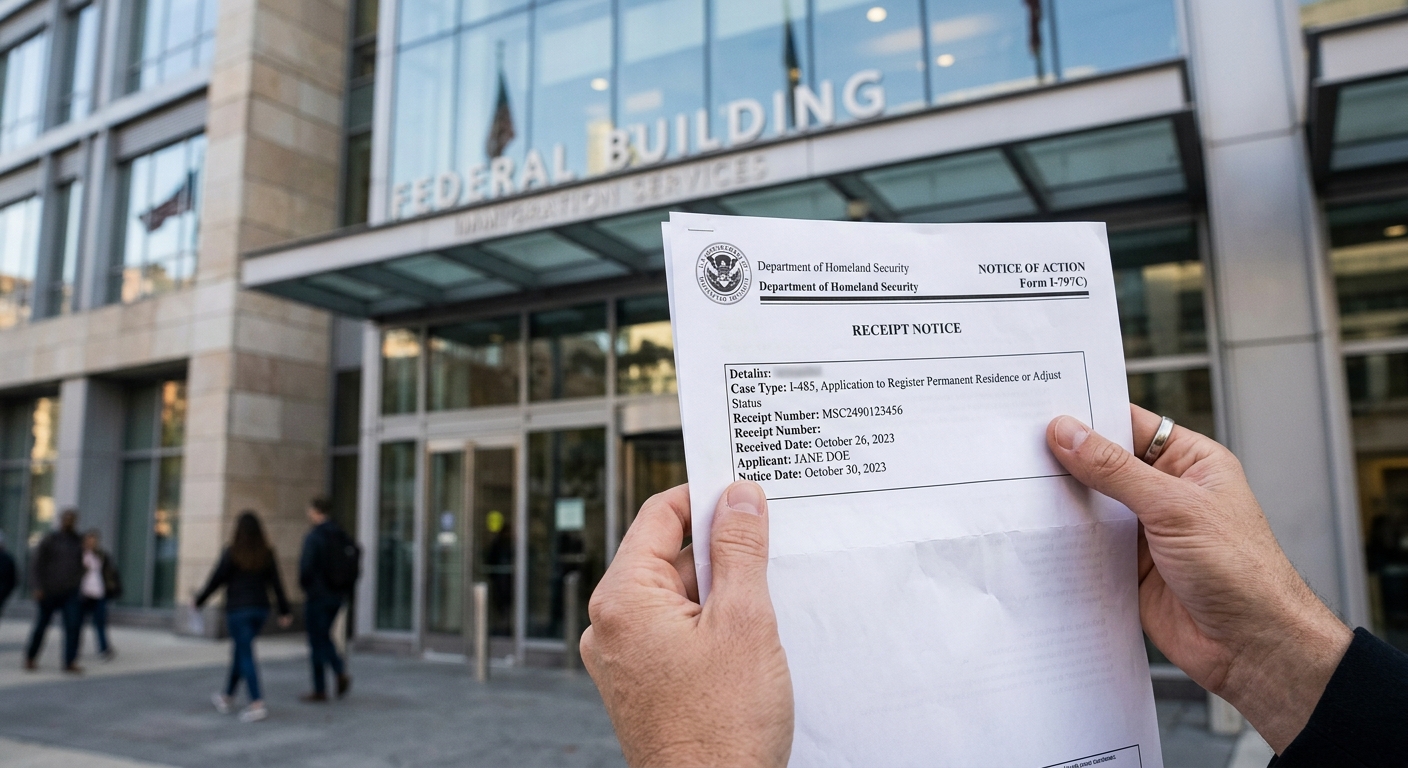
After USCIS accepts the filing, it reviews the application and evidence. Under USCIS evidence policy, an officer may issue a Request for Evidence (RFE) or Notice of Intent to Deny (NOID) when warranted. Neither is a mandatory stage in every case. Follow any notice’s submission instructions and deadline.
The final decision approves or denies the application. A NOID is notice of an intended denial with an opportunity to respond before USCIS makes its final decision.
The denial notice explains any available review and filing instructions. An appeal may go to the AAO; a motion goes to the USCIS office that issued the latest decision. The Form I-290B instructions distinguish them. Immigration-court decisions follow EOIR procedures. I-601A denials have no administrative appeal or motion to reopen or reconsider.
How long does an I-601 waiver take?
If you have already filed or are about to, check the USCIS processing information applicable to your case before planning around a date. A request for more evidence is not issued in every case; if you receive one, the response instructions and deadline are in that notice.
| Stage | What happens | What to check |
|---|---|---|
| Filing acceptance | USCIS accepts the filing | Filing defects may cause rejection |
| Review by the assigned office | USCIS reviews eligibility and evidence | Case-specific review |
| RFE, if issued | USCIS requests additional evidence | Respond by the notice deadline |
| Final decision | Approval or denial; NOID precedes a decision | Any review follows the decision notice |
Use the USCIS processing-times resource to consult processing information before planning dates. If you receive an RFE or NOID, follow that notice’s instructions.
How does USCIS assess discretion for an I-601 waiver?
An I-601 requires a favorable exercise of discretion as well as the applicable eligibility requirements. USCIS weighs favorable and unfavorable factors; no list of positive factors guarantees approval.
Your evidence should address the requirements of the particular waiver ground. Where hardship is required, document the qualifying relationship and the claimed hardship. A clean immigration history is not a universal new eligibility requirement.
We review how the evidence supports eligibility and discretion, including relevant favorable factors such as work history, community involvement, or rehabilitation. These factors must be considered alongside unfavorable facts in the case.
An approved I-601 covers only the grounds and incidents included in the waiver, subject to its benefit-specific limits. It does not itself grant a visa, lawful status, or a green card. If you are seeking a green card, the remaining requirements of that process still apply.
If you are considering an I-601 waiver or have received a notice of inadmissibility, contact us. We will review the applicable waiver requirements and evidence in your case before you file with USCIS.
Frequently asked questions about the I-601 waiver
Can a U.S. citizen child be my qualifying relative for an I-601?
It depends on the ground. For immigrant unlawful-presence waivers and ordinary immigrant fraud waivers, the hardship qualifying relative is a U.S. citizen or lawful permanent resident spouse or parent, not a child. Under the criminal hardship route in INA §212(h), a U.S. citizen or lawful permanent resident son or daughter can qualify.
For a VAWA self-petitioner seeking a fraud waiver under INA §212(i), hardship may be to the applicant or the applicant’s U.S. citizen, lawful permanent resident, or qualified alien parent or child. That special rule does not change the unlawful-presence waiver rule. Other waiver routes have their own standards.
What if my situation changes while my I-601 is pending?
Document the change and keep supporting records, then assess whether it affects the applicable eligibility requirements or hardship claim. A new diagnosis or changed country conditions must be relevant to the claim. If USCIS issues an RFE or NOID, follow that notice’s submission instructions and deadline. A child is not automatically a qualifying relative; the waiver ground controls.
Can I travel outside the U.S. while waiting for my I-601 decision?
Review the travel rules for your underlying immigration application before leaving. Filing I-601 is not travel permission. On August 13, 2026, the BIA held prospectively in Matter of Delcarmen-Lara that an Advance Parole departure counts under the ten-year-bar provision, INA §212(a)(9)(B)(i)(II).
USCIS separately warns about Advance Parole departures under the three- and ten-year unlawful-presence provisions. Whether a bar applies still depends on its statutory conditions and exceptions, not simply time without lawful status. Get individual advice before buying tickets.
How long does USCIS take to decide an I-601?
Consult USCIS processing information applicable to your case before planning around a date. If USCIS sends an RFE or NOID, follow the instructions and deadline in that notice.
What happens if USCIS denies my I-601?
Read the denial notice to determine what review, if any, is available and where to file. An appeal may go to the AAO; a motion goes to the USCIS office that issued the latest decision. Immigration-court decisions use EOIR procedures. I-601A denials have no administrative appeal or motion to reopen or reconsider.