
8 min read
Whether you have an active deportation order is something you can check yourself using official government systems. A final order of removal doesn’t come out of nowhere: it’s recorded in your immigration file and can be looked up.
Confirming whether there’s an order in your name, understanding what it means to have one, and knowing what ICE does with that information are the practical first steps to assessing your situation with legal help.
How to know if you have a deportation order
The most direct way to find out whether there’s an active deportation order in your name is to check the immigration court’s official records. The Executive Office for Immigration Review (EOIR), which runs the immigration courts, makes this information available to the public, and there are several ways to check it.

Here are five ways to confirm the status of your case:
- EOIR’s online case status portal (ACIS): go to acis.eoir.justice.gov, enter your A-Number (Alien Registration Number), and check whether any orders are on record in your name. The portal is also available in Spanish.
- EOIR’s automated hotline, 1-800-898-7180: call for free, enter your A-Number, and listen to the latest status of your case. It’s available 24/7 and also in Spanish.
- Your A-Number: this is the 8- or 9-digit number on any prior immigration document (a Notice to Appear, work permit, or USCIS receipt notice). Without it, neither the portal nor the hotline can find your case.
- An immigration attorney: a lawyer can request your full immigration file through a Freedom of Information Act (FOIA) request to EOIR, ICE, or USCIS, and confirm whether there are orders, pending hearings, or open appeals. This is the most complete option.
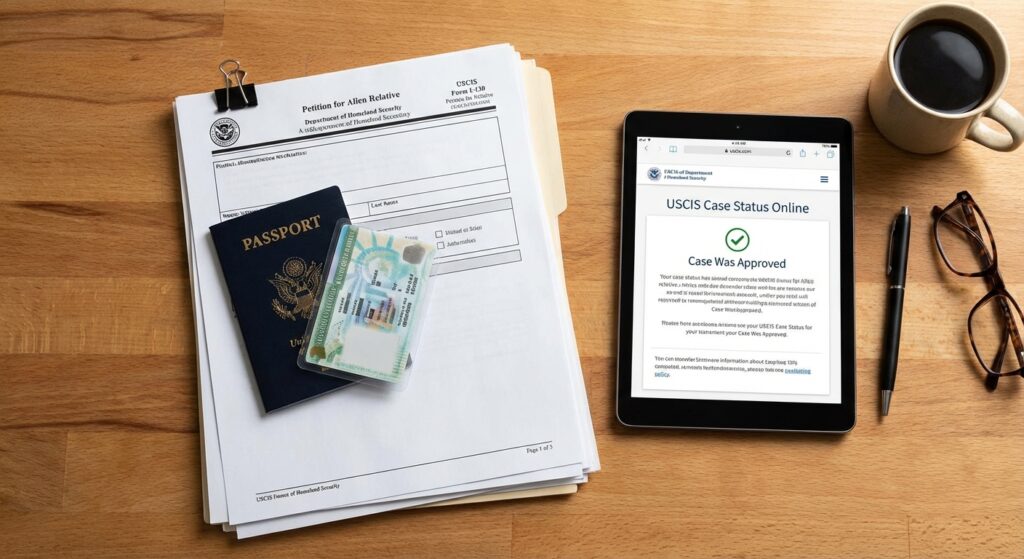
- USCIS case status (if you have an open USCIS case): if you have an application pending with USCIS, you can check it with your receipt number. Keep in mind that USCIS and the immigration courts are separate agencies, so a USCIS status doesn’t tell you whether a judge has issued an order.
If you find out there is an order on record, the next step is to understand what kind of order it is and when it was issued. That information determines which legal options are available to you.
What it means to have a deportation order in the U.S.
A deportation order, technically called an order of removal, is a formal decision that a person must leave the country. In most cases, it’s issued by an immigration judge after proceedings in immigration court. (Some orders, like expedited removal or reinstatement of a prior order, are issued by immigration officers instead of a judge.)
Court-issued orders usually happen in one of two ways:
- In absentia (in your absence): this happens when a person doesn’t show up for their scheduled hearing, and it’s very common. An in absentia order can be issued even if you never actually received the hearing notice, as long as it was sent to the address the court had on file. That’s why many people discover an order years later. If you didn’t receive proper notice, that can be grounds to ask the court to reopen your case.
- In person, after a hearing: the judge heard the case, considered the defenses presented, and ordered removal. You can appeal to the Board of Immigration Appeals (BIA) within 30 days, a critical deadline that generally can’t be extended.
Once issued, the order is entered into federal records and can be accessed by immigration agencies nationwide. The date it was issued matters: it starts the clock for legal remedies like a motion to reopen, and it affects certain bars to returning if the person leaves the country.
It’s important to tell a removal order apart from other documents that look similar. An ICE arrest warrant is different: it’s issued by the immigration agency, not a judge, and is used to detain someone. A Notice to Appear (NTA) isn’t a deportation order either; it’s the start of the court process, not the end.
If I have a deportation order, will ICE come looking for me?
This is the question that causes the most anxiety, and the answer depends on your situation. Having an active order doesn’t automatically mean there’s an operation underway to find you right now. ICE works with priorities and limited resources, and those priorities can change from one administration to the next.
In practice, there are three common scenarios:
- Active order with no immediate action: there’s no current effort to locate you. That does NOT mean the order has gone away; it’s still valid.
- Flagged in the system: your record can surface during any contact with authorities, like a traffic stop, an employment background check, or contact with local police who share data with immigration.
- Priority case: if there’s a criminal record, prior deportations, or the case has been flagged as a priority, ICE is more likely to actively try to locate the person.
A final order of removal does not expire. Even if years go by without contact with authorities, the order remains valid and can be enforced whenever the system registers an interaction. Some people with required immigration check-ins receive formal notices to report, while others may go years without contact despite having an order on record.
Signs that your file may be active include recent mailed notices, calls from people claiming to be officials (always verify before responding), or requests to report to an immigration office. Any of these signs calls for an organized legal response, not an improvised one.
Contact with local authorities is another critical point. Programs like Secure Communities and 287(g) agreements allow some state or local agencies to share data with ICE during routine identity checks. That means a traffic stop, an employment check, or even filing a police report can bring your immigration file to ICE’s attention, even if you weren’t on their radar before.
What to do if you find out you have a deportation order
Finding out there’s an order in your name can be a shock, but staying calm and organized is the difference between protecting your rights and losing options. Don’t make impulsive decisions, don’t sign documents without legal advice, and don’t share details on social media or with strangers.

Here are practical steps to consider:
- Gather key documents: your passport (valid or expired), birth certificate, proof of time in the U.S. (receipts, leases, medical or school records), marriage certificate if applicable, and any prior immigration documents (notices, work permits, USCIS receipts).
- Know your basic rights: you have the right to remain silent, the right not to sign documents you don’t understand, and the right to ask for a lawyer before answering questions. These rights apply even if you have an active order.
- Talk to an immigration attorney before any interaction with ICE: a professional review of your file can uncover legal options that aren’t obvious. Depending on the case, legitimate options may include a motion to reopen, a request for a stay of removal, or other formal processes.
- Understand the government’s voluntary departure program (CBP Home): the government currently offers a formal option through the CBP Home app to arrange a scheduled departure with travel assistance and a stipend, instead of waiting for a forced removal. Leaving the U.S. has serious long-term consequences, so every case should be evaluated with an attorney first.
- Keep a record of any contact: if an official contacts you, write down the date, time, how they contacted you, their name, and any case number. Ask for everything in writing and give a copy to your attorney.
Every case is different, and your real options depend on your immigration history, how much time has passed, and the specific facts. A complete review of your file by an immigration attorney is the starting point for making informed decisions.
When to have an immigration attorney review your case
If you’re unsure about the status of your case, or you’ve already confirmed there’s an order, specialized legal help changes the decisions available to you. One of the most common questions in these cases is what happens to your work permit when there’s a deportation order, because your EAD can be affected. A professional review of your file can identify open deadlines, formal options, and procedural errors that may create a path forward.
Our firm works with people facing these questions every day. If you’re in Texas, meet our immigration attorneys in Texas or learn about our deportation defense services. Contact us to schedule a confidential consultation and understand your options.
Frequently asked questions about deportation orders
Where can I check if I have a deportation order?
You can check your status on EOIR’s online case status portal (acis.eoir.justice.gov), which is also available in Spanish, or by calling the free automated hotline at 1-800-898-7180. Both require your A-Number, which appears on any prior immigration document. If you can’t find your A-Number, an immigration attorney can request your full file through a FOIA request and confirm what the official record shows.
How do I know if ICE is looking for me?
ICE works with priorities and doesn’t actively search for everyone with a deportation order. Signs of an active file include recent official notices by mail, calls from people claiming to be officials (always verify), or formal requests to report to an office. Having an active order doesn’t mean a search is underway, but the order stays on record and can surface during any contact with authorities. Check your official status before assuming anything.
When does a person have a deportation order?
In most cases, a person has a deportation order when an immigration judge issues a final order of removal after court proceedings. A very common type is the in absentia order, issued when the person doesn’t show up for a scheduled hearing. The order can be valid even if the person never received the notice, as long as it was sent to the address on file, and it stays on record until it’s carried out or the case is reopened through legal channels.
Does ICE issue deportation orders?
In most cases, no. Deportation (removal) orders are usually issued by immigration judges at EOIR. ICE issues immigration arrest warrants, which are different documents. (Some removal orders, such as expedited removal or reinstatement, are issued by immigration officers.) To confirm whether there’s a court removal order in your name, check EOIR’s online portal or call 1-800-898-7180 with your A-Number. If the difference between these documents is confusing, a legal review of your file will clarify what kind of case is open.
What documents should I gather if I’m told I have a deportation order?
Gather your passport, birth certificate, marriage certificate if applicable, proof of your time in the U.S. (receipts, leases, medical or school records), prior immigration notices, USCIS receipts, and any documents showing family or community ties. Keep clear copies organized in folders and share only what’s needed through your attorney. Don’t sign or hand over originals without legal advice.
How long does a deportation order last?
A final order of removal issued by an immigration judge does not expire. It stays active in the immigration system indefinitely and can be enforced any time authorities come into contact with the person, no matter how many years have passed. The only ways to close it are through formal legal processes, such as a motion to reopen, a timely appeal, or complying with the order to leave.