6 min read
Getting your I-130 approved by USCIS is a big milestone, but it doesn’t mean you have a green card yet. The approval only confirms the family relationship with the person who petitioned for you. Several steps remain before you become a permanent resident, and they depend on your family category and where you live.
Knowing what comes after the approval notice, and how it connects to the Visa Bulletin, helps you avoid mistakes and unnecessary delays. At this stage, working with a family immigration attorney helps you prepare for the next step without surprises.

Your first real step after your I-130 is approved
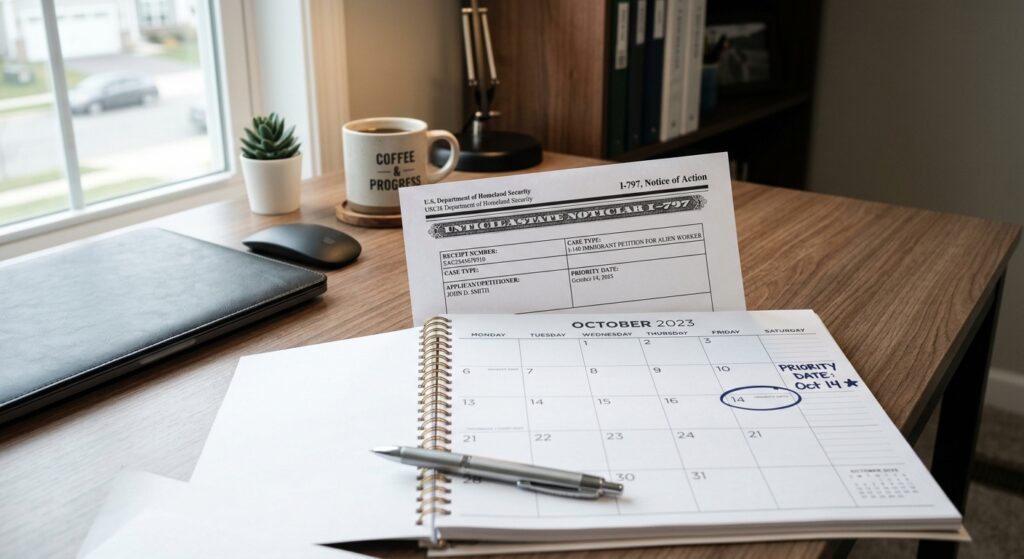
The approval comes in a document called a Notice of Action (Form I-797). It confirms two things: that USCIS has accepted the family relationship, and that your case is active with an assigned priority date.
What happens next depends on one key distinction: your family category determines whether you can move forward right away or have to wait.
- Immediate relatives (IR) of U.S. citizens (spouses applying for a marriage-based green card, parents, and unmarried children under 21): there’s no annual limit, so they can move forward without waiting.
- Family preference categories (F1 to F4): these have annual limits, so the wait depends on the Visa Bulletin.
Identifying your category correctly shapes every step that follows. If you’re considering applying from inside the United States, talk to an adjustment of status attorney to confirm you qualify for that path.
Adjustment of status vs. consular processing
Once the I-130 is approved, there are two main paths to a green card. They aren’t interchangeable: which one applies depends on where the beneficiary lives and whether they meet certain requirements.
Adjustment of status applies when the beneficiary is already in the United States and eligible to file Form I-485 without leaving the country. In most cases, that means they were inspected and admitted or paroled when they entered, for example, people who came in on a visa and meet specific requirements.
Consular processing applies when the beneficiary is outside the United States (or isn’t eligible to adjust inside the country). The case moves from USCIS to the National Visa Center (NVC) and ends with an interview at a U.S. embassy or consulate in the beneficiary’s home country. Each path has different timelines, requirements, and risks.
The Visa Bulletin and your priority date
For the preference categories (F1, F2A, F2B, F3, F4), the wait doesn’t depend on your personal case; it depends on the annual visa limits. That’s where the Visa Bulletin comes in.
The State Department publishes the Visa Bulletin every month with two charts: Final Action Dates (Chart A) and Dates for Filing (Chart B). The date USCIS received your I-130 is your priority date. When that date becomes “current” on the chart USCIS designates for that month, you can take the next step.
Wait times vary widely by category and the beneficiary’s country of birth. Some cases move forward within a couple of years; others, especially from high-demand countries like Mexico or the Philippines, can take more than a decade. Checking the Visa Bulletin every month is part of the process.
Steps when your case moves to the National Visa Center (NVC)
For consular processing, USCIS sends the approved petition to the NVC. When the priority date is close to becoming current, the NVC begins the immigrant visa preparation stage.
The NVC typically asks for:
- Form DS-260 (Immigrant Visa Application), completed online by the beneficiary.
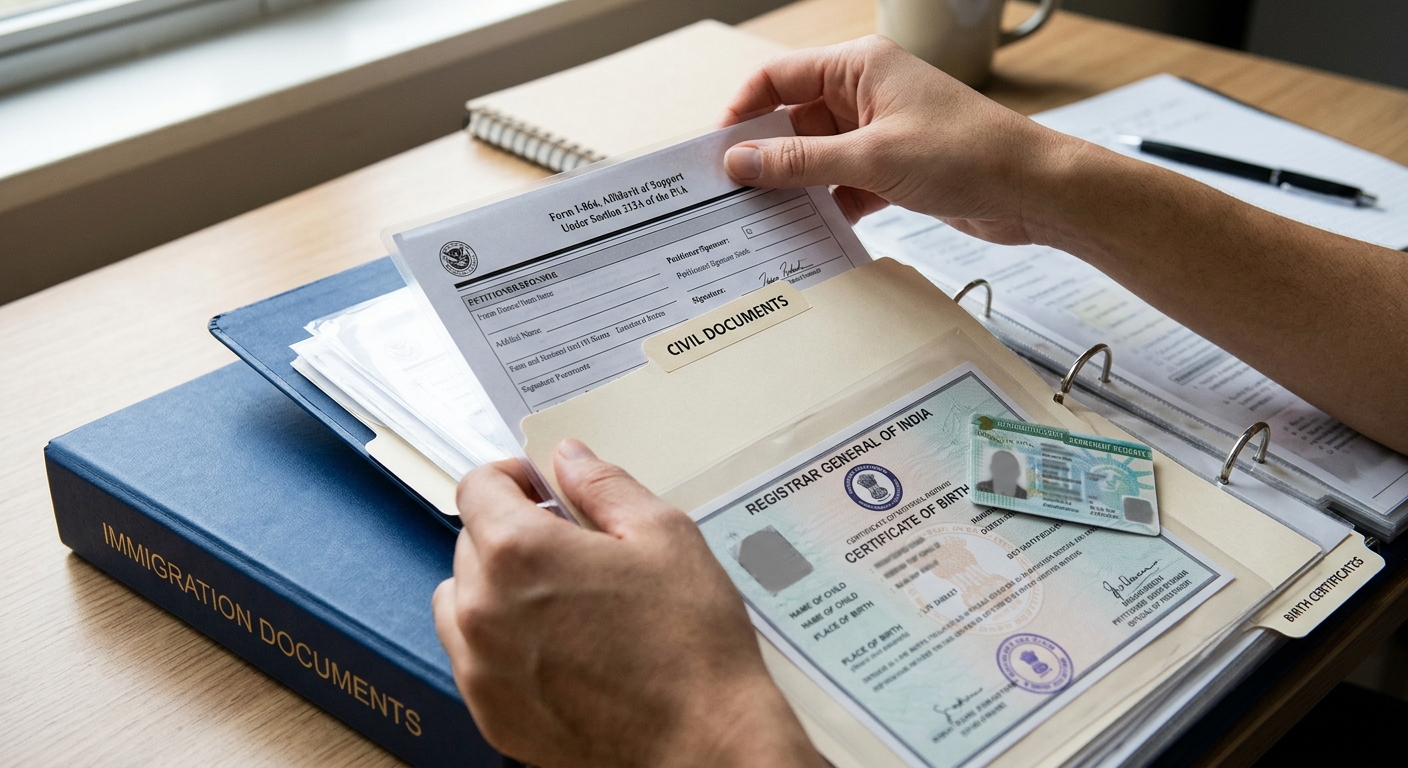
- Civil documents: birth and marriage certificates, police certificates, and divorce or death certificates if applicable.
- Form I-864, Affidavit of Support, signed by the U.S. citizen or permanent resident petitioner to show they can support the beneficiary financially.
- Payment of the visa fees.
Once the NVC considers the file complete, it schedules the consular interview. Before that appointment, the beneficiary must complete an immigration medical exam with a panel physician approved by the State Department.
What to do if you’re adjusting status in the U.S.
If you’re eligible to adjust status from inside the country, the process centers on Form I-485 plus supporting evidence. Typical steps include:
- Preparing the I-485 with all evidence of eligibility and admissibility.
- Including the petitioner’s I-864, the medical exam (Form I-693), and the required civil documents.
- If needed, applying for a work permit (Form I-765) and a travel document (Form I-131, Advance Parole) while the green card application is pending.
- Attending your biometrics appointment and, if USCIS requests it, a final interview.
The I-765 and I-131 can be filed together with the I-485, but since April 1, 2024, each one has its own filing fee (they are no longer included in the I-485 fee). Check the current fees on uscis.gov before filing. If you need to work legally while you wait, make sure these forms are filed correctly from the start.
How to keep your case moving and avoid it being abandoned
Many cases run into trouble not because of a denial, but because the beneficiary or petitioner missed something between stages. An approved I-130 doesn’t take care of itself; it needs active follow-up.
The most common mistakes include not updating your address with USCIS or the NVC, ignoring a Request for Evidence (RFE), not responding to the NVC when a visa becomes available, and letting essential civil documents expire.
It’s also important to watch for changes in the petitioner’s situation. If the petitioner passes away, becomes a U.S. citizen, or the beneficiary’s marital status changes, the family category can change and the original plan may no longer apply. Adjusting your strategy in time can be the difference between continuing your case and having to start over.
If you just received your I-130 approval and aren’t sure what to do next, schedule a consultation with our green card attorneys to review your case and plan the next stage.
Frequently asked questions about what happens after I-130 approval
How long does it take to get a green card after the I-130 is approved?
It depends on your family category and country of birth. Immediate relatives of U.S. citizens (spouses, parents, and unmarried children under 21) usually move forward within months. Preference categories (F1 to F4) can wait anywhere from several years to more than a decade, depending on the current Visa Bulletin.
Can I work while I wait after my I-130 is approved?
Only if you file for adjustment of status in the United States and submit Form I-765. If you’re outside the country, or waiting for your priority date to become current in a preference category, an approved I-130 alone does not give you work authorization.
What happens if the petitioner dies before the process is finished?
There are options to continue under section 204(l) of the Immigration and Nationality Act for beneficiaries who were living in the U.S. when the petitioner died. Surviving spouses of U.S. citizens may also have their own path. The case doesn’t always end, but it requires additional steps and a legal review of the relationship and where the beneficiary was living at the time of death.
What if I move during the process?
You must update your address with USCIS (Form AR-11 or online) within 10 days of moving, and also notify the NVC if your case is there. If you don’t, you could miss your interview notice or other important mail, and your case could go inactive.
Can I leave the U.S. while my I-485 is pending?
Leaving without an approved travel document (Form I-131, Advance Parole) can be treated as abandoning your adjustment of status application. Even with approved Advance Parole, travel now carries more risk: under a Board of Immigration Appeals decision issued on August 13, 2026 (Matter of Delcarmen-Lara), leaving the U.S. on Advance Parole now counts as a departure for the 3- and 10-year unlawful presence bars. If you have more than 180 days of unlawful presence, you could be barred from returning. Talk to an attorney before you travel, because the risks depend on your type of case and immigration history.