

7 min read
If you’re under immigration supervision and you’re not sure whether you have an ICE check-in coming up, the most important thing is to find out as soon as possible. Missing a required check-in can have serious consequences, depending on your release conditions and case. Start with your appointment notice and the instructions from the officer or office handling your case.
If you need guidance on handling your situation with ICE, especially if you have an open immigration case, talk to an immigration attorney before making decisions that could affect your case.

How to check if you have an ICE appointment: step by step
Start with the instructions for your own case, then check the information available to you:
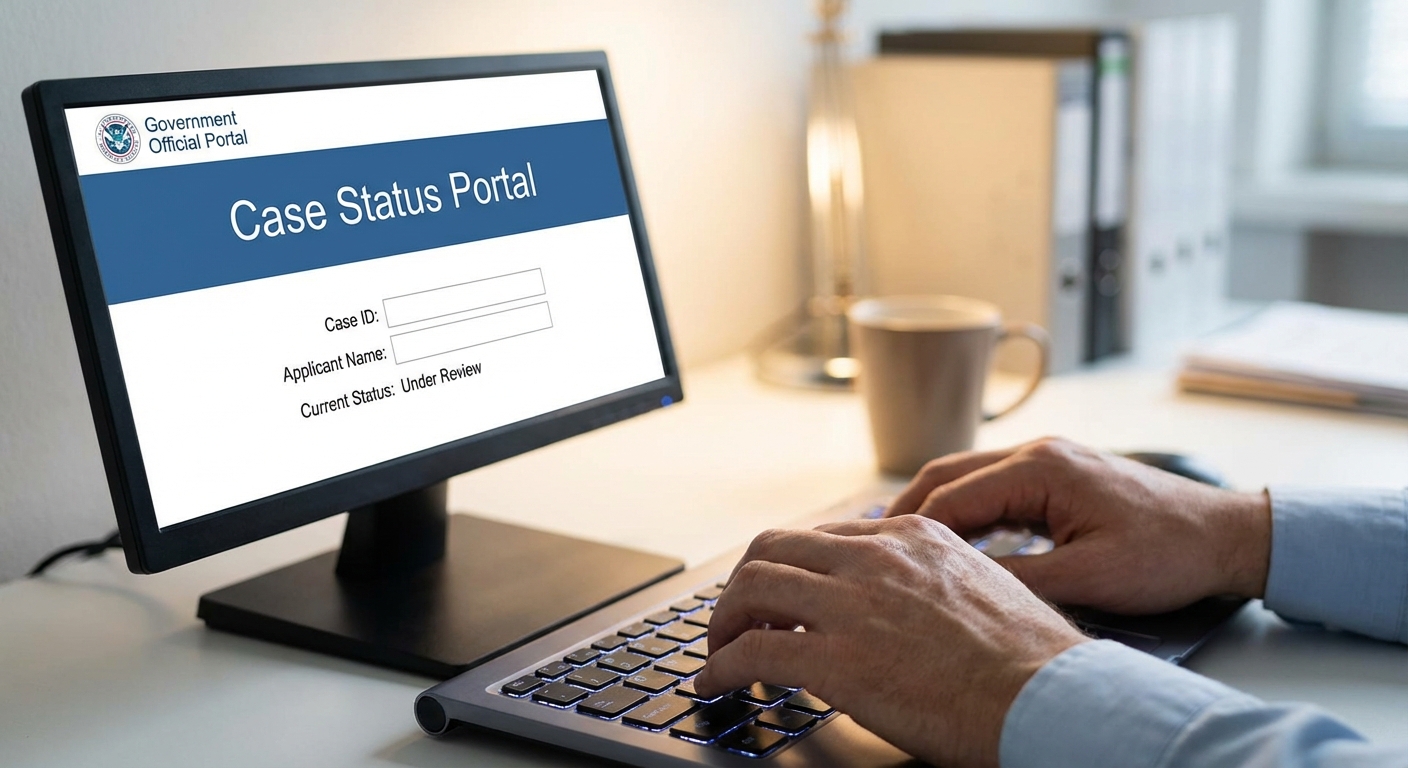
1. The online portal: checkin.ice.gov
ICE’s online appointment portal opens with an Identity Confirmation screen. The current screen asks for:
- Your Subject ID, printed on Form I-385.
- Your Birth Place, selected from the list.
- Completion of the CAPTCHA shown on the screen.
That initial screen does not ask for an A-Number. Follow your notice to determine whether this portal applies to your case; do not assume it lists every check-in or allows every appointment change. The image above is an illustration, not a screenshot of the ICE scheduler.
2. Check your paperwork
Look through your documents for:
- Order of Supervision: check the reporting conditions written in your order; do not assume it contains the next appointment’s date, time, and address.
- Appointment notices: look for a date, time, location, and instructions in the notices you received. Ask about any missing or unclear details.
- Case-specific instructions: keep the contact details provided by the officer or office responsible for your supervision.
3. Contact the office handling your case
If you can’t get into the portal or can’t find your paperwork, use the contact instructions you have for the ERO office or officer handling your case. Ask how to confirm your next check-in. Follow their instructions about the information needed; an identifier alone does not guarantee that an appointment can be confirmed.
What happens if I miss my ICE appointment?
This is the most important part of this article: missing a required ICE check-in can have serious consequences. The result depends on the terms of your release and the stage of your case:
- Return to custody: 8 CFR 241.4(l) allows a person in the post-removal-period custody groups covered by 241.4(a) or (b)(1), released under supervision or other conditions, to be returned to custody for violating those conditions. On revocation, the rule requires notice of the reasons and a prompt informal interview after return to custody. This is not a rule for every ICE check-in or supervision program.
- Enforcement of an existing removal order: supervision does not itself cancel a final order. Whether it can be executed depends on the order and any applicable stay or other legal restriction. The removal and supervision rules are separate from the question of whether you missed a check-in. If you need to understand the order itself, our explanation of how to check for a deportation order addresses that question.
- Other supervision conditions: check the reporting instructions for your own program and ask the assigned officer about any conflict. Do not assume that all supervision programs have the same rules.
- Pending applications: tell your attorney about both your reporting obligations and any pending immigration applications so you can get advice for your specific case.
Important: an ICE check-in is not the same as an immigration court hearing. Under 8 U.S.C. 1229a(b)(5), missing a hearing can lead to a removal order in absentia (in your absence). Normally, the required written notice must have been provided to you or your attorney, and the government must establish notice and removability by clear, unequivocal, and convincing evidence. The statute has an exception to the written-notice requirement if you failed to provide the required address. Check your court notices separately if you have a court case.
What to do if you can’t make your appointment
If you can’t attend because of illness, a family emergency, or a conflict with a court date, explain the situation promptly and follow the instructions for your case:

- Contact your officer or responsible office as soon as possible. Use the contact instructions you received and explain why you cannot attend.
- Ask how to request a change. Follow the method your office instructs you to use and keep a record of your request and any response.
- Keep supporting documents. Organize any medical documentation, court notice, or other relevant proof, and ask what the office needs for your request.
- Tell your attorney. If you have a lawyer, let them know and ask for advice about the request and your reporting obligations.
The key is to act early and ask for confirmation of any change. Sending a request does not mean it has been approved; do not assume you can miss the original appointment just because you asked to reschedule.
What to bring to your ICE appointment
If you’re going to your check-in, come prepared. Follow your appointment instructions; this is a practical checklist, not a universal list of required or accepted documents:
- Photo ID: check which identification your instructions request. Do not assume that every passport, consular ID (matrícula consular), or state ID will be accepted.
- Your Order of Supervision or appointment notice.
- Proof of your current address: a utility bill, lease, or official mail.
- Documents from your immigration case: if you have a VAWA self-petition, U visa, asylum case, or work permit in process, bring your USCIS receipt notices and any approvals.
- An emergency contact: the name and phone number of a family member or attorney who can be reached if something unexpected happens.
Follow the arrival instructions in your appointment notice or those provided by the office handling your case.
How to protect your immigration case while under ICE supervision
If you have an open case (VAWA, U visa, asylum, work permit), your relationship with ICE needs special attention:
- Bring your case paperwork: review receipt and approval notices with your attorney to identify the process and stage involved. VAWA petition approval and adjustment to permanent residence are separate decisions. For a person with a final removal order, filing a U-1 petition does not itself affect ICE’s authority to execute that order. Do not treat paperwork as proof that you are exempt from your reporting instructions.
- Ask about anything you do not understand: if you are handed documents to sign, ask for time to read them, request an explanation, and seek legal advice about anything unclear. This is practical advice, not a guarantee that every check-in or signature can be delayed until a lawyer is present.
- Keep track of address requirements: check the instructions for USCIS and ICE separately, and for the immigration court if you have a court case. Do not assume that updating one record updates the others.
- Know the limits of confidentiality protections: 8 U.S.C. 1367 limits use and disclosure of information from covered VAWA, U, and T cases, but permits legitimate agency uses by a sworn officer or employee of a covered department or its agencies, along with statutory disclosure exceptions. That use-and-disclosure limit ends after denial and exhaustion of all opportunities to appeal. A separate rule restricts adverse admissibility or deportability determinations based solely on prohibited sources identified in the statute, such as an abuser or perpetrator, with an exception for convictions under INA 237(a)(2). These limits do not themselves grant status or immunity from detention or removal. Make sure your attorney knows about your ICE supervision.
If you need immigration guidance, contact our immigration team in Texas to discuss your questions.
Frequently asked questions
Can I check my ICE appointment online?
ICE’s online appointment portal has an initial Identity Confirmation screen asking for the Subject ID printed on Form I-385, Birth Place, and a CAPTCHA. It does not ask for an A-Number on that screen. Follow your case instructions to determine whether the portal applies to you; do not assume it lists every check-in or permits every change. If you cannot use it, contact the responsible office or officer according to your notice and ask how to confirm the appointment.
Can I be deported for missing an ICE appointment?
The risk depends on your case and release conditions. Under 8 CFR 241.4(l), a person in the post-removal-period custody groups covered by 241.4(a) or (b)(1), released under supervision or other conditions, may be returned to custody for violating those conditions. Revocation requires notice of the reasons and a prompt informal interview after return to custody; this is not the rule for every check-in.
Supervision does not itself cancel a final removal order. Execution depends on the order and any applicable stay or other legal restriction under the removal and supervision rules. Ask for advice about your own circumstances. An ICE check-in and an immigration court hearing are separate; check any court notices as well.
How do I reschedule an ICE appointment if I can’t make it?
Contact the officer or office handling your case as soon as possible, using the instructions you received. Explain the problem, ask how to request a change, and ask what supporting documents are needed. Keep copies of your request and the response. Sending a request is not confirmation of approval; do not assume you can skip the original appointment unless the change has been confirmed.
How can I tell if a message from ICE is real and not a scam?
An A-Number, case details, or an office address in a message does not by itself prove the sender is genuine. Be suspicious of calls, texts, or emails that ask for money or bank information or pressure you to act immediately. Before responding, verify the contact independently using information you already have from your case, rather than relying on the message’s number or link.
Does my ICE appointment affect my VAWA or U visa case?
Do not assume that a pending case or confidentiality protection excuses your check-in. Tell your attorney about both processes and review what your notices actually say. VAWA petition approval and adjustment to permanent residence are separate decisions. For a person with a final removal order, filing a U-1 petition does not itself affect ICE’s authority to execute the order.
8 U.S.C. 1367 limits use and disclosure of covered VAWA, U, and T case information, while allowing legitimate agency uses by a sworn officer or employee of a covered department or its agencies, along with statutory disclosure exceptions. That use-and-disclosure limit ends after denial and exhaustion of all opportunities to appeal. Separately, the law restricts adverse admissibility or deportability determinations based solely on prohibited sources identified in the statute, such as an abuser or perpetrator, with an exception for convictions under INA 237(a)(2). These limits do not themselves grant status or immunity from detention or removal.