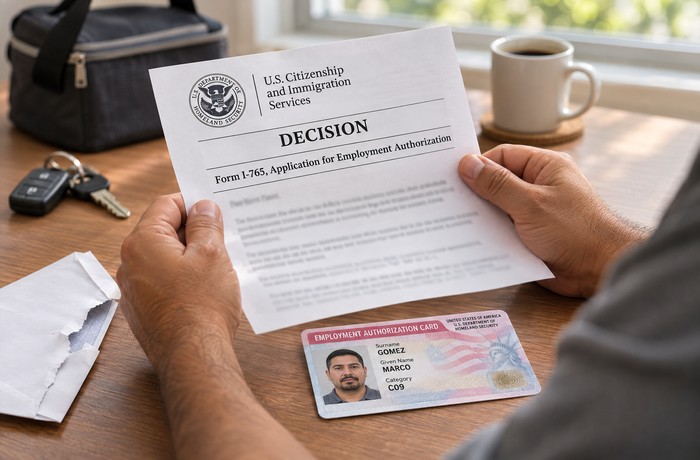

Opening a letter from USCIS and finding your work permit denied can feel like the ground just moved under your job and your paycheck. However, this does not mean you can do anything now because there is always another way. It may not be that long until you receive your authorization again. Below, we explain why work permits get denied, how to read your notice, and the real steps you can take next.
What It Means When Your Work Permit Is Denied
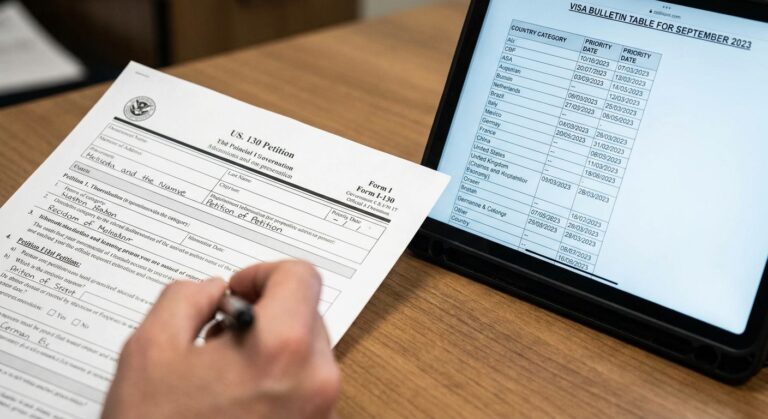
A work permit is officially called an Employment Authorization Document (EAD). You ask for one by filing Form I-765. When USCIS denies that form, it means you do not have permission to work based on that application.
In addition, every work permit has an end date printed on the card. As a result, a denial or a long delay can leave a gap in your ability to work, so it helps to act quickly.
How to Read Your Work Permit Denial Notice
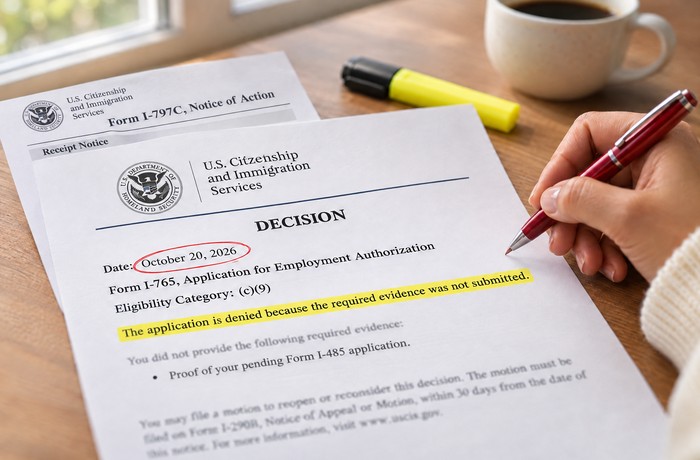
USCIS must tell you in writing why it denied your application. So, before you do anything else, read your work permit denial notice slowly, line by line. Look for:
- The date on the notice. Deadlines for your next step count from this date.
- Your category code. For example, (c)(9) for a pending green card case or (c)(8) for a pending asylum case.
- The exact reason. USCIS usually names the missing document or the rule it applied.
- Any mention of a Request for Evidence. This tells you if a missed or weak reply played a part.
Meanwhile, keep the original letter safe. Also, gather a copy of everything you sent, including your receipt notice (Form I-797C).
Why Was Your Work Permit Denied? Common Reasons
Most denials fall into a few clear groups. Once you know which group fits your case, the next step gets much easier to see.
I-765 Denial for Missing or Wrong Evidence
A common I-765 denial reason is simple: USCIS did not get what it needed. For example:
- You picked the wrong eligibility category code.
- You left out proof of your main case, such as a receipt notice.
- You did not include a copy of your ID, passport, or I-94 record
No Reply, or a Late Reply, to a Request for Evidence
Sometimes USCIS sends a Request for Evidence (RFE) asking for more papers. If the reply arrives late or misses what USCIS asked for, the officer may decide the case on what is already in the file.
The Main Case Was Denied
Many work permits depend on another case. For instance, a (c)(9) work permit depends on a pending Form I-485 green card application. If USCIS denies that main case, it often denies the work permit too.
Filing Before You Qualify
Some categories have waiting periods or extra rules. For example, people with a pending asylum case must wait a set amount of time before they can apply. Filing too early can lead to a denial.
Can You Appeal Work Permit Decisions?
Here is the short answer: You generally cannot appeal work permit denials the usual way. Federal rules (8 CFR 274a.13) say there is no appeal from a denied work permit application. On the other hand, you may still have options.
File a Motion to Reopen or Reconsider
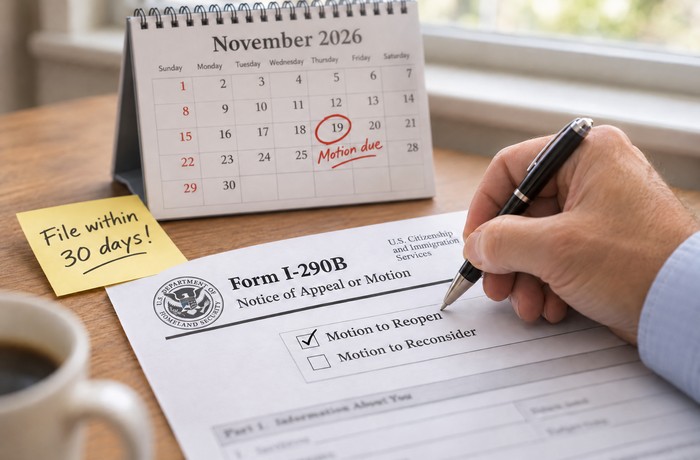
You can ask USCIS to look at its own decision again with Form I-290B. There are two types:
- Motion to reopen: you bring new facts or new documents.
- Motion to reconsider: you show USCIS applied the law or policy the wrong way.
The deadline is short, generally 30 days from the decision. A filing fee applies.
Refile a New Form I-765
If the problem was easy to fix, such as a missing document, a fresh application is often the faster route. However, you will pay the filing fee again, so make sure you fix the real reason first.
Work Permit Application Denied? Your Next Steps
If your work permit application denied letter just arrived, follow these steps in order:
- Read the notice and circle the date. Your motion window starts here.
- Talk to your employer early. Working without valid permission can create problems in future immigration cases.
- Collect your file. Keep your I-765, receipt notice, any RFE and reply, and the denial notice together.
- Check your main case. If it is still pending, the work permit may be easier to fix.
- Get your case reviewed before you refile. Sending the same packet again can lead to the same result.
Getting Back on Track After a Denial
A work permit denied letter is stressful, but it usually tells you what went wrong. Most cases come down to missing evidence, a missed RFE, an eligibility rule, or the main case. Once you know the reason, you can choose between a motion, a new filing, or fixing the main case.
That said, refiling alone without fixing the real problem can cost you another fee and more months without work. Our team at YSL Immigration Lawyers brings more than 20 years of immigration experience to work permit cases like yours. We meet with clients by phone or video, in English and Spanish, from our Austin and Laredo offices and across the U.S. Contact our team to schedule a consultation and review your denial notice.
Can I appeal a work permit denial?
Not through a regular appeal. The rules say there is no appeal from a denied I-765. However, you may be able to file a motion to reopen or reconsider with Form I-290B or file a new I-765.
Can I reapply after my work permit is denied?
Yes, in most cases you can file a new Form I-765. You will need to pay the filing fee again. Before you refile, fix the reason listed in your denial notice.
Will USCIS refund my fee if my work permit is denied?
Generally, no. USCIS filing fees are usually non-refundable, even when the case is denied. That is one more reason to fix the problem before you file again.
Can I keep working after my work permit is denied?
Generally, a denial means you do not have permission to work based on that application. If you hold a different valid permit or status, your situation may be different. Talk with your employer and an immigration attorney before you make a decision.