
A green card lets you live and work in the United States for good. However, it does not give you every right a citizen has. This gap shows up at the worst moments, like in an election, a long trip, or an arrest. Here is a plain look at green card vs. citizenship, what each one lets you do, what each one asks of you, and when it makes sense to take the next step.
Green Card vs. Citizenship at a Glance
The biggest difference between both is security. A lawful permanent resident can easily lose status. On the other hand, a citizen generally keeps citizenship for life, whether they got it by birth or through naturalization.
| Green card holder | U.S. citizen | |
| Live and work anywhere in the U.S. | Yes | Yes |
| Vote in federal elections. | No | Yes |
| Can be deported | Yes, for certain crimes or fraud | No |
| Time abroad | Long trips can risk your status. | No limit |
| Petition for relatives | Spouse and unmarried children | Spouse, children of any age, parents, siblings |
| Document to renew | Green card every 10 years (Form I-90) | U.S. passport only |
| Serve on a jury. | No | Yes |
Permanent Resident vs Citizen: Where the Difference Shows
Though day to day, life looks almost the same, the difference appears at three key moments.
Travel and Time Abroad
If you have a green card, a trip of more than 6 months can lead officers at the airport to ask whether you gave up your U.S. home. Meanwhile, a trip of 1 year or more generally ends your status unless you got a reentry permit (Form I-131) before you left. Long trips can also reset the clock for citizenship.
On the other hand, citizens travel on a U.S. passport. They can stay abroad as long as they want and come back without questions about their status.
Deportation Risk
Green card holders can face removal for certain crimes, and even an old case can matter. That is why it helps to speak with an immigration lawyer after any arrest. Learn more on our deportation defense page.
Citizens cannot be deported. The government can take citizenship away only in rare cases, such as fraud during the naturalization process.
Bringing Family to the U.S.
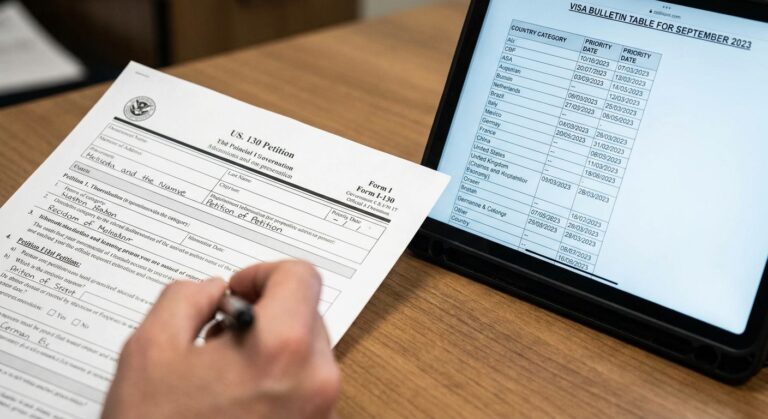
A green card holder can file Form I-130 only for a spouse and unmarried children. These cases wait in line. Further, Mexico-born relatives often wait longer because of per-country limits.
A citizen’s spouse, unmarried children under 21, and parents (if the citizen is 21 or older) count as “immediate relatives.” They skip the visa line entirely. In addition, citizens can petition for married sons and daughters and for brothers and sisters.
Rights of Green Card Holders
A green card still gives you real protection. You can:
- Live and work in any U.S. state, for any employer.
- Own property and open a business.
- Go to public schools and colleges.
- Join the U.S. armed forces.
- Apply for citizenship after 5 years, or 3 years if you are married to and living with a U.S. citizen.
Can Green Card Holders Vote?
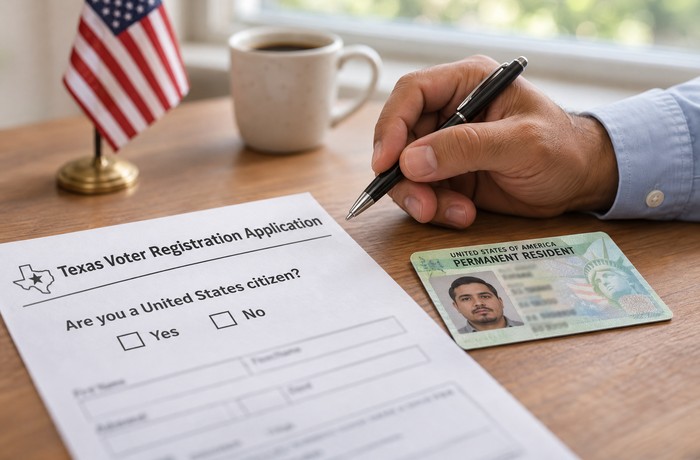
No. Green card holders cannot vote for president or Congress. Texas law lets only U.S. citizens vote in state and local elections too.
This mistake can be costly. Registering to vote or checking the “U.S. citizen” box at the DMV can count as a false claim to citizenship. This can cause serious immigration problems.
Responsibilities: What Each Status Asks of You
Both green card holders and citizens must:
- File federal tax returns and report income from anywhere in the world.
- Register with Selective Service if you are a man aged 18 to 25.
- Follow federal, state, and local laws.
Green card holders must also:
- Carry proof of status if you are 18 or older.
- Report a new address to USCIS within 10 days (Form AR-11).
- Renew the card before it expires, or file Form I-751 if you have a 2-year conditional card.
Citizens must also:
- Serve on a jury when called.
Benefits of US Citizenship
The main benefits include:
- The right to vote in every election and to run for most public offices.
- Permanent security, with no card to renew and no risk of deportation.
- Free travel on a U.S. passport, with help from U.S. embassies abroad.
- Faster family petitions, since your spouse and (once you are 21) your parents skip the visa line.
- Automatic citizenship for your kids in many cases, if they are under 18, holds green cards and lives in your custody.
- Federal jobs and some scholarships that require citizenship.
Before You File Form N-400
Form N-400 asks about your arrests, long trips, and tax history. If a past problem comes up, USCIS can deny the case, and the fee is nonrefundable.
Timing matters, too. The fee is $710 online or $760 on paper, and a June 2026 proposed rule would raise it. Learn more on our citizenship and naturalization page.
Your Next Step
In short, a green card gives you a home in the U.S., while citizenship makes that home permanent. Every year you wait, your status stays open to risks like a long trip or an arrest. Filing alone is risky too, because one wrong N-400 answer can cost far more than the fee.
Our team at YSL can review your history and tell you whether you are ready. We meet clients by phone or video, in English and Spanish, from our Austin and Laredo offices. Contact us to schedule a consultation.
Can a green card holder be deported?
Yes. A lawful permanent resident can face removal for certain crimes or immigration violations or for giving up U.S. residence. Citizens cannot be deported.
Do I give up my green card when I become a citizen?
Yes. You hand in your green card at the oath ceremony. Your Certificate of Naturalization then proves your status, and you can apply for a U.S. passport right away.
How long can a green card holder stay outside the U.S.?
Trips under 6 months rarely cause problems. However, trips over 6 months can raise questions, and a trip of 1 year or more generally ends your status unless you have a reentry permit.
What happens if my green card expires?
You stay a permanent resident, but you lose easy proof of your status for work and travel. File Form I-90 to renew it. Conditional 2-year cards are different: you must file Form I-751 before they expire.
How soon can I apply for U.S. citizenship?
Most green card holders can file Form N-400 after 5 years, or after 3 years if married to and living with a U.S. citizen. USCIS lets you file up to 90 days before you reach that date.