
6 min read
After waiting for so many years, you finally have your green card. This might feel like an achievement you would never lose. However, the truth is that you can lose green card status. But don’t worry, it rarely happens out of nowhere. In this guide, our team will explain the most common reasons and the simple steps that keep your permanent residency safe.
Can You Lose Your Green Card? The Short Answer
Yes, it can happen. A green card makes you a lawful permanent resident. But becoming a permanent resident comes with rules. You can keep your status only as long as you follow those rules. However, in most cases the government can’t just take your card at the airport or by mail. Usually, only an immigration judge can order you removed, and only after a hearing. This gives the rights and time to fight back.
Reasons Green Card Can Be Taken Away
There can be many reasons for this, but here are the ones we see most often at our Austin and Laredo offices.
Living Outside the U.S. Too Long (Green Card Abandonment)
A green card is for people who live in the United States. So, if you have moved out to abroad, the government may decide you gave up, or “abandoned,” your status. That means you’re no longer a permanent resident of the U.S. USCIS looks at why you left, how long you planned to stay, and what kept you away.
Watch for these warning signs:
- Trips longer than 6 months, which often lead to extra questions at the border.
- Trips of 1 year or more without a reentry permit, after which your green card alone usually won’t get you back in.
- Filing U.S. taxes as a “nonimmigrant.”
- Moving your home, job, and family to another country.
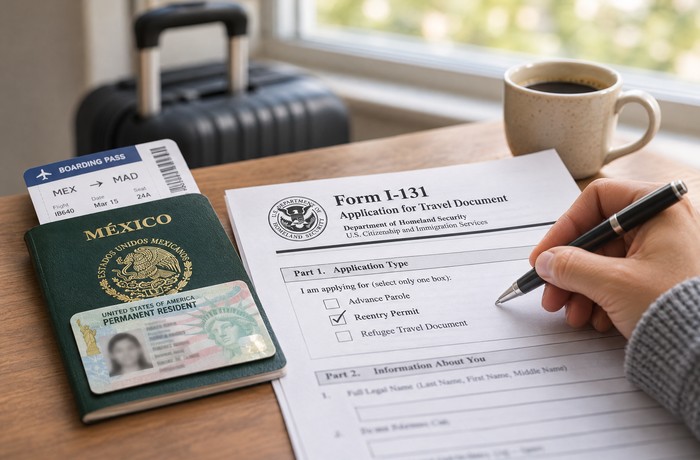
How to avoid it: Before a long trip, file Form I-131 for a reentry permit. This form can be valid for up to 2 years. Meanwhile, keep a U.S. address, bank account, job ties, and file taxes as a resident.
Criminal Convictions
Certain crimes can make a green card holder deportable under section 237 of the Immigration and Nationality Act (INA). These include:
- Aggravated felonies (It is a legal group that covers serious crimes like drug trafficking, some theft, or violent crimes)
- Most drug offenses (except a single possession of 30 grams or less of marijuana for personal use)
- Domestic violence
- Stalking
- Breaking a protective order
- Some firearm offenses
- Some “crimes involving moral turpitude” (such as fraud)
In addition, a guilty plea with no jail time can still count. In Texas, even deferred adjudication can count as a conviction under immigration law. So, talk to an immigration lawyer before you accept any plea deal.
Fraud or False Claims
If someone used a fake marriage, false documents, or lies to get a green card, the government can act on it. The government doesn’t always act right away. Sometimes it acts years later. This often comes up when the person applies for citizenship.
On the other hand, some people get into trouble after they have their card. For example, checking “U.S. citizen” on a job form or voting in a federal election before you naturalize can lead to removal.
Missing the I-751 Deadline
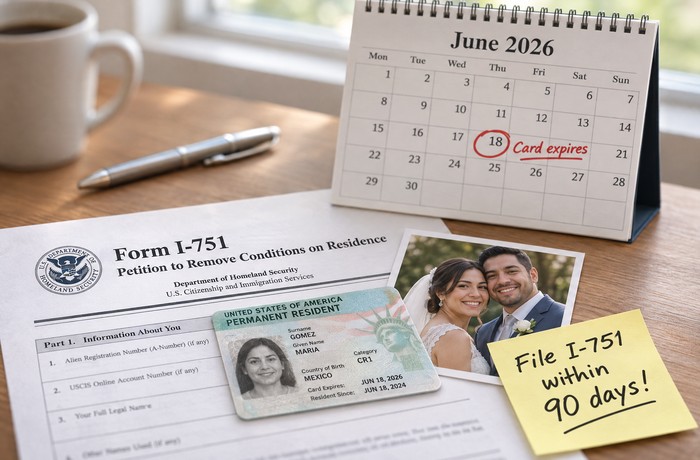
If you got your green card through a marriage of less than 2 years, you received a 2-year conditional card. For this you must file a Form I-751 in the 90 days before that card expires. If you miss this, your status ends automatically. After this, USCIS starts removal proceedings with a Notice to Appear.
Smaller Rules People Forget
- Not reporting a new address on Form AR-11 within 10 days of moving.
- Helping someone enter the U.S. illegally, even a family member.
Green Card Revoked or Green Card Removal: What Really Happens
People often say a card was “revoked.” In this case the process usually looks like this:
- First the government sends you a Notice to Appear (NTA) in immigration court.
- Then you attend hearings before an immigration judge.
- After this you present your defenses, such as cancellation of removal, if you qualify.
- Lastly, you lose your status only if the judge orders removal and any appeals end.
Our deportation defense team can step in at any of these stages.
Should You Sign Form I-407?
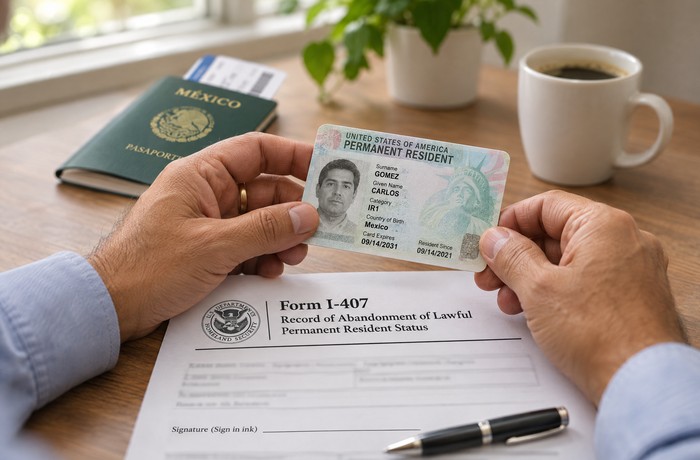
At the airport, an officer may hand you Form I-407. Here, signing that form means you give up your green card on purpose. You don’t have to sign it right away, and you have the right to ask for a hearing before an immigration judge instead.
How to Lose Permanent Residency by Accident (and How to Avoid It)
In most cases, many people lose green card status, never by accident. Use this checklist to stay safe:
- Get a reentry permit before any trip that may last close to a year.
- File your taxes as a U.S. resident every year.
- Update your address with USCIS within 10 days of a move.
- Put your I-751 deadline on your calendar.
- Never claim U.S. citizenship or vote before you become a citizen.
- Call an immigration lawyer before you accept any criminal plea.
Finally, think about citizenship. Once you become a U.S. citizen through naturalization, most of these green card risks go away.
Protect Your Green Card Before a Problem Starts
You can lose green card status through long trips, certain crimes, fraud, or a missed I-751 deadline. Still, most of these risks are easy to avoid when you know the rules. So, learn these rules and plan ahead. Waiting until you get a Notice to Appear, or handling it alone, may limit your options. A plea deal signed too fast or a form signed at the airport can be hard to undo.
If you have a question about your status, our team at YSL is here to help in English and Spanish. Contact YSL Immigration Lawyers to schedule a consultation at our Austin or Laredo office.
Can I lose my green card if I get divorced?
If you hold a 10-year card, then you will not lose your card by divorce alone. On the other hand, if you have a 2-year conditional card, you can still file Form I-751 on your own and ask USCIS to waive the joint filing rule.
How long can I stay outside the U.S. with a green card?
Usually, trips under 6 months rarely cause problems. However, staying away 1 year or more without a reentry permit usually means your card alone won’t let you return.
Does my green card status end when my card expires?
Lawyers generally must keep what you share confidential. Their job is to help you with your case.No. The card expires after 10 years, but your permanent resident status doesn’t. You renew the card with Form I-90.
Can a DUI cost me my green card?
A single, simple DUI usually doesn’t make a green card holder deportable. However, a DUI with drugs, an injury, or a child in the car carries bigger risks, and any DUI can affect a later citizenship case.