
8 min read
If you are a U.S. citizen and you want to bring your brother or sister to the United States, the wait can feel endless. A sibling petition falls in the F4 visa category, and because of the yearly visa limits, the F4 wait time is measured in decades, not months. Approval of Form I-130 only confirms that the family relationship is real.
An approved petition does not give your sibling legal status or let them stay in the U.S. while they wait for their turn. That is why understanding how the Visa Bulletin works is the first real step to setting expectations for the whole family.
A wait this long takes careful financial and personal planning, because two families end up waiting on a turn that can take more than a decade to arrive. If your family is thinking about starting this process, our family immigration attorneys can help you avoid technical mistakes and protect those years of patience until a visa becomes available.
How long is the real line for a sibling petition?
The F4 wait time for a brother or sister of a U.S. citizen is not the same for everyone. It depends mainly on the priority date and the beneficiary’s country of birth. Every fiscal year, Congress sets a limited number of visas for the F4 category.
That legal cap creates huge backlogs for countries with high demand. It is not a USCIS processing delay. It is a quota that puts applicants in a virtual line that moves forward month by month according to the Visa Bulletin.
Wait times change a lot depending on the sibling’s country of birth, and the only reliable way to know where the line stands is to check the current Visa Bulletin.
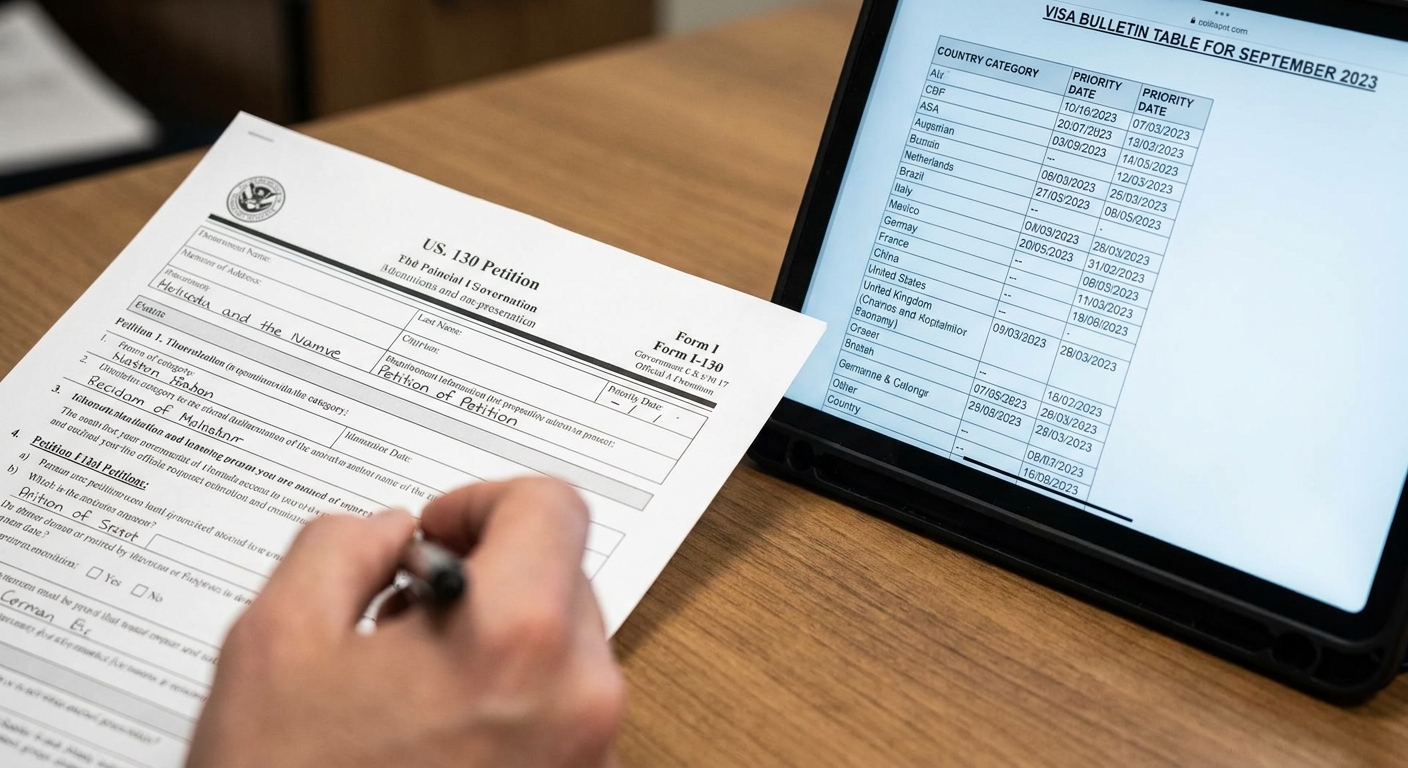
According to the U.S. Department of State’s September 2026 Visa Bulletin, these were the F4 final action dates, meaning the priority dates being processed at that time:
| Country | F4 final action date (September 2026) |
|---|---|
| All countries | October 22, 2011 |
| China | October 22, 2011 |
| India | November 1, 2006 |
| Mexico | April 8, 2001 |
| Philippines | August 22, 2007 |
Only petitions filed on or before the date listed for your country can move to the next stage. The Visa Bulletin changes every month, so these dates may move forward or stay the same. Check it yourself each month on the Department of State website before drawing conclusions about your case.
Many families lose their chance simply because they did not keep their address updated with the National Visa Center (NVC). A lot of people assume that an approved I-130 means the process is almost over. In reality, staying in contact with the government is what keeps you from losing a turn that took years to arrive.
Who qualifies for an F4 sibling petition?
Because the F4 category takes so long, meeting the basic requirements from the start is what keeps the petition valid over the years. Only a U.S. citizen can petition for a brother or sister.
Green card holders cannot file for their siblings under current law. If a permanent resident wants to do this, they first need to become a U.S. citizen and then file the petition.
Immigration law defines these family ties carefully so the relationship is legitimate from day one. The basic requirements are:
- The U.S. citizen petitioner must be at least 21 years old when filing Form I-130.
- You must prove the blood relationship. This includes full siblings and half-siblings who share at least one parent.
- Adopted siblings can qualify if the adoption happened before both turned 16 and the other adoption rules are met.
- Your sibling can include their spouse and unmarried children under 21 in the same petition as derivative beneficiaries.
A common problem is that the sibling’s children turn 21 during the long wait. The law protects the age of some children, but many still “age out” of the original petition simply because of how much time passes.
This is different from petitioning for your parents. Parents of a U.S. citizen are immediate relatives, so they do not wait for a visa number in the Visa Bulletin. Learn more about what happens after your I-130 is approved.

How to read your priority date in the Visa Bulletin
Your priority date is the exact day USCIS received Form I-130, and it is the most valuable piece of information in your whole file. That date marks your place in line, and it does not change no matter how long the initial approval takes.
To follow your progress, compare that date with the monthly updates from the Department of State. The Visa Bulletin has two different charts, and they often confuse applicants. Here is how to use them:
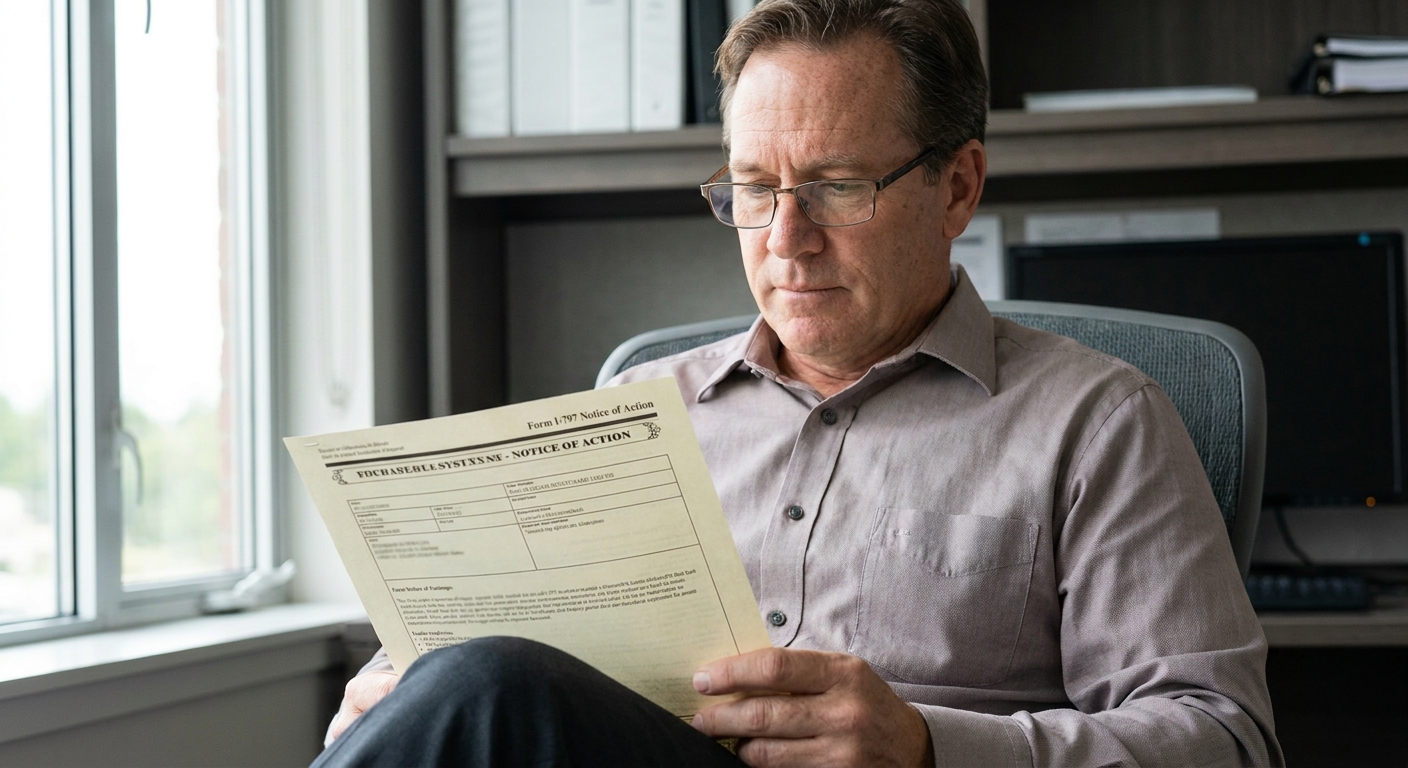
- Find the Form I-797 (Notice of Action) you received after filing the petition. Your priority date appears near the top of the notice.
- Check Chart A (Final Action Dates) to see whether a visa can be issued for your turn. This is the chart that decides when your sibling can receive the green card.
- Check Chart B (Dates for Filing) to see whether you can start the early steps with the NVC, which happen before the visa is available.
- Make sure the “chargeability” country is your sibling’s country of birth, not their current citizenship, because visa limits are assigned by country of birth.
The NVC usually sends a notice by email or mail when the turn gets close. But relying only on that notice is risky in a process this long, because contact information can easily become outdated.
Some families find out too late that their priority date already became current and their case was closed for inactivity. Checking the Visa Bulletin regularly helps keep a simple communication problem from ruining a wait that has lasted many years.
Why is the wait so much longer for siblings from Mexico?
Mexico is in a unique position because of the huge number of pending petitions compared with the per-country limit of 7% of the yearly visas. That legal cap means no single country can receive more than a small share of the total.
The result is an extreme bottleneck where demand from Mexico is far higher than the visas available. That keeps Mexican priority dates stuck in years that look very far away compared with the rest of the world.
According to the September 2026 Visa Bulletin, the F4 final action date for Mexico was April 8, 2001. In other words, petitions filed that day were the ones being processed, roughly 25 years later.
Because of this backlog, many families look for other legal paths when reunification is urgent. For those who decide to wait, staying eligible during all those years is the main challenge.
What happens to the sibling petition if the U.S. citizen dies during the wait?
Since the F4 wait can last decades, there is a real risk that the petitioner passes away before a visa is available. In the past, this automatically revoked the petition. Today, Section 204(l) of the Immigration and Nationality Act allows the petition to survive in certain cases.
To use this protection, the sibling generally must have been living in the U.S. when the petitioner died and continue living here until the final decision. If the sibling lives abroad, they may be able to ask for humanitarian reinstatement. In both cases, a substitute sponsor will be needed for the Affidavit of Support (Form I-864).
Knowing the real F4 wait time helps you make decisions with the right information. If you want us to review your situation or follow up on an old case that seems stuck, attorney Yohana Saucedo and our team in Austin and Laredo, Texas, can go over the legal options for your family. Schedule a consultation.
Frequently asked questions about the F4 sibling petition
What happens to my children if they turn 21 before our priority date is current?
The Child Status Protection Act (CSPA) lets some children stay on the petition, but it is not automatic. A formula subtracts the time the petition was pending with USCIS from the child’s age when the visa becomes available. Because the F4 wait often lasts decades, many children still end up over 21 and lose their place in their parents’ case.
Can my sibling wait in the U.S. legally while the petition is pending?
An approved sibling petition does not give permission to stay or to work. To wait inside the U.S., your sibling needs their own separate legal status, such as a student or work visa. Staying without authorization builds up unlawful presence, which can trigger bars that block the green card even when the priority date becomes current. Most F4 beneficiaries finish their case at a U.S. consulate in their home country.
What if my U.S. citizen sibling moves abroad during the wait?
The petitioner must have a primary home (domicile) in the U.S. to act as the financial sponsor. If your sibling lives abroad permanently when the visa becomes available, they may have trouble signing the Affidavit of Support. They usually need to show concrete evidence that they plan to reestablish their home in the U.S. before or at the same time as you. Without that, the consulate may refuse the immigrant visa.
Can a sibling petition be sped up because of a family emergency?
No. The system does not let anyone move ahead in the F4 line for humanitarian or medical reasons. USCIS can sometimes expedite the processing of the initial petition, but that does not change when a visa is available in the Visa Bulletin. The yearly limits are set by Congress, and no officer can skip the order of priority dates. If reunification is urgent, it is worth looking at other legal options.
What should I do if I lost the receipt notice from a petition filed 15 years ago?
You can ask USCIS for a duplicate notice or request a copy of your file through a Freedom of Information Act (FOIA) request. Your receipt number and priority date are the only way to track your place in the Visa Bulletin. Without them, you risk missing the final notices from the National Visa Center, and your case could be closed for lack of response.
Does my place in line change if my sibling filed as a green card holder and later became a citizen?
A green card holder cannot petition for a brother or sister, so a petition filed while your sibling was a permanent resident was most likely rejected or never processed in this category. Your place in line starts only on the day USCIS receives a sibling petition from someone who is already a U.S. citizen. Time waited under another status generally does not carry over.