
8 min read
If you are looking into VAWA, you have probably run into Form I-360 for a VAWA self-petition and wondered what it is and where it fits. Here is the short answer: the I-360 is not a green card and it is not a visa. It is the petition that starts your protection under the Violence Against Women Act (VAWA). Everything else in your case builds on it.
If you want help figuring out whether VAWA is right for you, talk to our VAWA team at YSL Immigration Lawyers.
What is Form I-360 under VAWA used for?
The I-360 breaks the immigration control an abuser can have over you. Many abusers use status as a weapon. For example, a U.S. citizen spouse may refuse to file a family petition (Form I-130) for you, or a U.S. citizen adult son or daughter may refuse to file one for a parent. With the I-360, you take control of your own case. You don’t need the abuser’s help or permission, and you are protected from threats, blackmail, and immigration-related revenge.
When you file a VAWA self-petition, you ask USCIS to recognize three things:
- You have a qualifying family relationship with a U.S. citizen or green card holder.
- You suffered battery or extreme cruelty from that person.
- If you are a spouse, you married in good faith, not just to get immigration benefits.
This is not about “accusing” your abuser. It is about showing how the relationship affected your safety and stability.
An approved I-360 does not give you a green card right away. It opens the door to your next steps, such as deferred action, a work permit, adjustment of status, or consular processing, depending on your case. Think of the I-360 as the legal foundation of your whole VAWA strategy.
When do you file Form I-360, and why does timing matter?
The I-360 goes at the start of your case. You file it before or together with your green card application. If your abuser is a U.S. citizen spouse, parent, or adult son or daughter, you can usually file Form I-485 at the same time as your I-360. If your abuser is a green card holder, you generally wait for the I-360 approval and a current priority date.
You can usually file once you can show the relationship, the abuse, and the other basic requirements. This is true even if the relationship already ended or there is no criminal case. VAWA was designed so you don’t have to wait for your abuser to cooperate or for a criminal conviction. If you divorced, file within 2 years of the divorce.
The law lets you file without a lawyer, but legal help is strongly recommended. Mistakes in timing, in how you tell your story, or in how you organize evidence can hurt your credibility and cause delays. An experienced attorney can help you choose the right moment, decide which evidence matters most, and plan what comes after approval.
What should you check before filing your VAWA I-360?
Review these points before you file. Each one makes your case clearer and more consistent:
- Relationship and the abuser’s status: proof that the abuser is a U.S. citizen or green card holder, such as a birth certificate, passport, naturalization certificate, or green card copy.
- Proof you lived together: leases, utility bills, or mail addressed to both of you.
- Proof of abuse: police reports, protective orders, medical records, or letters from counselors or social workers.
- Good moral character: police clearance letters and relevant records from the places you have lived in recent years.
- Identity documents: copies of official IDs for you and, if available, for the abuser.
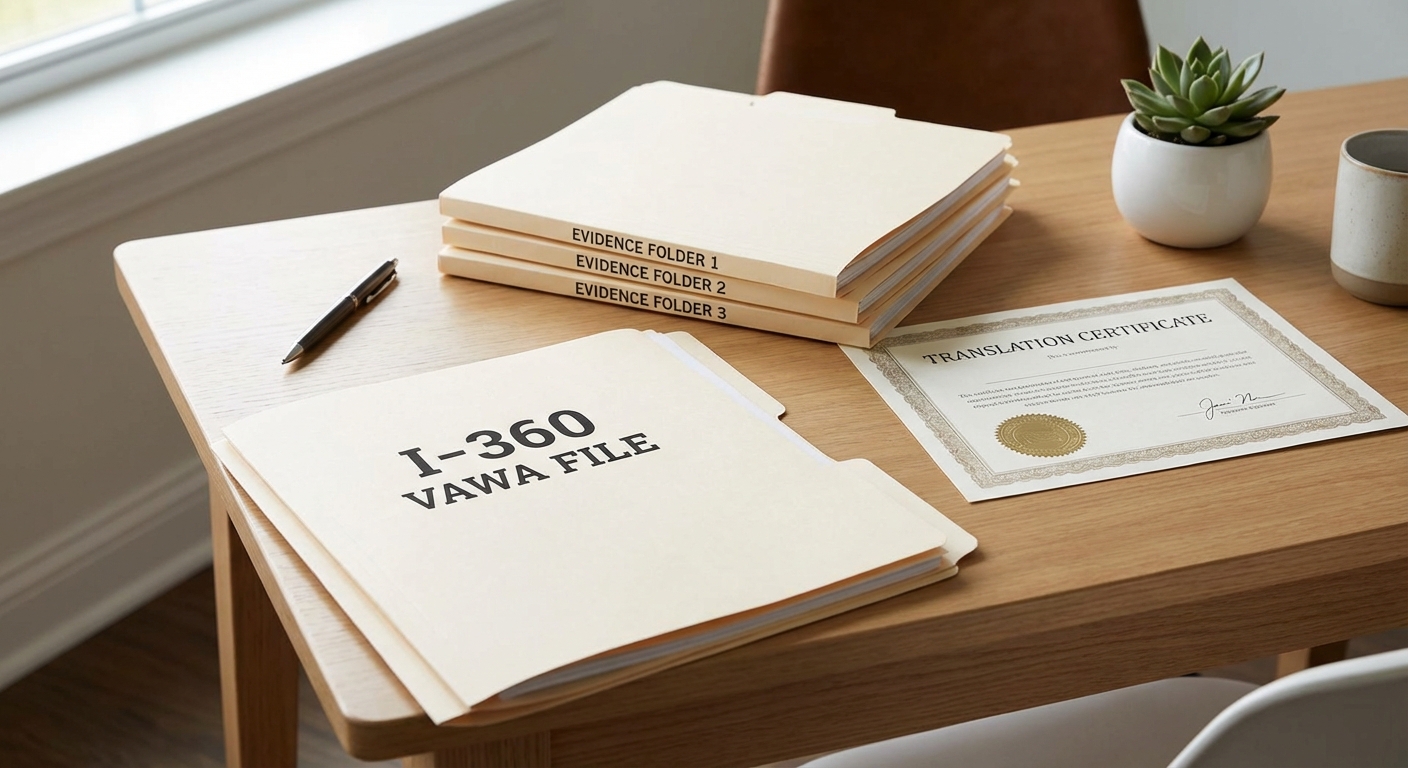
- Certified translations: every document that is not in English needs a full English translation with a translator’s certification.
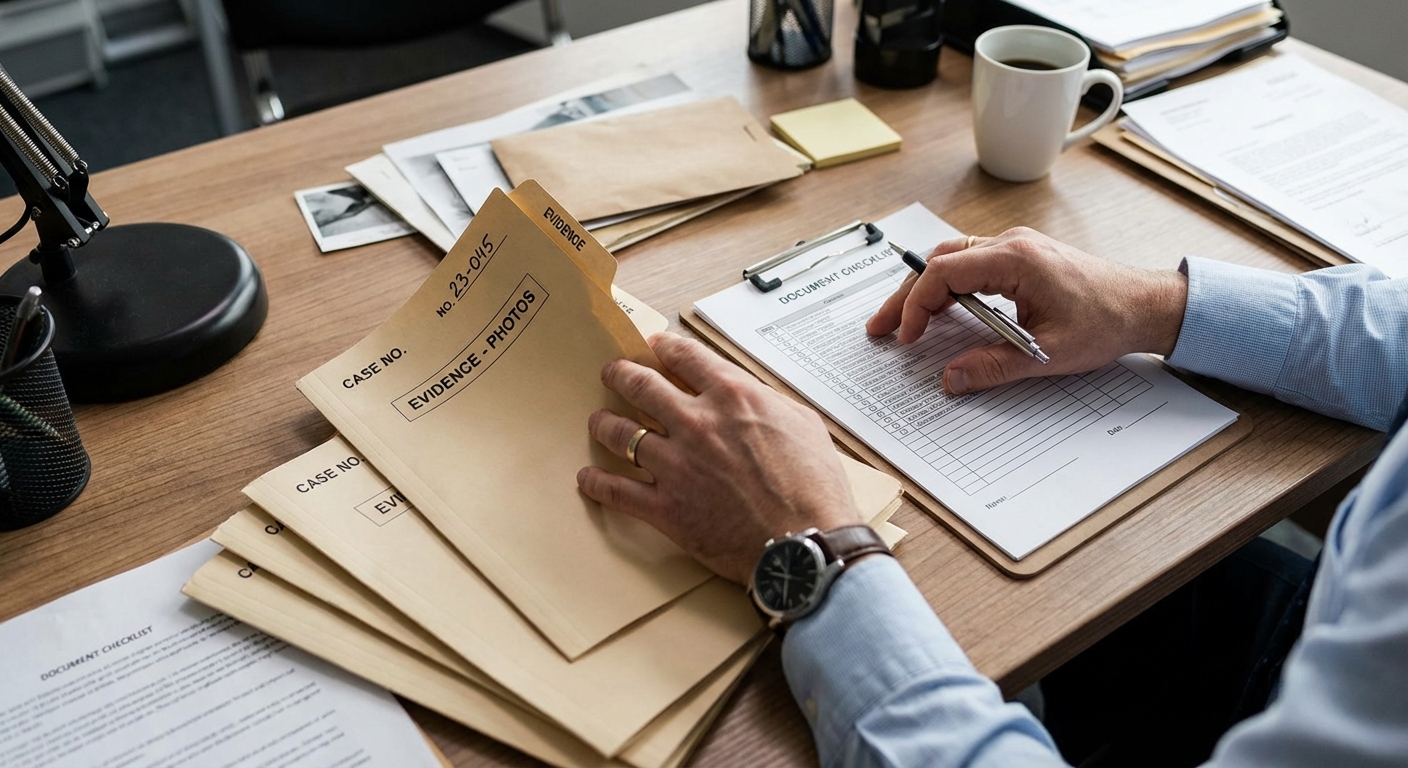
- Organized evidence: a detailed index and clear labels for each document.
Dates, places, and names must match across all your documents. If you are missing something, you have options. USCIS accepts “any credible evidence,” so sworn statements from people who know about the relationship and the abuse can help, even without a police report.
Every VAWA case depends on the evidence, the relationship you can prove, and your exact eligibility. If you want a personalized review, schedule a consultation with no obligation.
How much does it cost to file Form I-360 for VAWA?
There is no filing fee for an I-360 filed as a VAWA self-petition. Survivors often have no control over the household money, so USCIS does not charge it.
This exemption applies only to VAWA self-petitions. Other I-360 categories, such as Amerasians, widows or widowers of U.S. citizens, or Special Immigrant Juveniles, may have different fees. Always check the current fees on Form G-1055 at USCIS.gov before you file.
What about the later steps? Under the USCIS fee rule in effect since April 1, 2024, VAWA self-petitioners are generally exempt from fees on related forms like the I-485 (green card), I-765 (work permit), and I-131 (travel document). Confirm the current rules on Form G-1055. You may still have other costs, like the immigration medical exam, certified translations, records requests, and attorney’s fees.
What is a VAWA prima facie determination, and how do you get it?
After USCIS receives your VAWA self-petition, and before it makes a final decision, it does a quick first review. If your petition shows the basic requirements, USCIS issues a prima facie determination notice (Notice of Prima Facie Case).
This notice is mainly for public benefits. Depending on your state and the program, it can help you access things like housing assistance, food assistance, and services for domestic violence survivors while your case is pending. It stays valid until USCIS approves or denies your I-360.
Keep in mind that a prima facie determination is not approval of your I-360, and it is not deferred action. It only shows your case is on track. The final decision comes later, after USCIS reviews all your evidence.
What happens after your I-360 is approved?
An approved I-360 is a turning point. USCIS has recognized that you meet the VAWA requirements and that you can move forward without your abuser. With the approval, USCIS also grants you deferred action. Still, the approval alone is not a green card.
Common next steps include:
- Adjustment of status (Form I-485) to get your green card if you are in the U.S. VAWA self-petitioners can often adjust even if they entered without inspection. Learn more about adjustment of status.
- A work permit (Form I-765). See how long a VAWA work permit takes and what comes after your VAWA work permit.
- Advance Parole (Form I-131), if you are eligible and need to travel. Be careful: under a Board of Immigration Appeals decision issued on August 13, 2026 (Matter of Delcarmen-Lara), leaving the U.S. on Advance Parole now counts as a departure for the 3- and 10-year unlawful presence bars. If you have more than 180 days of unlawful presence, you could be barred from returning.
Each stage has its own forms and standards. Keeping your filings in order and consistent matters as much as each individual document. For timelines, read what happens after I-360 approval and how long a VAWA green card takes. As of September 2026, USCIS completes 80% of VAWA I-360s within about 52.5 months.
The I-360 is a technical form, but it is also the legal tool that gives you back control of your life. At YSL Immigration Lawyers, we guide each self-petition with care. We look at your situation and build the right strategy for you.
Remember: after you file, USCIS reviews your petition and may issue a prima facie determination, which can unlock certain benefits while your case is pending.
Frequently asked questions about Form I-360 for VAWA
What is the VAWA I-360 self-petition, and who can use it?
It lets survivors of abuse, women and men alike, petition for themselves without the abuser knowing or agreeing. It covers spouses and former spouses of U.S. citizens or green card holders, children abused by a U.S. citizen or green card holder parent, and parents abused by a U.S. citizen son or daughter who is 21 or older. You must show the family relationship, good faith marriage if you are a spouse, and the abuse.
What evidence do I need to prove the abuse and the relationship?
You need to show the family relationship, good faith marriage when it applies, the abuse (physical, emotional, sexual, or extreme cruelty), good moral character, and that you lived with the abuser. Helpful evidence includes the abuser’s status documents, proof of your relationship and shared home, your own declaration, statements from people who know you, and police or court records if they exist.
Is my VAWA petition confidential?
Yes. Federal law protects VAWA petitions. USCIS cannot share your information with your abuser, and it generally cannot use information provided only by the abuser against you. This helps lower the risk of retaliation. An attorney can explain how these protections apply to your case.
What is the difference between getting my green card through USCIS and through a consulate?
If you live in the U.S., you can usually apply for adjustment of status with USCIS, and VAWA self-petitioners can often adjust even if they entered without inspection. If you are abroad, after the I-360 is approved your case goes to the National Visa Center and you attend an interview at a U.S. consulate. Both paths require certified translations and background checks, and timelines vary.
What costs should I plan for in a VAWA case?
The VAWA I-360 has no filing fee, and VAWA self-petitioners are generally fee-exempt on related forms like the I-485, I-765, and I-131 (check Form G-1055). You may still pay for certified translations, police clearances, court records, the immigration medical exam, and attorney’s fees. Organize your key documents early, build a timeline of events, and talk to a lawyer to avoid delays.