
6 min read
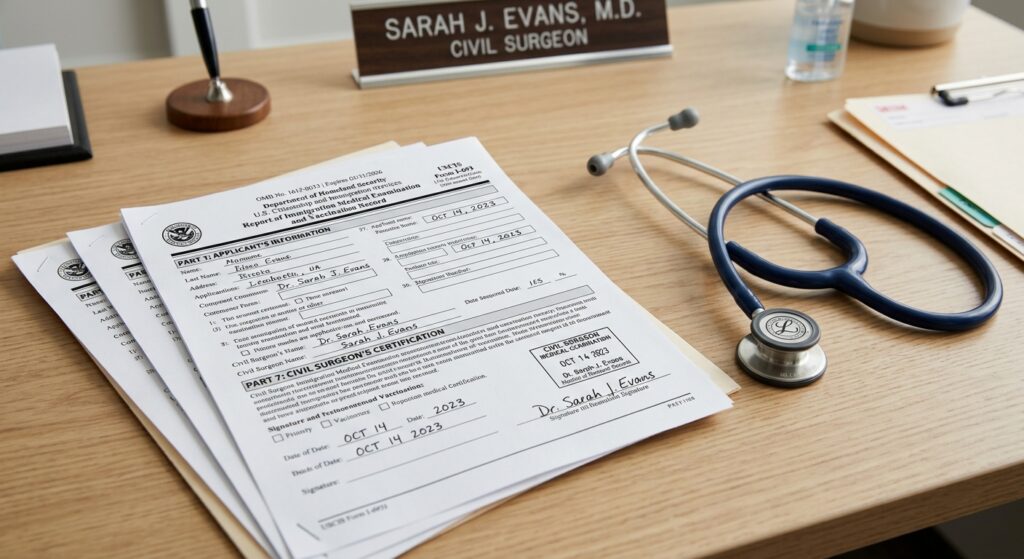
The immigration medical exam is a required step when you apply for a green card from inside the United States. The results go on Form I-693 (Report of Immigration Medical Examination and Vaccination Record), and you file it together with your I-485. If you plan it early, you avoid delays and a possible rejection of your whole package.
Below we explain what the exam includes, who can do it, which vaccines you need, which medical conditions can affect your case and how to prepare. If you are still learning about the full process, start with our guide on how to get a green card.

What is the immigration medical exam for a green card, and why does it matter?
The immigration medical exam shows USCIS that you are not “inadmissible” on public health grounds. In other words, it confirms you do not have a medical condition that would block you from getting permanent residence.
Form I-693 is the only document USCIS accepts for this. It applies mainly to people doing adjustment of status inside the U.S.
Key date: since December 2, 2024, you must submit the I-693 at the same time as your I-485. If it is missing, USCIS can reject the whole application.
Who can do the immigration medical exam?
Only a USCIS-designated doctor, called a civil surgeon, can complete Form I-693. An exam done by any other doctor will not be accepted.
You can find one near you with the official USCIS “Find a Civil Surgeon” tool. You can search by ZIP code and, in many cases, find doctors who speak Spanish.
If your case is processed abroad through a U.S. consulate, the exam is done by a panel physician instead, and the results are not recorded on Form I-693.

What does the immigration medical exam include?
- General physical exam: vital signs, weight, height, eyes, ears, skin, lungs and heart.
- Tuberculosis (TB) test: applicants 2 years and older generally need an IGRA blood test. A chest X-ray is only required if the IGRA is positive or you have symptoms.
- Lab tests: blood and urine tests for syphilis and gonorrhea, depending on your age, as required by CDC rules for civil surgeons.
- Mental health review: questions about any history of mental health disorders with harmful behavior and about drug or alcohol use.
- Vaccines: the doctor reviews your vaccination records and gives you any missing doses.
The doctor classifies any finding as Class A (a condition that can be a barrier to admission) or Class B (a condition that does not stop the process but needs follow-up). A Class A finding does not always mean a denial, because a waiver is often available.
Required vaccines
The vaccine list is based on the recommendations of the Advisory Committee on Immunization Practices (ACIP). Depending on your age, you may need:
- Measles, mumps and rubella (MMR)
- Polio
- Tetanus, diphtheria and pertussis (Tdap/Td)
- Haemophilus influenzae type b (Hib)
- Hepatitis A
- Hepatitis B
- Varicella (chickenpox)
- Seasonal flu (influenza), during flu season
- Pneumococcal and meningococcal
- Rotavirus (babies under 8 months)
If you are missing doses, the civil surgeon can usually give them at the same visit. Some vaccines need extra visits because of the time required between doses.
Since January 22, 2025, the COVID-19 vaccine is no longer required for adjustment of status. Vaccine requirements can change, so confirm the current list with your civil surgeon.
Medical conditions that can affect your green card
The health-related grounds of inadmissibility are in section 212(a)(1) of the Immigration and Nationality Act (INA):
| Category | What it includes | Does it block the green card? |
|---|---|---|
| Quarantinable diseases | Communicable diseases designated by the federal government as quarantinable | Yes, unless a waiver is granted |
| Communicable diseases of public health significance | Active tuberculosis, infectious syphilis, gonorrhea | Yes, unless treated or a waiver is granted |
| Mental disorders with harmful behavior | A diagnosis linked to behavior that threatens you or others | Depends on the case; a waiver is possible |
| Drug abuse or addiction | Problem use of controlled substances based on clinical criteria | Yes, while active; there is no waiver, but a finding of remission can remove this ground |
| Missing vaccines | Not having the required vaccinations | Usually solved by getting the vaccines; waivers exist in some cases |
A Class A finding does not end your case automatically. Depending on the condition, you may be able to apply for a health-related immigration waiver (generally on Form I-601), which USCIS reviews case by case.
How to prepare for your immigration medical exam
Bring these documents to your appointment:
- A valid photo ID (passport or other government-issued ID).
- Your vaccination records, in any language.
- Relevant medical records, such as past diagnoses of chronic, mental health or infectious conditions.
- A list of the medications you take (name, dose and how often).
- Payment (confirm the amount and accepted payment methods before your visit).
Schedule the exam well before you plan to file your I-485. The exam, missing vaccines and getting your sealed envelope can take more than one visit.
After you file, the next step is usually your biometrics appointment (you can follow it with your USCIS case status), and later, in many cases, the interview. Learn what happens after the immigration interview.

The sealed envelope and how long Form I-693 is valid
The civil surgeon gives you Form I-693 in a sealed envelope. Do not open it. If it arrives opened or damaged, USCIS will not accept it and you will have to repeat the process. Keep it in a safe place and file it, unopened, with your I-485.
Under current USCIS guidance:
- A Form I-693 signed by the civil surgeon on or after November 1, 2023 stays valid while the I-485 it was filed with is pending.
- There is no longer a fixed two-year validity period like before.
- If your I-485 is withdrawn or denied and you file a new one, you will need a new I-693.
How much does the immigration medical exam cost?
USCIS does not set an official fee. Each civil surgeon sets their own price, which usually covers the visit, lab tests and any vaccines you need. Call the office ahead of time to confirm the total cost and payment options. The fee for the exam is separate from the USCIS filing fees; check Form G-1055 for current USCIS fees.
Our adjustment of status attorneys in Austin and Laredo, Texas, can review your green card package before you file. Schedule a consultation with YSL Immigration Lawyers.
Frequently asked questions about the immigration medical exam
How much does the immigration medical exam cost?
USCIS does not set an official price. Each civil surgeon sets their own fee, which usually includes the visit, lab tests and vaccines. Confirm the total with the doctor’s office before your appointment.
When should I do the medical exam if I am filing an I-485?
Before you file. Since December 2, 2024, Form I-693 must be submitted together with the I-485. Without it, USCIS can reject your whole package, so plan the exam a few weeks ahead.
How long is Form I-693 valid?
A Form I-693 signed on or after November 1, 2023 stays valid while the I-485 it was filed with is pending. If that I-485 is withdrawn or denied, you will need a new medical exam for a new application.
What happens if the doctor finds a medical condition?
A Class A condition can be a barrier to your green card, but treatment or a waiver is often possible. A Class B condition is documented and does not stop the process. Every case needs an individual legal review.
Can my regular doctor do the immigration medical exam?
No, unless your doctor is a USCIS-designated civil surgeon. You can find an authorized doctor with the “Find a Civil Surgeon” tool on the USCIS website.