
6 min read
Getting your VAWA work permit usually brings real relief. For the first time in a long while, you can work legally and support yourself without depending on the person who abused you. But your work permit (EAD) is not the finish line. It is a tool that lets you work while your case keeps moving.
What you do at this stage matters. Smart choices now can keep your path to a green card on track. Small mistakes can cause delays you don’t need. At YSL Immigration Lawyers, we help survivors plan each step so the process stays organized and safe.

What does having a VAWA work permit really mean?
Your work permit shows that your case has moved forward. It means the U.S. government recognizes that your situation deserves protection while your case is decided. It is more than a document to show your employer.
In day-to-day life, a VAWA work permit lets you:
- Work legally in the United States.
- Get a Social Security number or update the one you have.
- Earn income on the books and build a work history.
- Make decisions about your life without depending on your abuser.
It also confirms that your VAWA case is active and under review. Depending on your case, it may raise the question of whether you can travel with Advance Parole. Be very careful here: under a Board of Immigration Appeals decision issued on August 13, 2026 (Matter of Delcarmen-Lara), leaving the U.S. on Advance Parole now counts as a departure for the 3- and 10-year unlawful presence bars. If you have more than 180 days of unlawful presence, you could be barred from returning. Talk to an attorney before you plan any trip.
Keep one thing in mind: the work permit is temporary. It is not permanent residence. That is why the steps you take now can make the road to a lasting solution easier or harder.

What are the next steps after you get your VAWA work permit?
Now is the time to switch from waiting to planning. Your goals are simple: avoid gaps in your status, keep your case strong, and get ready for your green card as soon as you are eligible.
- Get or confirm your Social Security number. You need it to work and handle your income legally.
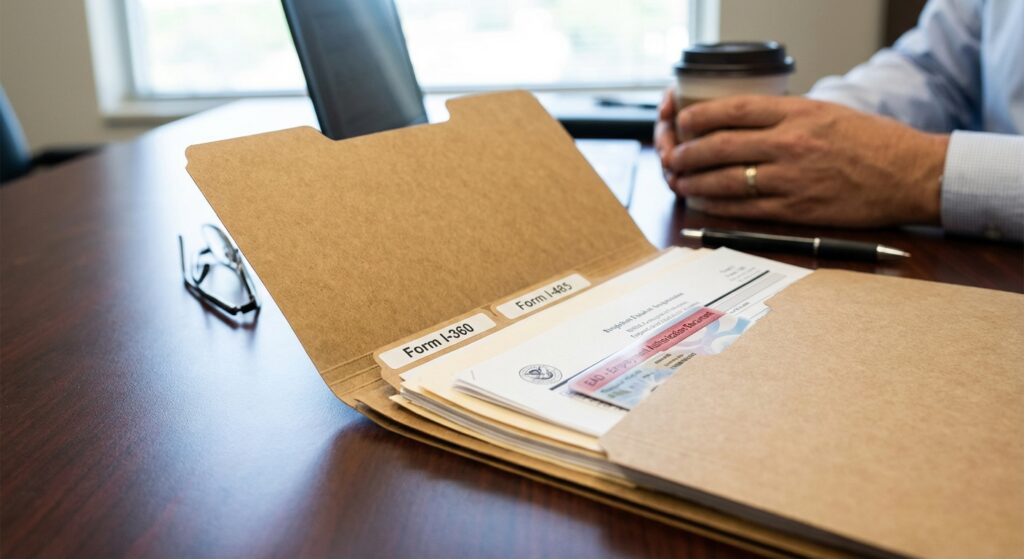
- Check the status of your Form I-360 VAWA self-petition. Confirm whether it is pending or approved. When your I-360 is approved, USCIS also grants you deferred action. See what happens after I-360 approval.
- See if you can file for adjustment of status (Form I-485). If your abuser is a U.S. citizen spouse or parent, a visa is generally available right away, and you may even have filed the I-485 together with your I-360. If your abuser is a green card holder, you may need to wait until your priority date is current.
- Plan your renewal early. For most work permit renewals filed on or after October 30, 2025, there is no automatic extension anymore. File your Form I-765 well before your card expires. Learn more in our guide on work permit renewal fees, and check Form G-1055 for current fees and exemptions.
- Keep your address up to date with USCIS and read every notice carefully.
- Start getting ready for your green card interview or any future Request for Evidence (RFE).
Every case is different, and these steps may not all happen at the same time. Think of your work permit as a middle stage. Use it to get your file in order.
For a realistic idea of the full timeline, read how long a VAWA green card takes. As of September 2026, USCIS completes 80% of I-360 VAWA self-petitions within about 52.5 months, so planning ahead pays off.

What should you watch out for so your case doesn’t stall?
Most problems at this stage are administrative. People forget to renew on time, miss a Request for Evidence, or file forms without a clear plan. Keep copies of everything, write down key dates, and act early. These simple habits prevent most delays.
Changes in your personal, family, or work life can also affect your case. If you have a criminal record or another possible inadmissibility issue, review what VAWA forgives before you file your I-485.
While you wait, check your USCIS case status regularly. That way you will catch updates or RFEs right away.
You are not required to have a lawyer. Still, an experienced team can help you time each filing, review your evidence, and avoid mistakes that could hurt your path to a green card. If you want personalized guidance, contact YSL Immigration Lawyers.
Frequently asked questions about the VAWA work permit
What should I do first after I get my VAWA work permit?
Get your Social Security number, show your work permit to your employer when you fill out Form I-9, and keep copies of everything. Then look at whether you can file Form I-485 for your green card, which depends on your I-360 and on whether a visa is available in your category.
How can I check and track the status of my I-360 and I-485?
Check each case online with your receipt number on a regular basis. Confirm whether your I-360 is approved and where your I-485 stands. Keep your address current with USCIS and answer any Request for Evidence quickly. An attorney can help you understand USCIS notices and plan your next move.
What are the signs that my case is moving forward, and what should I do?
Good signs include an approved I-360, a pending I-485, an available visa, and a valid work permit. If that is your situation, gather your medical exam, work records, and background documents for your adjustment of status. If a visa is not available yet, keep building your evidence. Do not travel until you get legal advice: under Matter of Delcarmen-Lara (August 13, 2026), leaving the U.S. on Advance Parole now counts as a departure for the 3- and 10-year unlawful presence bars.
What documents should I prepare for my adjustment of status interview?
Bring strong evidence of the abuse, your immigration history, and your ties to the U.S. Bring originals and copies of your IDs, medical records, and proof of income. Tell your attorney about any family or job changes, and give a clear, consistent account so there are no contradictions.
When should I talk to an immigration attorney?
Talk to an attorney when your family, job, or address changes, before any travel, or when something unexpected happens in your case. A professional can review your evidence, plan each stage, and help you avoid costly mistakes. Every case is unique.