

9 min read
Few things cause as much stress as not knowing how much a green card costs. The total is more than one government fee. A family-based green card usually includes several USCIS filing fees, a medical exam, possible vaccines, translations and, for many families, an immigration attorney.
When you know what each piece is for, you can plan ahead and avoid surprises. If you want a cost estimate built around your own situation, our green card lawyers can walk you through it.
How much does a green card cost in USCIS fees?
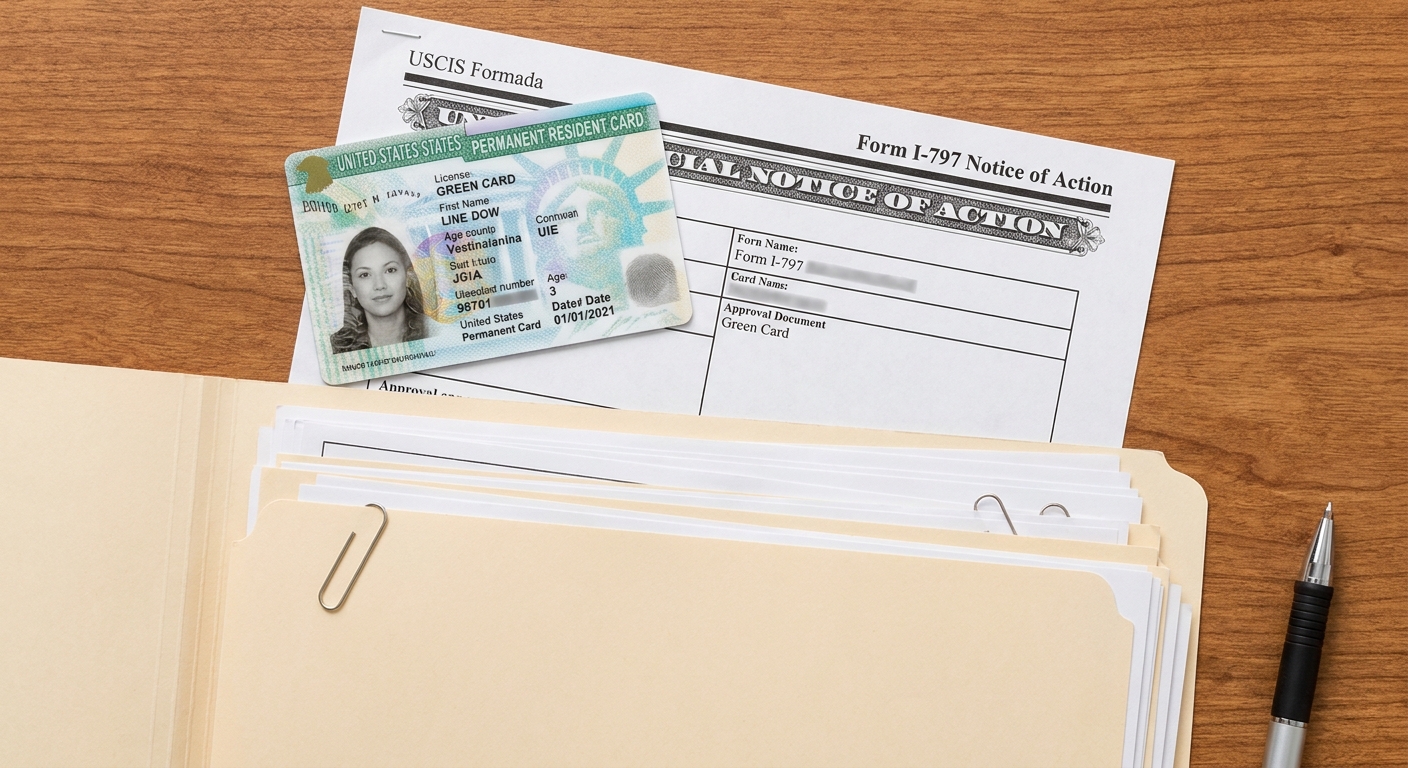
USCIS updated almost all of its fees on April 1, 2024, and fees can change again. Because of that, the safest move is to check the official USCIS fee schedule, Form G-1055, on uscis.gov the same week you file. Each form’s page on uscis.gov also has a fee calculator.
These are the most common government costs in a family-based case:
| Cost | When you pay it | Where to check the current amount |
|---|---|---|
| Form I-130 (family petition) | When your U.S. citizen or green card holder relative files the petition. Online filing costs less than paper. | Form G-1055 / I-130 page on uscis.gov |
| Form I-485 (adjustment of status) | When you apply for the green card from inside the U.S. | Form G-1055 / I-485 page on uscis.gov |
| Form I-765 (work permit) and Form I-131 (travel permit) | Optional. If you file them with your I-485, each one now has its own fee. | Form G-1055 |
| USCIS Immigrant Fee | Only if you go through a U.S. consulate abroad, after your immigrant visa is approved and before you travel. | USCIS Immigrant Fee page on uscis.gov |
| Medical exam (civil surgeon) | Before or with your I-485. Each doctor sets their own price. | Call several USCIS-designated civil surgeons |
How much is the Petition for Alien Relative (Form I-130)?
The I-130 is the first step for most family-based green cards. Your U.S. citizen or permanent resident relative files it to prove your family relationship. Since April 1, 2024, filing online costs less than filing on paper, so check both amounts in Form G-1055 before you choose.
How much is the Application to Register Permanent Residence (Form I-485)?
If you are in the U.S. and qualify for adjustment of status, you file Form I-485. Under the 2024 fee rule, the I-485 fee already covers your biometrics appointment, so you no longer pay a separate biometrics fee for most cases. Children under 14 filing with a parent may pay a lower amount. Confirm the right fee for each family member in Form G-1055.
What about the work permit (I-765) and travel permit (I-131)?
This is where many families get caught off guard. Before April 2024, the I-485 fee included the work permit and Advance Parole. That is no longer true. If you file Form I-765 or Form I-131 with your I-485, each one has its own fee. For example, a paper I-765 filed with a pending I-485 is $260, and a paper I-131 is $630 ($580 online). If you file them later or for a different reason, the amount may be different, so check Form G-1055.
Before you travel on Advance Parole, talk to an attorney. Under a Board of Immigration Appeals decision issued on August 13, 2026 (Matter of Delcarmen-Lara), leaving the U.S. on Advance Parole now counts as a departure for the 3- and 10-year unlawful presence bars. If you have more than 180 days of unlawful presence, you could be barred from returning.
If you want to know what comes next once your case moves forward, read what happens after your immigration interview.

How should you pay USCIS fees to avoid delays?
USCIS is very strict about payments. A common mistake is combining the fees for several forms into one payment, or using a payment method USCIS does not accept for that form. Either one can get your whole package rejected and sent back.
If you pay by credit or debit card, use Form G-1450. If you pay from a U.S. bank account, use Form G-1650. Payment rules have been changing, so read the “Where to file” and fee instructions on each form’s page right before you mail or submit it. The right amount, paid the right way, for each form saves you weeks.
The medical exam: a cost many people forget
Most green card applicants need an immigration medical exam on Form I-693. It must be done by a USCIS-designated civil surgeon, not your regular doctor, and each civil surgeon sets their own price. Call two or three in your area and ask for the full price before you book.
Regular health insurance rarely covers this exam, so plan to pay out of pocket. The exam usually includes a physical, blood tests and a tuberculosis test. If you are missing any required vaccines, they cost extra, so bring your vaccine records to the appointment. Learn more in our guide to the immigration medical exam.
Many people underestimate both the medical exam and legal fees. Putting everything in your budget from day one helps you avoid delays.
How much do immigration lawyers charge for a green card?
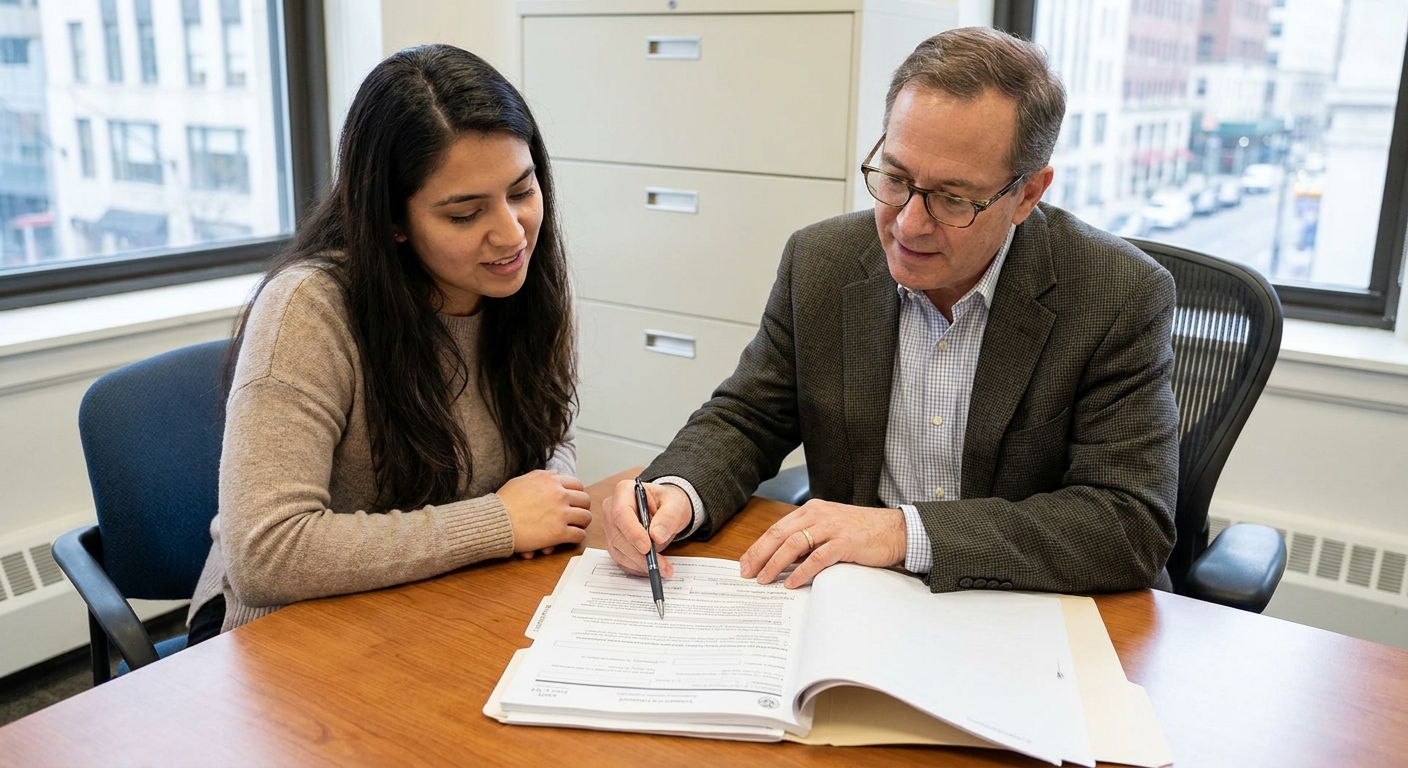
The government does not require you to hire a lawyer. Still, many families see it as an investment in peace of mind. Most immigration attorneys charge a flat fee, and the amount depends on how complex your case is.
Things that can raise the price include the path you take (inside the U.S. or through a consulate), past denials, any criminal history and whether you need an immigration waiver. A case that needs a waiver almost always costs more than a simple one.
Attorney fees usually cover preparing your forms, gathering evidence, representing you before USCIS and getting you ready for your interview. One mistake in your documents or a missed deadline can mean a delay, a denial or paying the government fees all over again. Talk to our family immigration lawyers for a quote based on your case.
How much does a green card cost depending on your path?
Whether you adjust status inside the U.S. or go through consular processing abroad changes your total cost. The I-130 fee is the same either way. The differences are in the other payments and in how long you wait.
Adjustment of status (inside the U.S.): you pay the I-485 fee and, if you want them, separate fees for the work permit and travel permit. You do not have to travel for an interview abroad.
Consular processing (outside the U.S.): after the I-130 is approved, you pay fees to the National Visa Center and the U.S. Department of State for the immigrant visa. After the visa is approved and before you receive the physical green card, you also pay the USCIS Immigrant Fee. On top of that, you may have travel and hotel costs for the interview abroad.
Keep in mind that not everyone can choose. If you entered without inspection, you generally cannot adjust status inside the U.S. unless an exception applies, and leaving the country could trigger the 3- or 10-year bar. An attorney can tell you which path is open to you and which one is more efficient in money and time. If your I-130 is already approved, see what comes next after I-130 approval.
Avoid mistakes that make your green card more expensive
- Wrong payments to USCIS: a check filled out incorrectly, the wrong amount or a combined payment can get your application rejected. You lose time and may have to pay again to refile.
- Missing or incorrect documents: every form needs specific evidence. Gaps or errors can lead to a Request for Evidence (RFE) or even a denial. Read what to do if your adjustment of status is denied.
- Not budgeting for the medical exam and vaccines: this expense often shows up right before the interview.
- Not answering USCIS on time: missing a deadline can lead to a denial. Starting over means paying every fee again.
Planning each step protects you from surprise costs. A complete, correct application from the start is the best way to protect your budget. If you want a realistic picture of fees, timelines and options for your family, schedule a consultation with YSL Immigration Lawyers in Austin or Laredo, Texas.
Frequently asked questions about green card costs
Can I pay USCIS fees in installments?
No. USCIS does not offer payment plans. You must pay each fee in full when you file. Partial or combined payments are a common reason for rejection. Fee waivers (Form I-912) exist only for certain forms and categories, such as VAWA and some humanitarian cases, so check the form instructions to see if you qualify.
If my green card application is denied, do I lose my money?
Generally, yes. USCIS does not refund filing fees after a denial, and attorney fees for work already done are usually not refundable either. Most adjustment of status denials cannot be appealed to the AAO. Your options may be a motion to reopen or reconsider (Form I-290B, generally within 30 days), which has its own fee, or asking an immigration judge to review your application if you are placed in removal proceedings. Refiling means paying the fees again.
What vaccines do I need for a green card?
USCIS requires you to be up to date on certain vaccines. The civil surgeon reviews your records and tells you which ones you are missing. Any vaccines you need cost extra, on top of the exam fee.
Do I pay separately for a work permit or travel permit if I already applied for a green card?
Yes. Since April 1, 2024, the I-485 fee no longer includes the work permit or Advance Parole. If you file Form I-765 or Form I-131 with your I-485, each one has its own fee. Check Form G-1055 for the current amounts.
How can I keep green card costs down?
Pay each fee correctly, send complete documents, and answer USCIS on time. Only file for a work permit or travel permit if you really need it, since each one now has its own fee. Plan for the medical exam early and compare prices among civil surgeons.
Does health insurance cover the immigration medical exam?
Usually not. The exam must be done by a USCIS-designated civil surgeon, and most regular health plans do not cover it. Plan to pay out of pocket.
When can an immigration lawyer’s fee go up?
Fees can be higher when your case is more complex, for example, if you have past denials, a criminal record, several petitioners or beneficiaries, or you need an immigration waiver.
Do I need to translate documents that are not in English?
Yes. Every document in another language needs a complete English translation with a signed statement from the translator saying they are competent to translate and the translation is accurate. Missing translations often lead to a Request for Evidence (RFE) and delays.