
9 min read
If you were the victim of a crime in the United States and helped the police, the U visa process may give you a safe way to stay, work legally, and later apply for a green card. Knowing each step ahead of time helps you plan, gather the right documents, and avoid delays.
This guide walks you through the U visa process from start to finish: police certification, filing with USCIS, the waitlist, approval, and permanent residence. If you want to know how long the wait is right now, read our guide on what year USCIS is processing U visas.
The U visa process step by step
Most U visa cases go through the same six stages. Every case is different, but this is the path you can expect.

1. Law enforcement certification (Form I-918, Supplement B)
One of the most important steps is getting a signed certification from the police, prosecutor, judge, or another qualifying agency on Form I-918, Supplement B.
This form confirms three things:
- You were the victim of a qualifying crime.
- You have useful information about that crime.
- You helped, are helping, or are likely to help with the investigation or prosecution.
Without this certification, USCIS cannot approve a U visa. The signed form must be submitted within 6 months of the date the official signed it, so plan your filing around that date.
2. Filing your U visa petition with USCIS
Once you have the certification, you file your petition with U.S. Citizenship and Immigration Services (USCIS). There is no filing fee for Form I-918. A complete package usually includes:
- Form I-918, Petition for U Nonimmigrant Status.
- Form I-918, Supplement B (the signed certification).
- Your personal statement describing what happened and how it affected you.
- Evidence of the crime and the harm you suffered.
- Identity documents.
- Form I-918, Supplement A for each qualifying family member (derivative).
- Form I-192 (waiver) if you have an immigration or criminal issue that makes you inadmissible.
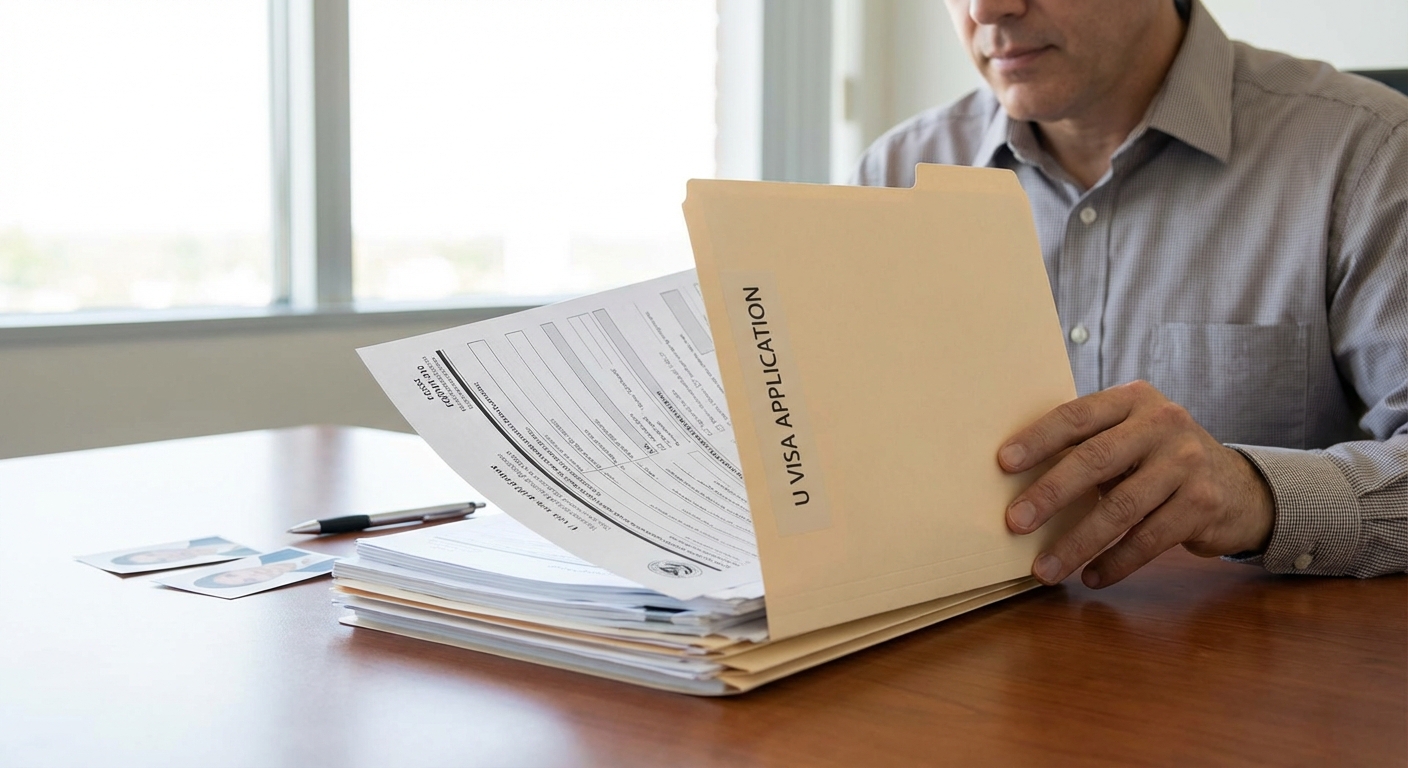
Your file should be organized, consistent, and complete. Every date and detail should match across your forms, your statement, and your evidence.
3. Case review and Requests for Evidence (RFE)
After you file, USCIS sends you a receipt notice (Form I-797C) and reviews your case to check that you meet the legal requirements. If something is missing or unclear, you may get a Request for Evidence (RFE).
Answering an RFE fully and on time is key. A weak or late response can delay your case or lead to a denial.
4. Bona fide determination and the U visa waitlist
The law allows only 10,000 U visas per year for principal petitioners. Family members (derivatives) do not count against that cap. Because far more people apply than there are visas, most cases wait for years.
While you wait, there are two important protections:
- Bona fide determination (BFD): if your petition is complete and appears to be filed in good faith, USCIS may grant you deferred action and a work permit (EAD) while your case is still pending.
- Waitlist: if your case is not handled through the BFD process, USCIS reviews it for the waitlist. If you are placed on the waitlist, you receive deferred action (or parole if you are outside the U.S.) and can apply for a work permit.
When visas become available, USCIS approves petitions in the order they were received. You do not need to file anything extra to keep your place in line.
5. U visa approval
When your petition is approved, you receive U nonimmigrant status for up to 4 years. As the principal petitioner, you get a work permit automatically with your approval; you do not have to file Form I-765. Family members with derivative U status must file Form I-765 to get their own work permit.
Keep copies of all your notices and case documents. You will need them later.
6. Applying for a green card (adjustment of status)
After you have been in U status for at least 3 continuous years, you may apply for permanent residence through adjustment of status with Form I-485. In general you must show that:
- You have been physically present in the U.S. for 3 continuous years since you received U status.
- You did not unreasonably refuse to help law enforcement after you received U status.
- Your stay is justified on humanitarian grounds, to keep your family together, or because it is in the public interest.
You must file the I-485 while you still have U status. Check the current I-485 instructions to see which supporting documents, such as a medical exam, apply to your case.
What documents do you need for a U visa, and how should you organize them?
Before you start collecting papers, make sure you actually qualify. Once you do, these are the documents most U visa cases use:
- The signed law enforcement certification (Form I-918, Supplement B).
- Your personal statement explaining what happened.
- Police reports, court records, or other official records of the crime.
- Medical or psychological records that show how the crime affected you.
- Photos, messages, or other evidence of the incident.
- Support letters from witnesses, counselors, or people close to you.
Consistency matters most. If your statement, your forms, and your records tell the same story, the officer can understand your case quickly.
How long does the U visa process take?
The U visa process is measured in years, not months. The main reason is the annual cap of 10,000 visas, not the strength of your file. Cases move in the order they were received, so two equally strong cases can be decided at very different times. You can follow the current wait in our post on the U visa waitlist and processing year.
Some time frames are set by law and regulation, according to USCIS:
| Time frame | What it means |
|---|---|
| Up to 4 years | How long U status lasts once approved. It can be extended only in limited cases, for example at the request of law enforcement, because of consular delays, or while your green card application is pending. |
| 3 continuous years | The time you must be physically present in the U.S. in U status before you can apply for a green card. |
| At approval | The principal petitioner receives a work permit automatically. Derivative family members must file Form I-765. |
Other things that can slow your case down include missing documents, RFEs, and background checks. You can track your case online with your receipt number. See our guide on how to check your USCIS case status, and read every notice USCIS sends you.
Keep in mind that all time estimates are only a guide. Policy changes and the details of your case can change them.
What happens after your U visa is approved?
Approval opens the door to a green card, usually through adjustment of status. Each path has its own requirements and timeline depending on your situation and your documents.
To get ready, start gathering early: your approval notices, proof of your continuous presence, proof that you kept cooperating with law enforcement when asked, photos, and any forms your case needs. Family members who never had derivative U status may be able to get a green card through Form I-929.
Be very careful with travel. Long trips abroad can break your continuous presence: in general, a single trip of more than 90 days, or more than 180 days in total, can reset your clock. If you are still waiting with deferred action and travel on Advance Parole, keep in mind that under a Board of Immigration Appeals decision issued on August 13, 2026 (Matter of Delcarmen-Lara), leaving the U.S. on Advance Parole now counts as a departure for the 3- and 10-year unlawful presence bars. If you have more than 180 days of unlawful presence, you could be barred from returning. Read more in our guide on traveling with a U visa, and talk to an attorney before any trip.

Common U visa mistakes and how to avoid them
- Missing or contradictory evidence. Every fact in your statement should be backed by documents, and your forms should match each other.
- Not following USCIS instructions. Use the current form editions, include certified English translations, and check dates and signatures. A checklist helps.
- Letting the certification expire. File within 6 months of the date the official signed Supplement B.
- Missing deadlines or not reporting changes. Late RFE responses and an outdated address can cause delays or a denial.
Review everything carefully and get legal advice when you have doubts. No one can promise a result, but a careful file avoids many problems.
Other options when your U visa case is complicated
Some cases are more complex. You may have a criminal record, a prior deportation order, or family members in different situations. In those cases, it is worth looking at other options too, such as a VAWA self-petition or family-based immigration.
Which path makes sense depends on your history, your family ties, and whether you can meet each program’s requirements. A practical approach is to compare the benefits, the obstacles, and the expected timelines of each option. An immigration attorney can help you weigh your chances on each route. At YSL Immigration Lawyers, our team can guide you through your U visa case. Schedule a consultation.
Frequently asked questions about the U visa process
How do I know if I qualify for a U visa, and what evidence do I need first?
In general, you must have been the victim of a qualifying crime, suffered substantial physical or mental harm, have information about the crime, and have helped or be willing to help law enforcement. The most important early evidence is the signed Form I-918, Supplement B, plus the police report, your personal statement, and any support letters. A clear summary of the facts makes the first review easier.
How should I organize my U visa documents?
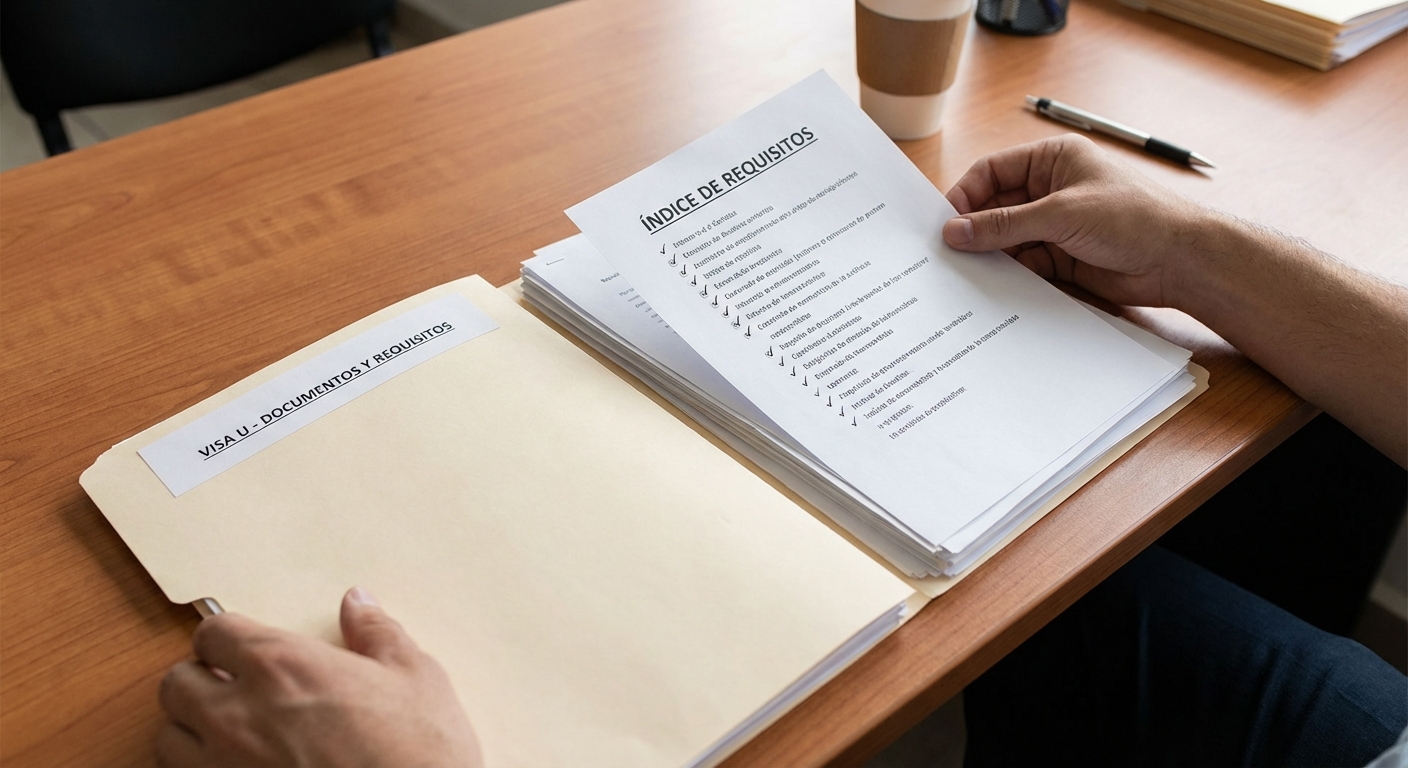
Put your forms first (I-918, Supplement B, Supplement A for family, and I-192 if needed), then your statement and your evidence in a logical order. Include a cover letter with an index, clear copies, and certified English translations of any document in another language. Check each item against the current USCIS instructions.
What could trigger a Request for Evidence in a U visa case?
USCIS often sends an RFE when information is incomplete or documents do not match. Common requests include proof of a family relationship, more detail about your cooperation with law enforcement, or more evidence of the harm you suffered. Read the RFE carefully, answer every point, send clear copies, and respond before the deadline.
Can I get a green card after my U visa is approved?
Yes. After 3 continuous years in U status, you may apply for a green card through adjustment of status with Form I-485, as long as you did not unreasonably refuse to help law enforcement and your stay is justified on humanitarian, family, or public interest grounds. Avoid long trips abroad, because they can break your continuous presence.
Can I work while I wait for my U visa?
Often, yes. If USCIS makes a bona fide determination or places you on the waitlist, you receive deferred action and can get a work permit. Once your U visa is approved, the principal petitioner gets a work permit automatically.
What can I do if my U visa case is not moving?
First, check your case status online and make sure USCIS has your current address. If your case is outside normal processing times, you can contact USCIS. You can also ask an attorney whether another option, such as VAWA or a family petition, fits your situation, and compare the requirements and timelines of each.