

9 min read
If you are a survivor of human trafficking and you already filed your application, waiting to hear back can cause a lot of anxiety. The T visa processing time is usually long, and much of it depends on things you can’t control.
Even so, knowing what affects how long your case takes helps you prepare and avoid the delays you can control. A T visa attorney can guide you at every stage.

Current T visa processing times
There is no fixed deadline for USCIS to decide Form I-914, the application for T nonimmigrant status. T visa cases are handled by USCIS’s humanitarian processing centers (for many years, the Vermont Service Center), and these cases have built up a large backlog.
T visa cases often take years, not months, and wait times have grown in recent years. Because USCIS numbers change constantly, the only reliable source is the official tool: check the current time for Form I-914 at egov.uscis.gov/processing-times.
Part of the delay comes from the large backlog of humanitarian cases and the detailed review each file receives.
The law sets an annual cap of 5,000 T visas for principal applicants. In practice, USCIS has not reached that cap, so it is usually not the reason for the wait (unlike the U visa, which has a long waitlist).
Can you get a work permit before your T visa is approved?
You don’t necessarily have to wait for a final decision to have some protection. USCIS can grant deferred action and a work permit to people whose T visa application is bona fide (genuine and complete) while the case is still pending.
This is called a bona fide determination. It has been available since August 28, 2024, under the updated T visa rule, and the work permit is requested with Form I-765 under category (c)(40).
USCIS recommends filing the I-765 together with your I-914 from the start, because waiting can make the process longer. If USCIS finds your application bona fide and you have not filed the I-765 yet, it will notify you and invite you to do so. Family members included as derivatives generally can’t receive this benefit until the principal applicant does.
This protection is for trafficking survivors, including people who were victims of labor exploitation, while their case moves forward.
What affects your T visa processing time?
Several things can speed up or slow down your case once you file it.
The quality of your documents is key. If your application is incomplete or doesn’t meet the requirements, USCIS can send a Request for Evidence (RFE). Your case stops until you send the information, which can add months. That is why it helps to send all your supporting documents from the start, complete and organized.
USCIS’s overall workload also matters. A high volume of cases or changes in internal policy usually make wait times longer for everyone.
Background checks are required and can delay your case if they need a deeper review.
Many people think the clock starts when they mail the package. In reality, it starts when USCIS accepts the application and issues the receipt notice. Keeping up with USCIS letters helps your case keep moving.
How can you speed up your T visa application?
You can’t control USCIS’s workload, but you can help your own case move more smoothly by being careful and proactive:
- File a complete, accurate application: fill out every section of Form I-914 correctly and include all the required evidence from the start. This lowers the chance of an RFE.
- Answer RFEs quickly: respond as soon as you can with clear, complete information. Waiting to respond makes the process longer.
- Keep your contact information updated: tell USCIS about any change of address so you receive all their letters.
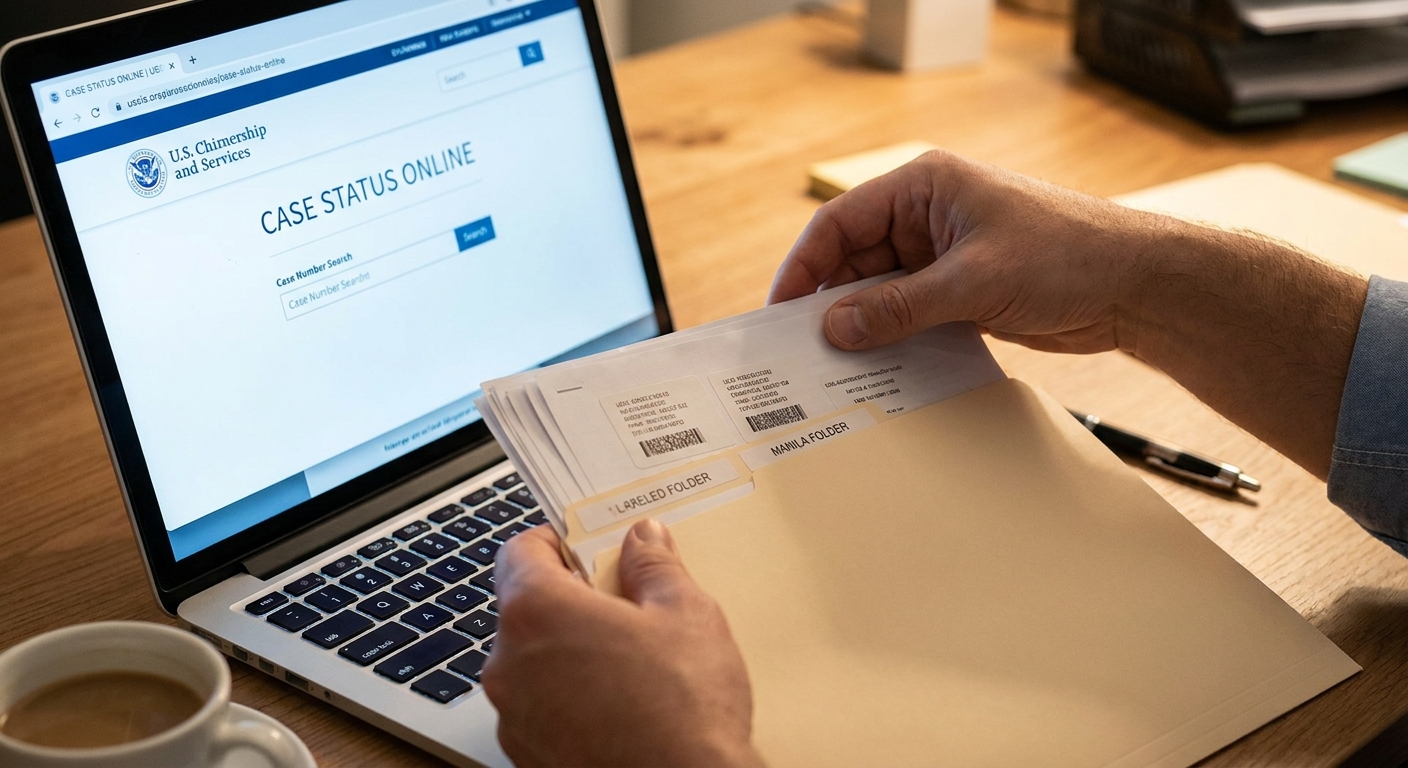
- Organize your evidence: use an index or labels so the officer can review your file easily.
These steps help your application move more efficiently and cut down on uncertainty.
How to track your T visa case after you file
After you file, it helps to understand how USCIS will contact you and how to follow your case. Silence can be stressful, but there are tools to stay informed.
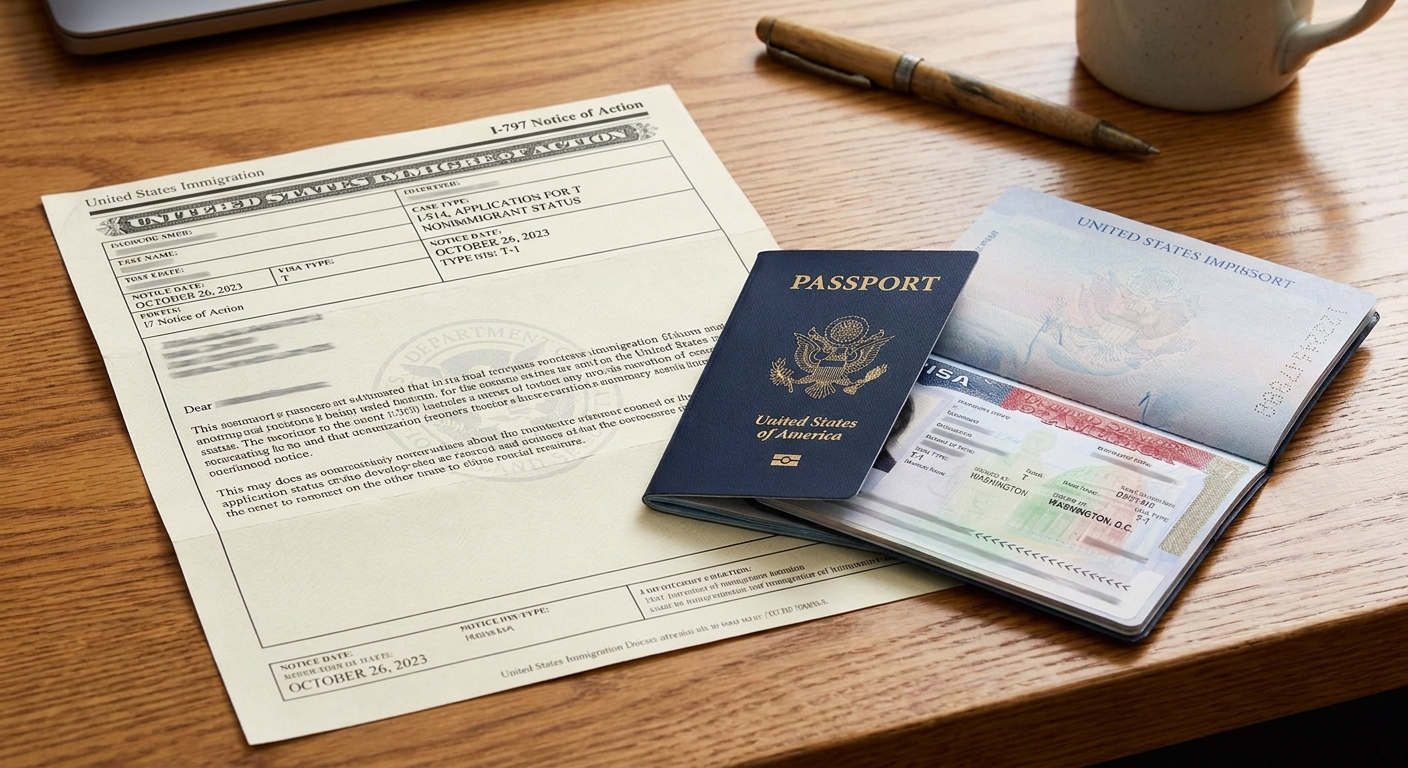
First, you will receive a receipt notice (Form I-797C) for your I-914 with a receipt number. With that number, you can check your status online with the USCIS Case Status Online tool. Our guide on how to check your USCIS case status walks you through it.
Your receipt number lets you see updates, such as an RFE or an interview appointment, so you can plan ahead.
If you get an RFE, you must send the additional documents before the deadline to avoid a denial. A denial is not always the end: depending on the reason, you may be able to file an appeal or a motion to reopen or reconsider (Form I-290B), or file a new application. In some cases USCIS asks for an interview, but it is not a step for everyone.
Many applicants can get a work permit while the case is pending through the bona fide determination, so acting early matters.
What comes after your T visa is approved?
Approval is a big step, but the process continues. Knowing what comes next helps you plan your benefits and your future in the United States.
After approval you will receive an approval notice. The notice is not the same as your physical documents, which arrive by mail later. Keep your address updated with USCIS so your documents arrive without problems; a mistake could delay or block delivery.
T status gives you lawful temporary status in the U.S. (generally for up to 4 years) and permission to work. If you are the principal applicant, USCIS issues your work permit (EAD) with the approval of Form I-914, without a separate Form I-765.
If you are still waiting for a decision, remember the bona fide determination described above can give you deferred action and a work permit sooner. You can also compare with how long a VAWA work permit takes.
After 3 years of continuous physical presence in T status, or earlier if the investigation or prosecution of the trafficking case is officially certified as complete, you may be able to apply for a green card through adjustment of status.
At YSL Immigration Lawyers, we can help you prepare your case, respond to USCIS and plan your next steps. Contact us for a confidential consultation at our offices in Austin and Laredo, Texas.
Frequently asked questions about T visa processing time
What can I do if my T visa is taking longer than expected?
If your case goes beyond the time posted at egov.uscis.gov/processing-times, you can submit an online case inquiry to USCIS. Before that, make sure you answered every RFE on time. An immigration attorney can look into your status and suggest next steps.
Can I include my family in my T visa application?
Yes, certain family members can apply as derivatives. If you are 21 or older, you can include your spouse and unmarried children under 21. If you are under 21, you can also include your parents and unmarried siblings under 18. At any age, parents, unmarried siblings under 18 and certain children of your derivatives may qualify if they face a present danger of retaliation. Each relative files with Form I-914, Supplement A, with your application or later.
Is a T visa interview required in every case?
No. USCIS only asks for an interview in some cases, to verify information or clarify details. If you need one, you will receive a notice and can prepare ahead of time.
What if the police can’t confirm my trafficking case?
A law enforcement declaration (Form I-914, Supplement B) is optional, not required. What the law requires is that you comply with reasonable requests from law enforcement for help with the investigation or prosecution. You are exempt from that if you were under 18 when the trafficking happened or if you can’t cooperate because of physical or psychological trauma. You can prove your eligibility with other credible evidence, such as your own statement and supporting documents.
How long do I have to answer a Request for Evidence (RFE)?
The deadline is printed on the RFE itself, so always check your notice. It is often around 12 weeks, but it can vary. Respond early and completely, because a late or incomplete answer can lead to a denial.
Do I need an immigration lawyer to apply for a T visa?
It is not legally required. But the process is complex, and survivors are often in a vulnerable situation. An experienced attorney can help you file a complete application and respond well to USCIS requests.
Can I leave the U.S. while my T visa is pending?
In most cases, it is not recommended. The T visa requires you to be in the U.S. on account of trafficking, and leaving can hurt or end your case. Even with Advance Parole there are risks: under a Board of Immigration Appeals decision issued on August 13, 2026 (Matter of Delcarmen-Lara), leaving the U.S. on Advance Parole now counts as a departure for the 3- and 10-year unlawful presence bars. If you have more than 180 days of unlawful presence, you could be barred from returning. Read more about Advance Parole travel risks and talk to an attorney before making any plans.