
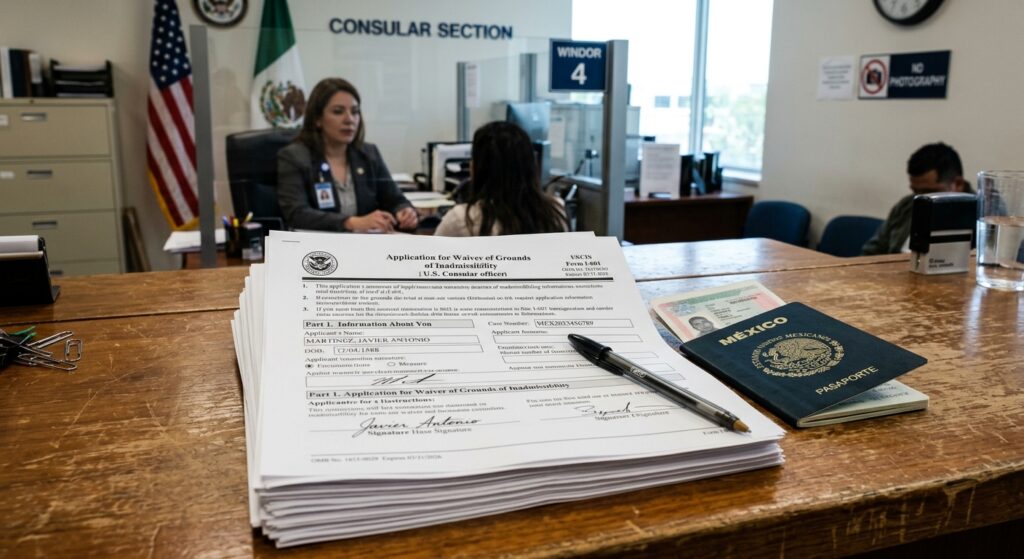
6 min read
Yes, it’s possible to get a U.S. visa even if you were in the country without status, but not just any visa, and not without planning. The answer depends on how long you were unlawfully present, whether you left the country, and what family ties you have with U.S. citizens or permanent residents.
Understanding how the unlawful presence bars work and which waivers exist is key before you pay any consular fees. The right path varies a lot from case to case, so it’s worth reviewing yours with our legal team before taking any step.
What counts as “unlawful presence” in immigration law?
Immigration law uses a technical term: unlawful presence. It generally applies to people who stayed past the date on their I-94 after entering with a visa, people who entered without inspection, and in some cases people whose status ended and wasn’t renewed in time.
Not every irregular stay automatically counts as unlawful presence. The law excludes, among others, time spent under age 18, time with a pending asylum application (unless you worked without authorization), and certain humanitarian program beneficiaries. The rules have many nuances, so have your case reviewed before assuming any exception applies.
The 3- and 10-year bars
Under INA §212(a)(9)(B), people who build up unlawful presence and then leave the country face a bar on returning. The bar is triggered when you leave, not before.
- 3-year bar: more than 180 days but less than one year of unlawful presence, followed by a departure.
- 10-year bar: one year or more of unlawful presence, followed by a departure.
- Permanent bar (INA §212(a)(9)(C)): applies to people who accumulated more than one year of unlawful presence in total, or who were ordered removed, and then entered or tried to enter the U.S. again without being admitted. Generally, you must wait 10 years outside the U.S. before asking for permission to reapply (Form I-212).
In practice, applying for a visa at a consulate after leaving with an active bar usually ends in a denial unless the right waiver is filed first or at the same time.
For many people already facing one of these bars, there’s a provisional waiver that lets you ask for forgiveness before you leave the country.
Waivers that can open the door
There are several waivers to overcome inadmissibility for unlawful presence, and each has its own requirements. USCIS keeps the current rules on its official Form I-601A page:
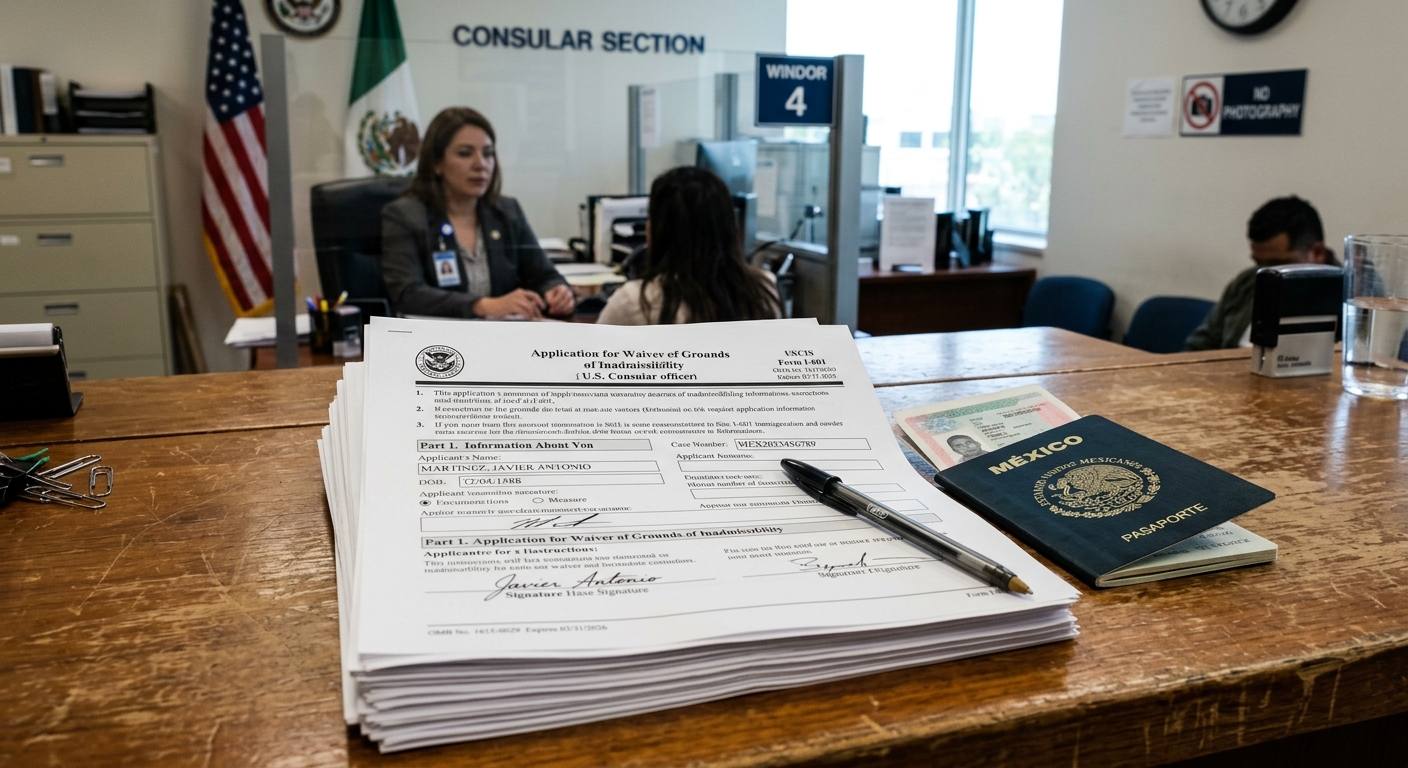
- Form I-601A (provisional waiver): lets you apply for the unlawful presence waiver from inside the U.S. before traveling to the consulate. It requires a qualifying relative (a U.S. citizen or permanent resident spouse or parent) and proof of extreme hardship.
- Form I-601 (general waiver): covers unlawful presence along with other grounds, such as fraud or certain crimes involving moral turpitude. In consular cases, it’s filed after the consular officer finds you inadmissible.
- Form I-212 (permission to reapply): required for people who were deported or face the permanent bar; it’s often combined with an I-601.
Knowing which immigration waivers exist helps you prepare a complete file, especially when a green card case is already underway.
Tourist visa vs. immigrant visa: how the picture changes
For someone with a history of unlawful presence, the difference between applying for a tourist visa and an immigrant visa is huge.
A tourist visa (B-1/B-2) requires you to prove you’ll return to your home country. A history of overstaying in the U.S. weighs heavily in that decision, and consulates often deny these applications under INA §214(b) for lack of strong ties to the home country.
An immigrant visa follows a different path. It’s based on an approved family or employment petition. On that path, waivers (I-601/I-601A) can resolve inadmissibility for unlawful presence, as long as you meet the qualifying relative and hardship requirements.
Special paths for victims and people at risk
Some paths have their own rules that can overcome inadmissibility for unlawful presence:
- U visa: for victims of certain crimes who help law enforcement. It has a specific waiver under INA §212(d)(14) that covers many grounds of inadmissibility, including unlawful presence.
- T visa: for victims of human trafficking. It also has ways to grant status despite irregular entries or stays.
- VAWA: for spouses, children, or parents of abusive U.S. citizens or permanent residents. People who qualify can explore this path with our legal team.
- Asylum: if asylum is granted, many grounds of inadmissibility can be waived when the person later applies for a green card.
These paths don’t apply to everyone, but they completely change the picture for people whose cases fit.
What the consular officer looks at
When your case reaches the consulate (after the waiver or during the immigrant visa process), the officer weighs several factors:
- How truthful and consistent your full immigration history is.
- The quality of the evidence of extreme hardship to your qualifying relative.
- How much time has passed since your last irregular entry or departure.
- Your criminal and immigration record, including any prior orders.
- The strength of your current family ties to U.S. citizens or permanent residents.
Lying about or leaving out past information is one of the costliest mistakes in the process: it can turn a waivable case into permanent inadmissibility for fraud or misrepresentation.
A criminal record doesn’t always close the door, but it’s important to first understand which crimes can block an immigration benefit before giving up on your case.
Recommended steps before starting the consular process
Before requesting a consular appointment or sending any form, organize your case carefully:
- Request your complete immigration history through a FOIA request so you know exactly what records the government has.
- Calculate your actual unlawful presence, accounting for exceptions and exact dates.
- Determine whether you have a qualifying relative (a U.S. citizen or permanent resident spouse or parent) who can support an I-601 or I-601A.
- Check whether a special path applies (U visa, T visa, VAWA, asylum) before ruling it out.
- Build strong evidence of extreme hardship: medical, psychological, financial, and community-related.
If you’re already moving forward with adjustment of status through a family petition, our attorneys can review your file and integrate the waiver with the rest of your immigration case.
If you have specific questions about your case, schedule a consultation with our legal team to review timelines, possible waivers, and the right order of filings before taking the first step.
Frequently asked questions about unlawful presence waivers
Can I get a tourist visa if I was in the U.S. without status?
It’s difficult but not impossible. Consulates usually presume immigrant intent for people with a history of unlawful presence, and most of those cases are denied under INA §214(b). If you want to return, an immigrant visa with a waiver is usually more realistic than a tourist visa.
Who exactly is a “qualifying relative” for the I-601A waiver?
A qualifying relative is a U.S. citizen or lawful permanent resident spouse or parent. For the I-601A (unlawful presence), U.S. citizen children do not count as qualifying relatives. Checking this before you file helps you avoid costly denials.
Can I start the process inside the U.S. without going to a consulate?
In some cases, yes, through adjustment of status (Form I-485) if you had a lawful entry and meet the requirements. People who entered without inspection often have to go through consular processing with an I-601A waiver, unless an exception such as INA §245(i) applies. The right path depends on your specific immigration history.
What if I was deported before?
A prior removal order adds more barriers. You’ll usually need Form I-212 (permission to reapply for admission) combined with the appropriate waiver. The minimum time you must stay outside the U.S. depends on the type of order, and each case needs individual analysis.
How long does the I-601A waiver take?
Timelines vary with USCIS workload. In practice, they can range from several months to more than a year. USCIS publishes updated processing times on its website, so check them before planning any travel or consular appointment.