

6 min read
A mistake made years ago can become a real obstacle when you apply for a green card, renew your status, or apply for a visa. Knowing which crimes immigration won’t forgive lets you spot risks before you file anything with USCIS.
Federal immigration law separates offenses that can be forgiven with a waiver from others that, in most cases, make a person inadmissible almost permanently. Working with an immigration attorney helps you evaluate your record accurately and choose the right path.

Which types of crimes block immigration benefits?
Immigration law groups criminal history into several categories. Some allow you to ask for a waiver; others almost completely close the door to a visa or green card.
The three categories that cause the most problems are aggravated felonies (INA §101(a)(43)), crimes involving moral turpitude (CIMTs), and controlled substance offenses.
On top of that, a false claim to U.S. citizenship is treated separately because of how seriously immigration authorities take it. Each category has its own rules, which is why an individual review of your case makes all the difference.
The impact of aggravated felonies
Aggravated felonies are the most severe classification in immigration law. The list is defined in section 101(a)(43) of the Immigration and Nationality Act (INA), and whether a crime qualifies depends on the specific elements of the offense and the sentence, not just what the crime is called. A crime can be an “aggravated felony” for immigration purposes even if it’s a misdemeanor under state law.
Some examples that often fall into this category:
- Theft or burglary with a sentence of one year or more, even if the state treats it as a minor offense.
- Fraud or deceit where the victim’s loss is more than $10,000.
- Crimes of violence with a sentence of one year or more, under the federal definition.
- Drug, firearms, or human trafficking, which almost always falls in this category.
A conviction for an aggravated felony can mean losing your legal status, a bar on returning to the U.S. that is very hard to overcome, and being cut off from many forms of immigration relief.
That’s why, before filing for adjustment of status with any criminal history, you should have an attorney review the exact sentence and how the offense was recorded.
Why drug trafficking is almost never forgiven
Drug trafficking is among the records that close the most doors in the immigration system. The reason is that federal law allows immigration officials to find a person inadmissible even without a conviction, under what’s known as the “reason to believe” provision (INA §212(a)(2)(C)).
That means if an officer has reason to believe the person was involved in drug trafficking, they can deny the immigration benefit even if charges were dropped or the case never went to trial.
There’s a very narrow exception for a single offense of simple possession of 30 grams or less of marijuana, which may be forgiven with a waiver under INA §212(h). Note that this is possession, not trafficking. Outside that situation, there’s very little room to regain eligibility, and every case requires individual analysis.
Keep in mind that even though many states have legalized recreational marijuana, immigration is governed by federal law. Conduct that’s legal under state law can still be a serious problem when you apply for a green card or visa.
False claims to U.S. citizenship
Claiming to be a U.S. citizen when you’re not is one of the strictest grounds of inadmissibility in immigration law. It’s found in INA §212(a)(6)(C)(ii) and, in most cases, it’s permanent.
Typical situations where this comes up:
- Checking the “U.S. citizen” box on Form I-9 when applying for a job.
- Registering to vote or voting in a federal, state, or local election (unlawful voting is also a separate ground of inadmissibility).
- Telling an immigration officer or police officer, or stating on an official form, that you’re a citizen in order to get a benefit.
Unlike many other paperwork errors, there’s generally no waiver available for this. The law has a very narrow exception for people whose parents were U.S. citizens, who lived permanently in the U.S. before turning 16, and who reasonably believed they were citizens when they made the claim. Outside of that exception, the path is complex and depends on the specific evidence.
That’s why it’s so important to distinguish between using fake foreign identity documents and claiming to be a U.S. citizen: the latter is treated much more harshly.
Which crimes can be waived, and with which form?
Before deciding your next step, it helps to see the full picture. This table summarizes which crimes immigration won’t forgive by category, and which form applies when a waiver is possible.
| Type of offense | Is a waiver available? | Form or path |
|---|---|---|
| Aggravated felony | Generally no, except in very limited situations | Individual case evaluation |
| CIMT (crime involving moral turpitude) | May be eligible depending on the case | I-601 (INA §212(h) waiver) |
| Drug trafficking | Almost never | No general waiver |
| Single simple possession of 30 grams or less of marijuana | May be eligible | I-601 (INA §212(h) waiver) |
| False claim to U.S. citizenship | Generally no, except a very narrow exception (citizen parents, lived in the U.S. before 16, and reasonably believed they were a citizen) | No general waiver |
| Cases where the person was the victim of a crime (domestic violence, trafficking, and certain other crimes) | May open other forms of relief, depending on the case | VAWA (I-360), T visa, or U visa (waiver on Form I-192) |
This table is a starting point, not a diagnosis. Criminal history is treated differently in U visa cases, and every criminal record has details that only an individual analysis can confirm.
When can you ask for a waiver?
Knowing which crimes immigration won’t forgive is only the first step: the law also provides several types of immigration waivers to overcome certain grounds of inadmissibility, though not every category qualifies the same way.

For criminal history, the best-known option is the I-601 waiver (Application for Waiver of Grounds of Inadmissibility), which usually requires showing that denying your case would cause extreme hardship to a qualifying relative who is a U.S. citizen or permanent resident. USCIS lists the grounds this form can cover on its official Form I-601 page. It’s different from the I-601A provisional waiver, which only covers unlawful presence and does not forgive criminal history.
There are also paths designed for victims. People who suffered domestic violence may qualify under VAWA, and victims of human trafficking have their own path through the T visa. For victims of certain other serious crimes, there’s the U visa. The U and T visas have their own waiver, Form I-192, for people who would otherwise be inadmissible.
How to review your criminal record before any application
The most important step before filing an immigration application with any criminal history is getting a complete picture of your record. Doing it on your own, without guidance, can lead to decisions that complicate your case.
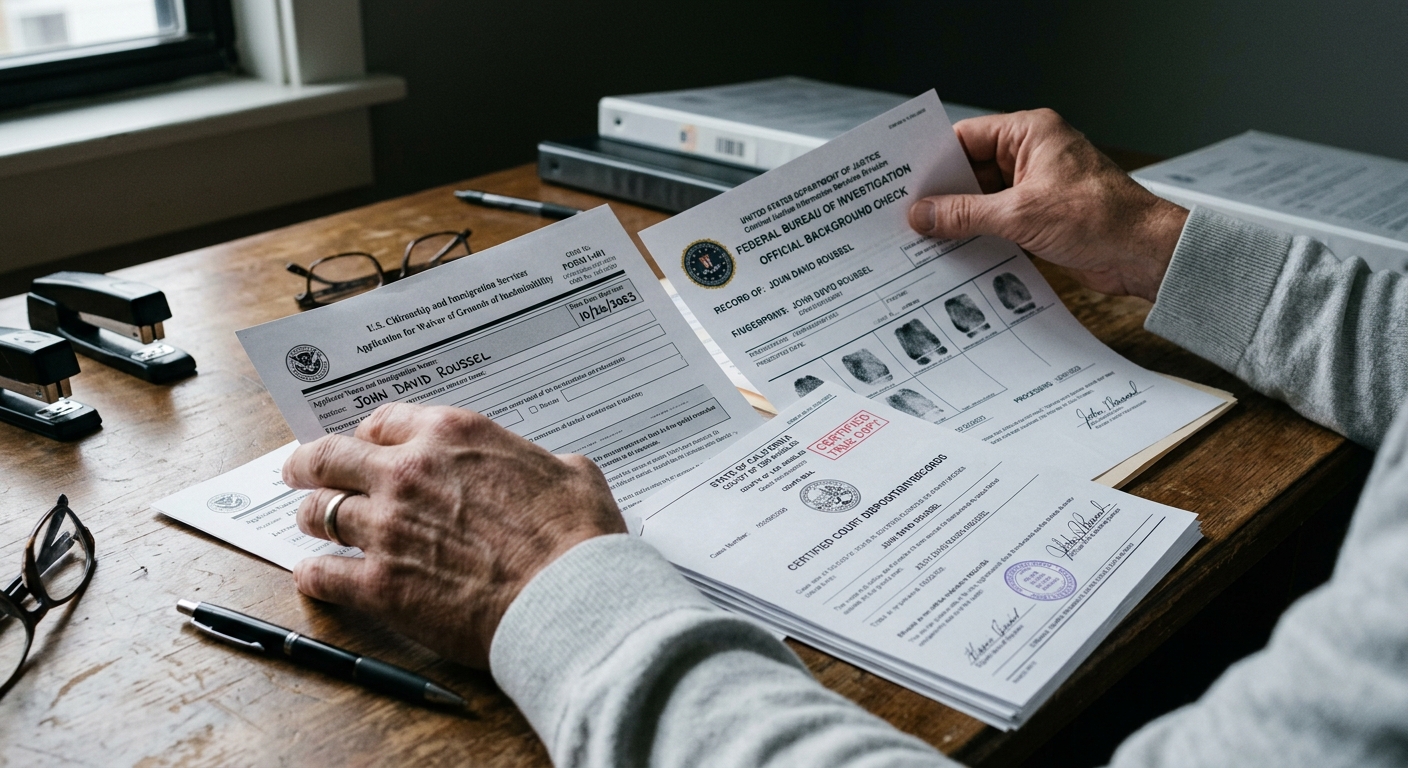
We recommend requesting an FBI Identity History Summary and certified dispositions from every court where you were arrested or charged, so you know exactly what the government has on file. Never hide an arrest, even if charges were dropped or the record was sealed: being dishonest can add another ground of inadmissibility for misrepresentation.
With your record in hand, a legal team can determine whether your case qualifies for a waiver or whether it’s better to adjust the timing of your application. Criminal history isn’t the only ground of inadmissibility: the immigration medical exam covers health-related grounds too.
If you have questions about how a record could affect your immigration case in Austin, Laredo, or anywhere in Texas, contact our immigration attorneys to review your case in detail before you file anything.
Frequently asked questions about crimes and green cards
What is a crime involving moral turpitude (CIMT)?
CIMTs are crimes considered contrary to accepted moral standards, such as fraud with intent to deceive, theft, serious assaults, or certain sex offenses. There’s no fixed list; they’re decided case by case. For green card and visa applicants, a single CIMT conviction (or admitting to one) can make you inadmissible under INA §212(a)(2), unless you qualify for an exception such as the “petty offense” exception, which generally applies when the maximum possible sentence is one year or less and the sentence imposed was six months or less. The rules for permanent residents who could be deported are different, so your specific record should be reviewed by an attorney.
Does a suspended sentence still count as a serious conviction?
In immigration law, the full sentence imposed counts, even if the judge suspended it or the person served it on probation. If someone was sentenced to one year, immigration treats it as one year, even with no time actually spent in jail. This detail can turn a minor state offense into an aggravated felony for immigration purposes.
Do I have to disclose a record that was sealed or expunged?
Yes. On immigration forms, you must disclose every arrest, charge, or conviction, even if the record was sealed or expunged at the state level. Federal authorities usually have access to your full history through the FBI, and being dishonest can lead to an additional ground of inadmissibility for fraud or misrepresentation, or a finding that you lack good moral character.
How do domestic violence convictions affect a green card holder?
A conviction for domestic violence, stalking, child abuse, or violating a protective order can make a permanent resident deportable under INA §237(a)(2)(E). The impact depends on how the offense is classified and whether it qualifies as a crime of violence. Talk to an attorney before traveling abroad or renewing your green card.
What if I helped a relative enter the U.S. illegally?
Helping someone else enter the country illegally (alien smuggling) is a ground of inadmissibility under INA §212(a)(6)(E), even if it was for family reasons. A discretionary waiver may be available in limited cases, for example, when the only person you helped was your spouse, parent, son, or daughter, depending on your case and immigration status.